Free. Instant. No signup. Pulls recalls and complaints for your exact vehicle.

Couldn't find that VIN. Check the digits and try again.

ProblemsByVin File / 2008-FORD-F-350 NHTSA data synced 4 days ago
2008 · Ford

Ford F-350 problems

232 owner complaints and 1 active recall campaign on file. Here's the breakdown — what's serious, what's noise, what a working mechanic would actually do about it.

0 5 10
Reliability score
7.2 / 10

Solid reliability overall. Common issues are concentrated in a few systems.

0
Critical
1
Severe
0
Moderate
Should you avoid this 2008 F-350?
Avoid — the steering

The data says walk unless this exact vehicle has documented proof the steering was repaired or replaced.

Our read of the federal NHTSA complaint and recall record for this exact year and model — not a substitute for a pre-purchase inspection. How we score.

Embed this reliability snapshot

Free to use on your site, post, or video — keep the link back. Preview the widget →

<iframe src="https://problemsbyvin.com/embed/reliability/2008-ford-f-350/" width="100%" height="340" style="border:1px solid #e2e8f0;border-radius:8px;max-width:640px" title="2008 Ford F-350 reliability snapshot" loading="lazy"></iframe>

Stories from the shop

If you’ve read what I wrote about the 6.0L Powerstroke, you’re thinking nothing could be worse than that engine. The 6.0L was a parts-eating, head-gasket-blowing nightmare that took a generation of mechanics to figure out. It made Ford diesel guys hate Ford for ten years.

Then Ford built the 6.4L Powerstroke. From 2008 through 2010. To replace the 6.0.

The 6.4L is worse. I’ll say that twice. It’s worse. Anybody who tells you different either doesn’t work on these or is selling one and praying.

What’s wrong with the 6.4

Where do I start.

Two turbos. Ford put twin sequential turbos on the 6.4. Small high-pressure turbo for low-rpm response, big low-pressure turbo for high-rpm flow. Sounds great. In practice, both turbos are heat-soaked into oblivion by the EGR system, and the small turbo’s variable geometry vanes stick with soot by 80,000 miles. When the small turbo seizes, the big turbo can’t hand off, and you get either no boost or runaway boost. Either way, you’re parked.

Replacement turbo set: $3,500-5,500 from Ford. Aftermarket twin turbo replacement: $2,500-4,000. Labor: $1,200-1,800 either way.

The radiator. Ford put the EGR cooler in line with the regular cooling system. The EGR cooler ruptures internally, fills the cooling system with combustion byproduct, plugs the radiator from the inside, and the engine starts running hot. To fix it you replace the radiator, the EGR cooler, the oil cooler (because it’s plugged too), the thermostat, and flush the entire system. $2,000-3,500 done.

Fuel dilution into the oil. The 6.4 uses post-injection during regeneration cycles to burn off the diesel particulate filter (DPF). Some of that fuel ends up in the oil instead of going out the tailpipe. Oil dilution rises continuously. By 5,000 miles into an oil change interval, the oil is 5-10% diesel fuel. That’s not oil anymore. That’s solvent. Bearings don’t love that. Crankshafts don’t love that. Engines don’t love that.

This is why every diesel guy you talk to who knows the 6.4 says you have to change the oil every 4,000 miles AT MOST. And use a heavy synthetic that’s tolerant of fuel dilution. And monitor your oil level — because dilution adds to the oil level, so the dipstick can read full while the engine’s actually running on contaminated oil.

The DPF and SCR system. Diesel particulate filter, exhaust temperature sensors, NOx sensors, the whole emissions package. All of it fails. Continuously. Replacement DPF: $2,500-4,500. Sensors: $300-600 each. The 6.4 was Ford’s first attempt at meeting 2007 emissions standards with a diesel, and they didn’t really know what they were doing yet.

Head bolts (yes, again). Like the 6.0, the 6.4L doesn’t have enough head bolts for the cylinder pressure. ARP studs are recommended at any sign of head gasket weakness. The good news is the 6.4 doesn’t blow head gaskets quite as readily as the 6.0 did — the architecture is slightly better. The bad news is when it does fail, you’re pulling the cab off because there’s no other way to access the heads on a 6.4 in a Super Duty chassis.

Cab-off head gasket job: $7,000-12,000.

What you’ll see and hear

  • Long crank time on cold start
  • Black smoke under acceleration (turbo lag plus EGR overload)
  • DEF/regen warnings if you drive only short distances (DPF won’t regenerate properly)
  • Coolant overflow (EGR cooler getting tired)
  • Oil level rising on the dipstick (fuel dilution)
  • Power loss, especially under load
  • Limp mode warnings
  • White smoke at startup that takes a long time to clear
  • Whining or hissing from the engine bay (turbo bearing failure)

What it costs to keep one going

Realistic annual maintenance budget on a 6.4L Powerstroke:

  • Oil changes every 4,000 miles with full synthetic and a quality filter: $80-120 each, so $400-600/year
  • DPF cleaning or replacement somewhere between 80,000 and 150,000 miles
  • Turbo replacement somewhere between 100,000 and 180,000 miles
  • EGR cooler/radiator replacement once or twice over the truck’s life
  • Various sensor replacements continuously

A 6.4L Super Duty over 200,000 miles will cost you more in repairs than the truck cost new.

The “delete” question

Just like with the 6.0L, the diesel community has an answer to all this: EGR delete, DPF delete, DEF delete, custom tune. Eliminates most of the emissions-related failures, gets you back to 18-22 MPG instead of the factory 12-15, and gives the engine its full rated power back.

It’s also a federal emissions violation. Federal enforcement is light. State enforcement in Texas is essentially nonexistent on these trucks. Most every diesel shop in the state will do it. Total cost: $2,500-4,000 for the kit and tune plus install.

I’m not telling you to do it. I’m telling you what’s out there. Make your own call.

Should you buy one?

A 2008-2010 Ford F-250, F-350, or F-450 with the 6.4L Powerstroke is generally NOT a yes. There are exceptions:

  • Truck has been deleted properly with a quality kit (Mishimoto, Sinister, MBRP, etc.) and tuned
  • Documentation showing recent turbo, DPF, EGR cooler, radiator, oil cooler work
  • Owner is willing to take less than retail because they know what they’re selling
  • You have a diesel shop you trust and a budget for ongoing maintenance

Hard pass on:

  • Stock-emissions 6.4 with no recent work
  • Any 6.4 used for short-trip duty (DPF won’t regenerate properly, all the emissions equipment fails faster)
  • 6.4 with documented overheating history
  • 6.4 with white smoke at startup

If you already own one:

  • 4,000 mile oil changes maximum, no exceptions, full synthetic 15W-40 (or 5W-40 if you live where it gets cold)
  • Watch oil level monthly, not just at oil changes
  • If you’re outside warranty, seriously consider the delete route — the trucks last twice as long
  • Find a real diesel shop, not the dealer
  • Budget for big repairs annually

The 6.4 was Ford’s emissions panic project. They needed a 2007-compliant diesel and they rushed it. The follow-up engine, the 6.7L Scorpion (2011-plus), was developed in-house by Ford and is night-and-day better. If you’re shopping a Ford diesel from this era, the 6.4 is the year you skip. The 7.3 (1999-2003) is great. The 6.0 is bad but fixable. The 6.4 is the one nobody should have built. The 6.7 is the redemption.

Take the 6.7. Pay more, save in repairs, drive it 300,000 miles, win.
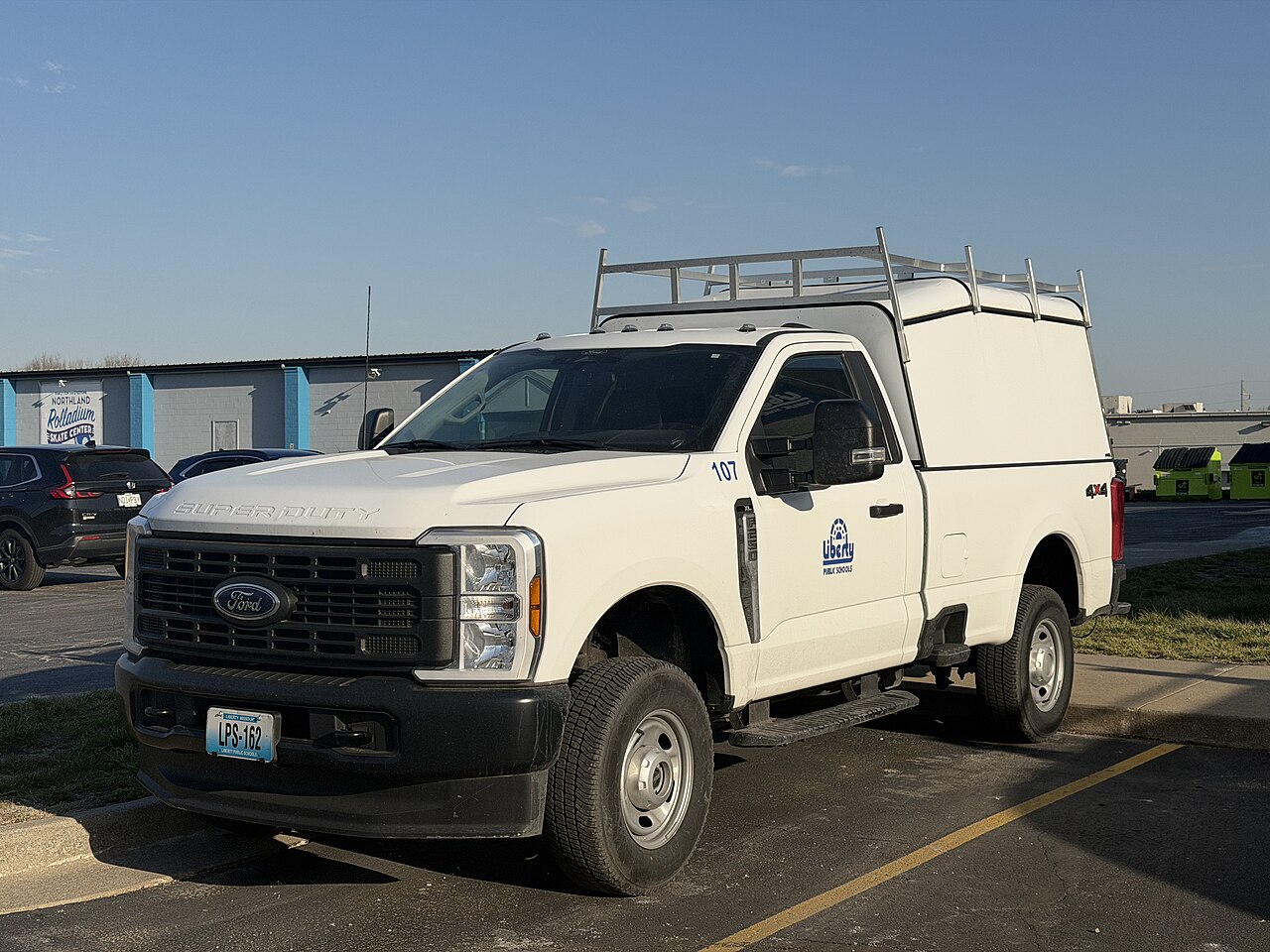
— Mark Driver

Top trouble spots 8 categories with 3+ complaints

steering
72 reports · fails ~82,168 mi · avg $700
severe
engine
67 reports · fails ~62,662 mi · avg $3,100
severe
brakes
17 reports · fails ~40,933 mi · avg $450
severe
tires
14 reports · fails ~59,107 mi · avg $150
moderate
fuel system
11 reports · fails ~48,044 mi · avg $1,200
severe
powertrain
10 reports · fails ~51,572 mi · avg $2,500
severe
suspension
10 reports · fails ~67,797 mi · avg $900
moderate
wheels
7 reports · fails ~79,338 mi · avg $400
severe
Buyer's checklist
Going to look at one? Use the pre-purchase inspection list.
Generated from this 2008 F-350's actual NHTSA complaint history — every item points at a documented failure pattern on this exact vehicle, not generic walkaround filler.
See the checklist ->
Honest Calculator
Should you buy an extended warranty on this 2008 F-350?
We pulled the math: risk-weighted exposure, typical contract cost, and our verdict on whether coverage pencils out for this specific vehicle.
See the calculator ->

What owners are saying recent NHTSA-filed complaints · verbatim

2008 F-350 · engine
While driving in snowy conditions, the air filter will get clogged with snow causing the engine to stall. On 12/30/2010 at 2pm I drove approximately 20 miles (zip code 57201) and the air filter had 1/2" of snow all around and inside the filter. Discussed with local…
12/30/2010 · at 73,000 mi · NHTSA ODI #10373535.0 · see engine pattern →
2008 F-350 · brakes
Monday, january 3, 2011, we were driving on a rural road in route to sharps chapel, tennessee when the right side front passenger caliper/rotor assembly failed causing smoking and burning smell of the brake shoes forcing me to pull to the side of the road. After allowing the…
12/26/2012 · at 18,000 mi · NHTSA ODI #10490117.0 · see brakes pattern →
2008 F-350 · steering
I have been having issues with this vehicle in the steering. It will pull to the left or right at any given time going down the road. We are a full service shop and own this vehicle. We have checked everything and contacted Ford. They recommended changing the steering shaft…
12/10/2015 · at 24,000 mi · NHTSA ODI #10809510.0 · see steering pattern →
2008 F-350 · engine
Tl*the contact owns a 2008 Ford f350. The contact stated that the radiator failed and was leaking. The vehicle was inspected by a dealer who confirmed that the radiator needed to be replaced. The vehicle was repaired. The failure mileage was approximately 20,774. Updated…
12/08/2010 · at 20,774 mi · NHTSA ODI #10369615.0 · see engine pattern →
View all 232 owner complaints →
Had a problem with your 2008 Ford F-350? File a complaint with NHTSA → It's free and official — owner filings are what build the federal safety record behind this page.

Estimate your repair exposure

Drag to your current mileage. Numbers are derived from this vehicle's complaint history.

0 mi 200k mi
At 80,000 miles
Likely repair cost in next 24 months
$0

Active recalls showing 1 of 1

severe NHTSA 08V344000 July 28, 2008

Knapheide is recalling 108 my 2006-2008 pro series truck beds equipped with an icc bumper which included a provision for a ball hitch

This could result in bending of the hitch channel or the hitch could be pulled off the vehicle, increasing the risk of a crash.

Fix: Knapheide will offer two remedies to its customers: (1) for those customers who do not use the hitch, the hitch will be removed from the truck bed and replaced with an icc bumper; or (2) for those customers who need a hitch, a receiver hitch assembly will be added to the existing hitch assembly and all suspect weld joints will be re welded. The recall began on august 15, 2008. Owners may contact knapheide at 1-877-473-5763.

Common questions

Is the 2008 Ford F-350 reliable?

Mostly yes. With a reliability score of 7.2 out of 10 based on 232 owner complaints filed with NHTSA, the 2008 Ford F-350 is generally a sound vehicle. The areas to watch are listed in the top problem section above — most are budget items, not deal-breakers.

Should you avoid the 2008 Ford F-350?

On the NHTSA data, the 2008 Ford F-350 is one to avoid unless a specific vehicle proves otherwise. The data says walk unless this exact vehicle has documented proof the steering was repaired or replaced. The record behind that call: 5 fire-related complaints and 1 crash-related complaint on the engine; Steering: 72 complaints, classified severe, failures cluster 35,000–125,000 mi; Reliability score 7.2/10 — around the segment average; 1 recall campaign on file. This is our read of the federal complaint and recall data — not a substitute for a pre-purchase inspection.

What's the most common problem on the 2008 Ford F-350?

Based on NHTSA records, the most-reported issue is steering, with 72 complaints filed. Typical failure occurs around 82,168 miles. Average repair cost runs about $700 at an independent shop.

What's the most expensive thing that goes wrong?

The steering is one of the costlier repair items. Average repair cost runs about $700 at an independent shop. Typical failure occurs around 82,168 miles. Catching early warning signs can sometimes extend life by 20–30,000 miles.

How do I check if my Ford F-350 has open recalls?

Paste your VIN into the decoder at the top of this page. We pull live from NHTSA, so you'll see exactly which campaigns apply to your vehicle and whether the dealer has logged the fix. Recall repairs are always free regardless of mileage or warranty status.

Is an extended warranty worth it on a 2008 Ford F-350?

Math is straightforward: a quality service contract runs $1,800–3,500 over 3 years. With 232 complaints on file and the costliest repair averaging $700, one major failure more than pays for it. The catch is reading the contract — many providers exclude wear items and require pre-authorization, so cheaper plans are not always better value.

Related

Recall and complaint data sourced from the National Highway Traffic Safety Administration (NHTSA) public records database, last synced 4 days ago. Verify the raw federal record at nhtsa.gov/vehicle/2008/Ford/F-350. Editorial commentary written by ProblemsByVin contributors and reviewed by ASE-certified mechanics. We are not affiliated with Ford. Some links on this page are affiliate links and we may earn a commission if you complete a quote or purchase.
Get a free warranty quote →
Sponsored — we earn a commission if you complete a quote. Disclosure.