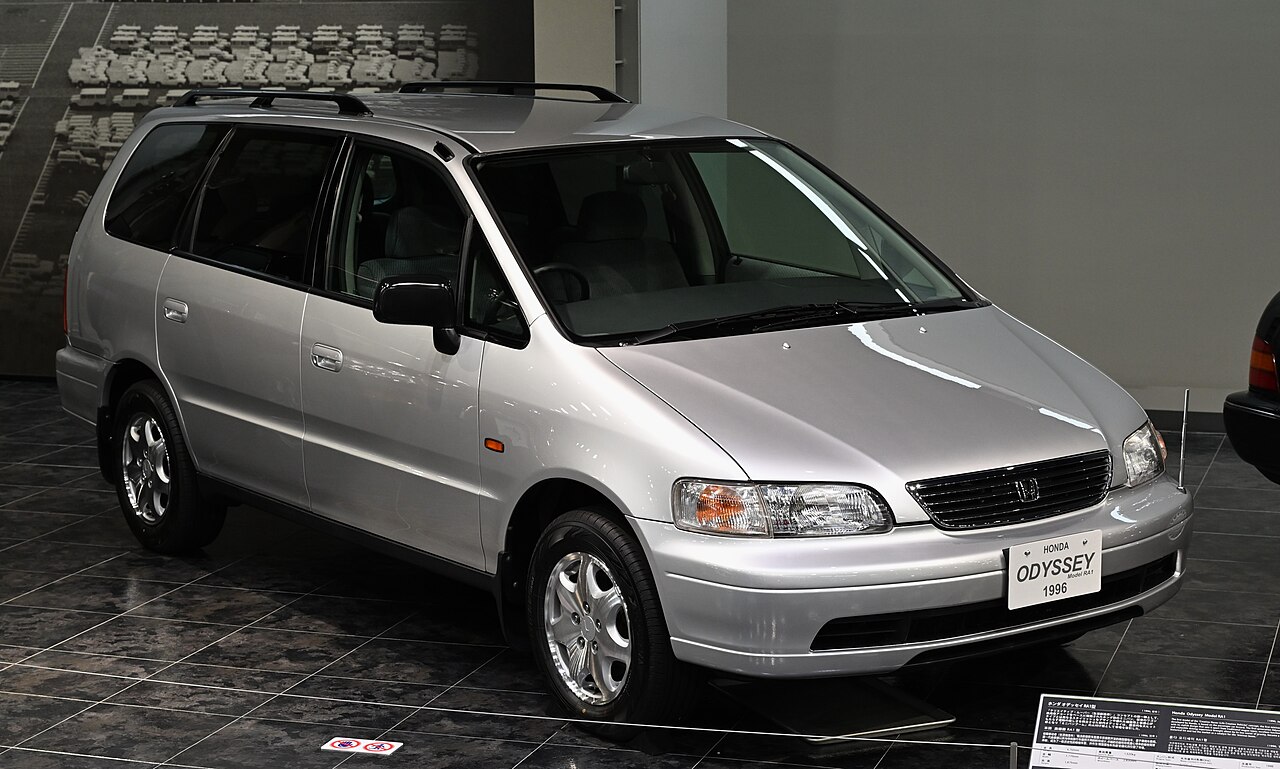
If you bought a 2003-2007 Odyssey, Pilot, or Accord V6 thinking you were getting a 250,000-mile family hauler, the engine probably held up its end of the bargain. The transmission probably didn’t.
For two decades Honda built one of the best small-engine reputations in the business. The 4-cylinder Civic and Accord, the K-series engines, the bulletproof 5-speed manuals — all earned. Then came the 5-speed automatic behind the J-series V6 in the 2003-2007 Odyssey, Pilot, Acura MDX, Acura TL, and Accord V6, and Honda owners learned that one bad transmission can trump a generation of good engines.
If you’ve got one of these vans or SUVs and the transmission still shifts crisp at 150,000 miles, you got lucky. Most didn’t.
What goes wrong
The BAYRA, B7XA, and MDKA family of 5-speed automatics had two related failure modes:
Torque converter and 3rd-4th clutch pack. The third clutch pack runs hot, the fluid breaks down, and clutch material shears off. The shavings circulate through the valve body and torque converter, glazing the converter clutch and causing converter shudder under light throttle. By the time you feel the shudder, the third clutch is on its way out.
Differential bearing. Inside the case, the differential rides on a bearing that wasn’t sized for the torque output of the V6. Bearing fails, differential gets sloppy, you get a whine that grows into a growl. Often heard before any shift problems show up.
The combination meant that by 100,000-180,000 miles, a huge percentage of these transmissions were either slipping, shuddering, or whining — sometimes all three.
What you’ll see and hear
- Shudder under light throttle at 35-50 mph, especially going up a slight grade — torque converter clutch glazing
- Slip or flare on the 2-3 or 3-4 shift
- Whining noise that increases with vehicle speed (not engine speed) — differential bearing
- Hesitation when pulling out from a stop
- Hard 1-2 shift after fluid is heat-stressed (long highway drive in summer)
- Check engine light with P0700-series codes
Honda’s actual response
Honda extended the powertrain warranty to 7 years/100,000 miles on most affected models when the lawsuits started piling up. They issued a software update intended to “smooth” the converter clutch engagement and reduce heat. They also issued a service bulletin recommending an external transmission cooler upgrade — and on some Odysseys, the dealer would install one for free.
Translation: they knew. The fix was always external cooling and aggressive fluid changes.
What to do if yours is still healthy
Honda’s official position was 90,000-mile fluid intervals. Real-world: change ATF every 30,000 miles, no exceptions. Use Honda Z1 or DW-1 (whichever your year specifies), no substitutes. The drain-and-fill is a 20-minute job — there’s no transmission pan, you pull the drain plug, drop about 3 quarts, put the plug back, refill through the dipstick tube. Do it three times in a row spaced over a week of driving and you’ve effectively done a full fluid exchange without paying a shop $300 for a flush.
Add an external cooler if you tow, live anywhere south of the Red River, or both. ATF temps over 220°F kill these transmissions. A B&M or Hayden universal cooler, $80, mounted in front of the radiator, will drop your operating temp 30-40°F and add years to the unit. I’d put one on every Odyssey in DFW if I had my way.
What to do when the shudder shows up
You’ve got a small window. If you act on the first sign of light-throttle shudder:
- Drain and fill three times in a week with fresh DW-1
- Add a cooler if you don’t have one
- Change driving habits — easy on the throttle, no extended highway runs in 110° heat
You might buy yourself another 30,000-50,000 miles. Maybe more.
If you ignore the shudder and let it progress to slipping, flaring, or hard shifts, you’re looking at a rebuilt or replacement transmission.
Cost to replace
- Used transmission from a salvage yard: $400-$800 for the unit, $800-$1,200 labor. Total $1,200-$2,000. Risky — you’re buying somebody else’s known-bad transmission.
- Reman from a specialist (Jasper, ATK, etc.): $2,500-$3,800 for the unit with warranty, $1,000-$1,400 labor. Total $3,500-$5,200.
- Honda dealer reman: $4,500-$6,000 installed. Best warranty (3 year/36k usually).
On a 2005 Odyssey with 175,000 miles worth maybe $4,000 running, you’re looking at a transmission job that costs as much as the van. That’s why you see so many of these in the salvage yards. Owners do the math and walk away.
Should you buy one?
A 2003-2007 Odyssey or Pilot with the V6 and 5-speed auto is a buy only if:
- The transmission has been replaced or rebuilt with documented receipts
- The current trans has under 80,000 miles on it AND has documented 30,000-mile fluid changes
- You’ve test driven it long enough to confirm no shudder, no whine, no slip
Otherwise, walk. The 2008-plus Odyssey with the 5-speed (and later the 6-speed) is a substantially different and more reliable transmission. The V6 itself is fine — the J35 is one of the great minivan engines. It’s just married to a transmission that doesn’t deserve it.
If you already own one: the cheapest insurance is a cooler, a fluid change every 30,000, and easy driving. That trio has saved more of these transmissions than Honda’s software update ever did.