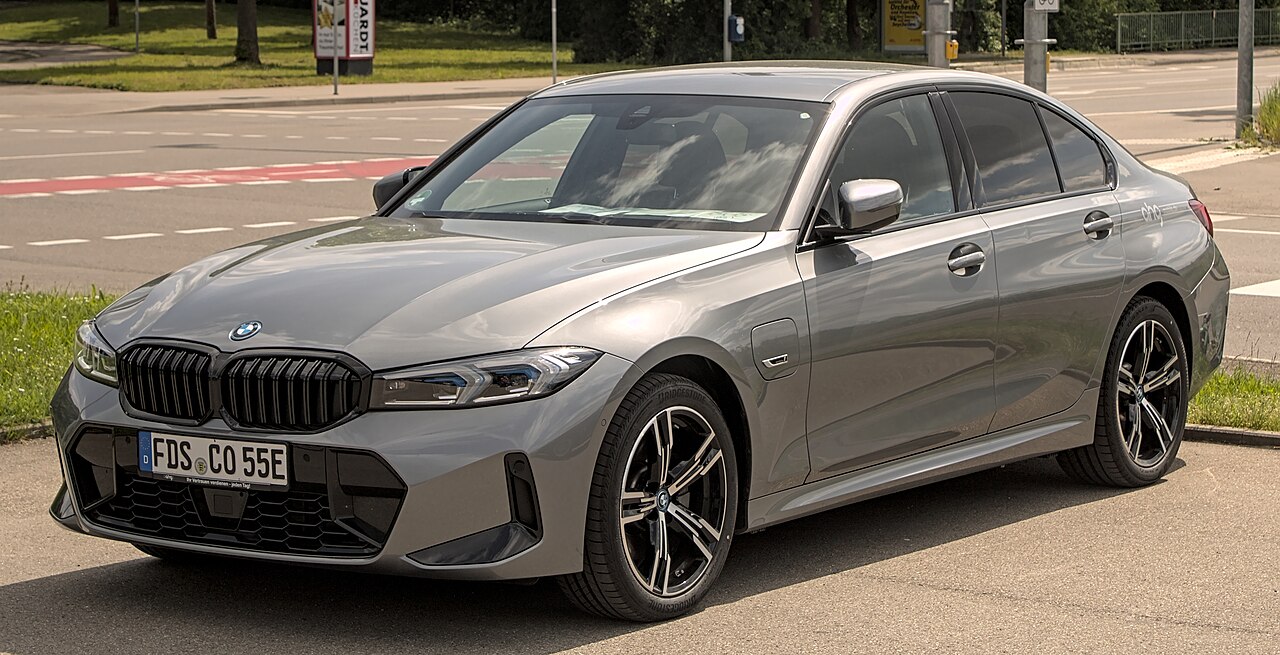
The N54 inline-six in the 2007-2010 BMW 335i, 535i, 1M, Z4 35i, and 740i is, depending on who you ask, either the best or the worst engine BMW built in the last 25 years.
Best: 300 horsepower stock, easily tuneable to 400-450 on the factory hardware, sounds incredible, parts pretty much across the board are still available, makes the 335i a genuine sleeper that beats stuff costing twice as much.
Worst: the high-pressure fuel pump fails so reliably that BMW had to extend the warranty to 10 years/120,000 miles after a class action, and the engine has carbon buildup, water pump failures, valve cover gasket leaks, and turbocharger wastegate rattles to make ownership a continuous bill.
I love these cars. I work on them all day long. I’m gonna tell you the truth about them.
The HPFP problem
The N54 uses direct injection — the first BMW engine with DI, in fact. The high-pressure fuel pump (HPFP) generates around 2,000 PSI of fuel pressure to feed the injectors. The original Bosch HPFP design had internal sealing issues that caused premature wear, and pumps would fail anywhere from 30,000 to 150,000 miles.
When the HPFP fails, you get:
- Long crank times before the engine starts
- Engine stalls at idle
- Rough running, sometimes severe
- Misfire codes across multiple cylinders
- Eventually, a no-start condition
- Sometimes a “drivetrain malfunction — reduced power” warning on the dash
BMW issued a recall (campaign N57) and an extended warranty (campaign 11N18) on the HPFP. If your VIN qualifies and the pump’s failed, BMW replaces it for free. The replacement pump is an updated Bosch design that’s much more reliable — most replaced pumps go 100,000+ miles without further drama.
You wanna check coverage: take the VIN to a BMW dealer, ask specifically about HPFP recall coverage. They sometimes claim “no open recalls” when in fact the campaign is still valid. Push back. The campaign has been extended multiple times. As of recent years, most N54 cars are still covered for HPFP replacement up to 10 years/120,000 miles or so.
The other N54 issues
If you own one of these cars, here’s the rest of the menu:
Carbon buildup on intake valves: All direct injection engines have this issue, but the N54 is particularly bad. By 60,000-80,000 miles you’ve got significant buildup that causes misfires, rough idle, and lost power. Fix is a walnut blast service — $400-700 at a shop. Plan for it every 60,000 miles or so.
Water pump: The N54 uses an electric water pump. They fail. About every 60,000-80,000 miles. $400 part, $400 labor. The pump itself plus the thermostat, do them together because the labor’s the same.
Valve cover gasket: Leaks oil onto the exhaust manifold, smells terrible when warm, eventually drips onto the alternator and kills it. $50 gasket, $300-500 labor done correctly with the new bolts and updated gasket.
Turbo wastegate rattle: The factory turbos use small wastegate flaps that develop play in the actuator linkage. Rattle from the engine bay during transient throttle changes. Doesn’t break anything immediately but progresses. Fix is rebuilt or upgraded turbos — $1,500-3,500 depending on what you go with.
Charge pipe (intake): Plastic charge pipe between turbos and throttle body cracks. When it goes, you suddenly have no boost and a check engine light. $100 for an aftermarket aluminum charge pipe (recommended), $300-500 for the OEM plastic replacement that’ll fail again. Get the aluminum.
Oil filter housing gasket: Leaks oil into starter motor area. Eventually kills the starter. Fix is $30 gasket, $400-600 labor because access is awful.
What it costs to keep one running
Realistic annual maintenance budget on a 2007-2010 N54 BMW with 80,000+ miles:
- Year one with new ownership: $2,000-4,000 catching up on whatever the prior owner deferred
- Years after: $1,500-2,500 annually for a daily-driven car
If you tune the car (and most N54 owners eventually do), add $1,000-2,000 for upgraded fuel system components and stronger fueling solutions to handle the increased boost.
A poorly-maintained N54 can be a $10,000 ownership disaster in two years. A well-maintained N54 can be one of the best driver’s cars on the road for $2,000 a year. The variance is on the maintenance side.
What you’ll see and hear
- Long crank time on cold start (HPFP weakening)
- Stumble or stall at idle, especially when warm
- “Drivetrain malfunction” warning, reduced power
- Misfire codes (P0301-P0306)
- Gas smell at the back of the engine bay
- White smoke at startup that clears (carbon, valve cover, or HPFP)
- Reduced power on hard acceleration
- Whistle from the engine bay (charge pipe crack)
- Rattle on throttle transitions (wastegates)
Should you buy one?
A 2007-2010 N54 BMW is a yes if:
- The HPFP has been replaced under the recall (get the receipts)
- The car has documented maintenance history showing carbon walnut blast, water pump, valve cover work
- You’re going in with a $3,000-5,000 first-year repair budget
- You actually want to drive a quick BMW, not just own one as transportation
Hard no on:
- Cars with no service history under $10,000 — assume they need everything
- Cars with check engine light or “drivetrain malfunction” warnings active
- Cars that have been heavily modified by amateurs (look for cheap aftermarket tunes, e85 conversions without proper fueling, etc.)
If you already own one:
- Find a BMW independent specialist. The dealer’s expensive and not always more knowledgeable than the indies for this engine.
- Use BMW LL-01 spec oil (Castrol Edge 0W-30 European Formula or equivalent), change every 5,000 miles. The factory 15,000 mile interval is fantasy on this engine.
- Walnut blast at 60,000 miles. Schedule it before symptoms.
- Replace the charge pipe with aluminum proactively. The plastic one will fail eventually.
- Budget for HPFP replacement before it fails — once it strands you, you’re getting it towed and that adds to the bill.
The N54 is one of those engines where the people who love them really love them, and the people who hate them really hate them. The difference is usually whether they understood what they were getting into. Go in with eyes open and a bank account ready. You’ll get an exceptional driver’s car for not much money.