2024 Subaru WRX problems
Light NHTSA footprint — 14 owner complaints. Either a clean record or thin data; we'll show what's there.
Selling this one? Make a free for-sale sign with its recall record and a QR code.
The 2024 Subaru WRX has 14 NHTSA owner complaints on file (U.S. federal records, as of October 2026). The most-reported system is powertrain at 3 complaints (~$2,500 to repair). Source: NHTSA Office of Defects Investigation.
| Model year | Owner complaints | Recalls |
|---|---|---|
| 2021 WRX | 13 | 1 |
| 2022 WRX | 25 | 1 |
| 2023 WRX | 9 | 1 |
| 2024 WRX (this page) | 14 | 0 |
| 2025 WRX | 3 | 0 |
| 2026 WRX | 0 | 0 |
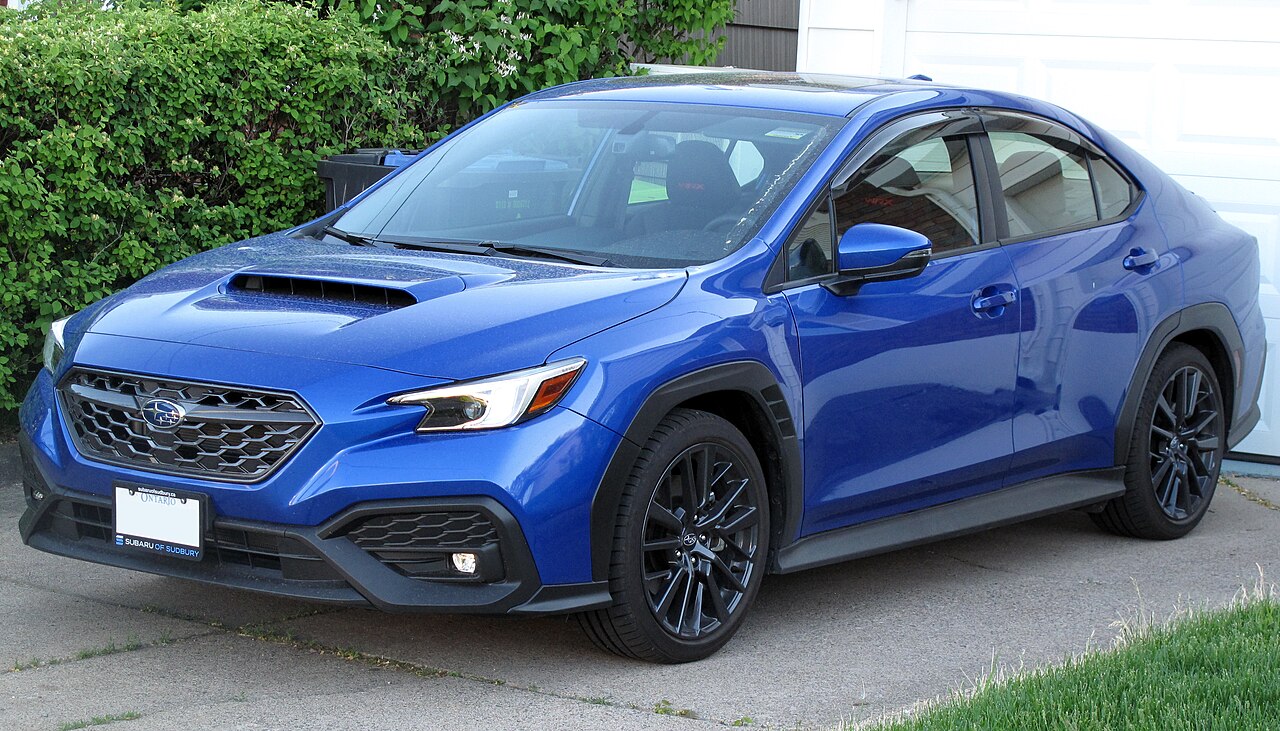
Above-average reliability for the segment. Few systemic issues on file.
Buyable on the data — keep up the usual maintenance and inspect normally.
- No systemic severe-failure pattern in the complaint record
- Reliability score 8.8/10 — above the segment average
Our read of the federal NHTSA complaint and recall record for this exact year and model — not a substitute for a pre-purchase inspection. How we score.
NHTSA crash-test safety ratings 5 / 5 overall
Driver-assist features on the tested model: Electronic stability control: Standard · Forward collision warning: Standard · Lane departure warning: Standard
Source: NHTSA New Car Assessment Program — tested configuration: 2024 SUBARU WRX 4 DR AWD. Stars rate crash protection in NHTSA's tests, not overall reliability — see the owner-complaint data below for what actually goes wrong.
Buying a used 2024 Subaru WRX? Check these first
Here's what this model is known to do — so you can inspect for it, price it in, or make the seller fix it before you sign.
What to inspect on this specific car
- powertrain — 3 owner reports · ~$2,500 to fix
Recalls to confirm are done
Run the VIN from the listing — no active recalls on this model right now, but confirm none were opened after this car was built.
Verdict for buyers: 8.8/10 model. The priciest documented failure is powertrain (~$2,500) — get the seller's service records for it or inspect closely. Otherwise an average-risk used buy at a fair price.
We tell you what this model is known for and what to inspect — a vehicle-history report tells you what this exact car has been through. Smart buyers get both.
See the full pre-purchase inspection checklist →Ask anything about your 2024 Subaru WRX
A noise, a warning light, a repair quote, "should I buy this?" — get an answer grounded in this vehicle's actual NHTSA record, not generic advice.
Answers use this vehicle's NHTSA complaint & recall record — owner-reported and unverified, not a diagnosis. Verify anything safety-critical with a mechanic.
Stories from the shop
I’m gonna be straight with you on this one. The 2022-plus Subaru WRX with the FA24 turbo engine ain’t been on the road long enough for anybody to definitively say what’s gonna fail at 100,000 miles. The engine is too new. Owner reports are mostly within the warranty period. Independent shop data ain’t there yet because the cars haven’t aged out of the dealer service network.
What I can tell you is what I’m hearing from the early adopters, what the Subaru forums are flagging, and what the engineering changes from the previous EJ25-turbo era suggest is gonna be different long-term.
What’s different from the old WRX
The previous-generation WRX (2002-2014 EJ25T, 2015-2021 FA20DIT) had well-documented problems: head gaskets, ringland failures, banjo bolt oil starvation, turbo coking, the whole song. Subaru fans love arguing about which was worst.
The 2022-plus WRX uses the FA24DIT — a 2.4 liter direct injection turbo, larger displacement than the FA20 it replaced, and incorporating lessons learned from the EJ25 turbo failures.
What’s been improved:
- Bigger pistons with a proven design from the larger Subaru naturally-aspirated 2.4L (the BRZ/Crosstrek/Outback engine that’s been around long enough to know it’s reliable)
- Improved oil pickup and oil delivery to the turbo
- Better cooling jacket geometry
- Updated piston rings
- A bigger oil pan capacity that helps with oil temperature stability
Subaru clearly knew the EJ25 turbo’s history and addressed the obvious failure points. That doesn’t mean the FA24 is bulletproof. It means the OBVIOUS failures have been engineered out, and we’re waiting to see what new failure modes show up.
What early reports are showing
From owner forums, dealer service campaigns, and the few NHTSA complaints filed so far:
The CVT: Half of the new WRXs come with a continuously variable transmission instead of the manual. Subaru’s CVT (which Subaru calls “Lineartronic”) has its own history — generally better than the Nissan Jatco we talked about elsewhere, but not without issues. Early WRX CVTs are showing some shudder under heavy load and occasional limp mode events. Software updates are addressing some of this. Long-term durability is unknown.
Oil consumption: Some early reports of higher-than-expected oil consumption between changes. Whether this is the engine breaking in (some Subarus take 15,000 miles to fully seat the rings) or an actual ring problem like the old FA20 had is unclear yet.
Direct injection carbon buildup: Same story as the VW we talked about. The FA24 is direct injection only, no port injection, so carbon will build up on the intake valves over time. Plan for a walnut blast service somewhere around 60,000-80,000 miles.
Some random electronic gremlins: Infotainment glitches, occasional dash light fluttering. Subaru’s been issuing software updates. Not engine-related but annoying.
Build quality: Interior plastics on these are cheaper than the previous generation. Doesn’t affect reliability but doesn’t help resale.
The CVT debate
If you’re shopping a new WRX and considering the CVT, you wanna know:
- It’s not as bad as Subaru’s older CVTs and certainly not as bad as Nissan’s
- Acceleration off the line is faster than the manual (zero-to-sixty wise) because the CVT keeps the engine in peak torque
- Long-term durability is the open question
The manual transmission version is mechanically simpler, longer-proven (Subaru’s been using essentially the same manual transmission for a decade), and is the safer long-term play. If you can drive a manual and you’re keeping the car past 100,000 miles, get the manual.
If you can’t drive a manual or you’re just going to lease and trade in, the CVT is fine for that use case.
What you’ll wanna watch for
Early signs to pay attention to on any 2022-plus WRX:
- Oil consumption between changes — check the level every 1,000-2,000 miles
- Any check engine lights with cam timing or fuel system codes
- Any CVT shudder, hesitation, or limp mode events (CVT cars only)
- Coolant level monitoring (turbo engines run hot, leaks show up early)
- Timing chain noise on cold start — the FA24 has a chain, not a belt, but chains still need fresh oil to live a long life
What it costs
You’re inside warranty for now if you bought new — full bumper-to-bumper for 3 years, powertrain for 5 years. If problems show up in that window, Subaru fixes them. Document everything in writing.
Out of warranty estimates, based on what comparable engines cost to maintain:
- Walnut blast for carbon: $400-600 at independent
- CVT fluid change (every 30,000 miles, do not skip): $200-300
- Spark plugs (NGK iridium, every 60,000 miles): $200-400 with labor
- Turbo replacement if it goes: $1,800-2,800
- Software updates: free at dealer if related to a TSB
Should you buy one?
A new or near-new WRX is a yes if:
- You actually want a sport sedan and will drive it like one (these things were built for spirited driving)
- You’re getting the manual transmission unless you specifically need the CVT
- You’re prepared to do tighter maintenance intervals than Subaru recommends (5,000 mile oil changes, walnut blast at 60-80k, CVT fluid at 30k)
- You’re paying market price, not the inflated Subaru fanboy premium
Pass on:
- WRX with CVT and you plan to keep past 100,000 miles
- Heavily modified examples from the early adopters (these guys are still figuring out tunes)
- Dealer-marked-up new ones (just wait, they’ll come down)
If you already own one:
- Use Subaru-spec or higher quality 0W-20 synthetic, change every 5,000 miles. The factory recommendation of 6,000+ is fine for a Camry, not for a turbo’d performance car.
- Pay attention to oil level monthly
- Get the latest TCM and ECM software updates done annually
- Add a catch can if you plan to keep it past 100,000 miles
- Consider a walnut blast at 60,000 miles before symptoms
The honest truth is the FA24 is too new to know what its long-term failure mode is gonna be. We won’t really know until 2027-2028 when these cars start aging out of warranty in numbers. Subaru has clearly engineered around the obvious EJ25 problems. Whether they introduced new ones is a question that’ll answer itself over time.
If you love driving and want a current-generation rally-flavored sedan, the WRX is one of the few options left at this price point. Just go in knowing the data ain’t all in yet.
Top trouble spots 1 category with 3+ complaints
What owners are saying recent NHTSA-filed complaints · verbatim
The component failing is the side skirts or, as officially described in the Subaru parts diagram, the „Side Spoiler“. It can also be found as part numbers 96051, and 96051A. It can be easily visually inspected. This puts others at risk because it may end up dragging on the…
Vehicle: 2024 Subaru WRX (Manual Transmission) Description of Safety Hazard: While operating my 2024 Subaru WRX at normal highway speeds in clear conditions, the vehicle suffered a sudden and catastrophic drivetrain failure. Without any warning lights, unusual noises, or prior…
The Drivers side mirror (LEFT) When sitting still is distorted and wavy if you look around in the mirror. It makes the earth bend or any objects in the mirror bend, the best way to put it when driving or sitting still it looks like a funhouse mirror. And once at about 40 MPH the…
Driving kids home from school and while making a left hand turn through a large intersection, when shifting from 2nd to 3rd gear I heard an immediate pop and then it lost all power in third while sounding like a bag of gravel under the car. I could have easily lost power while…
Estimate your repair exposure
Drag to your current mileage. Numbers are derived from this vehicle's complaint history.
Common questions
Is the 2024 Subaru WRX reliable?
Mostly yes. With a reliability score of 8.8 out of 10 based on 14 owner complaints filed with NHTSA, the 2024 Subaru WRX is generally a sound vehicle. The areas to watch are listed in the top problem section above — most are budget items, not deal-breakers.
Should you avoid the 2024 Subaru WRX?
On the NHTSA data, the 2024 Subaru WRX does not need avoiding. Buyable on the data — keep up the usual maintenance and inspect normally. The record behind that call: No systemic severe-failure pattern in the complaint record; Reliability score 8.8/10 — above the segment average. This is our read of the federal complaint and recall data — not a substitute for a pre-purchase inspection.
What should I check before buying a used 2024 Subaru WRX?
Inspect the powertrain first — it's the most-reported issue on this model, with 3 owner complaints filed. Average repair cost runs about $2,500 at an independent shop. Also confirm any open recalls have been completed by running the VIN, and ask for service records covering the problem areas listed above.
Is the 2024 Subaru WRX a good used car to buy?
It scores 8.8 out of 10 on our NHTSA-based read of 14 owner complaints. The main thing to watch is powertrain. Priced fairly and clean on inspection, it's a reasonable used buy. Our data covers what this model is known for — pair it with a vehicle-history report on the VIN to see what that specific car has been through.
What's the most common problem on the 2024 Subaru WRX?
Based on NHTSA records, the most-reported issue is powertrain, with 3 complaints filed. Average repair cost runs about $2,500 at an independent shop.
What's the most expensive thing that goes wrong?
The powertrain is one of the costlier repair items. Average repair cost runs about $2,500 at an independent shop. Catching early warning signs can sometimes extend life by 20–30,000 miles.
How do I check if my Subaru WRX has open recalls?
Paste your VIN into the decoder at the top of this page. We pull live from NHTSA, so you'll see exactly which campaigns apply to your vehicle and whether the dealer has logged the fix. Recall repairs are always free regardless of mileage or warranty status.
Is an extended warranty worth it on a 2024 Subaru WRX?
Math is straightforward: a quality service contract runs $1,800–3,500 over 3 years. With 14 complaints on file and the costliest repair averaging $2,500, one major failure more than pays for it. The catch is reading the contract — many providers exclude wear items and require pre-authorization, so cheaper plans are not always better value.