2026 Hyundai Kona Recalled Over Seat Belts
A seat belt buckle that fails to properly restrain an occupant in a crash increases the risk of injury.
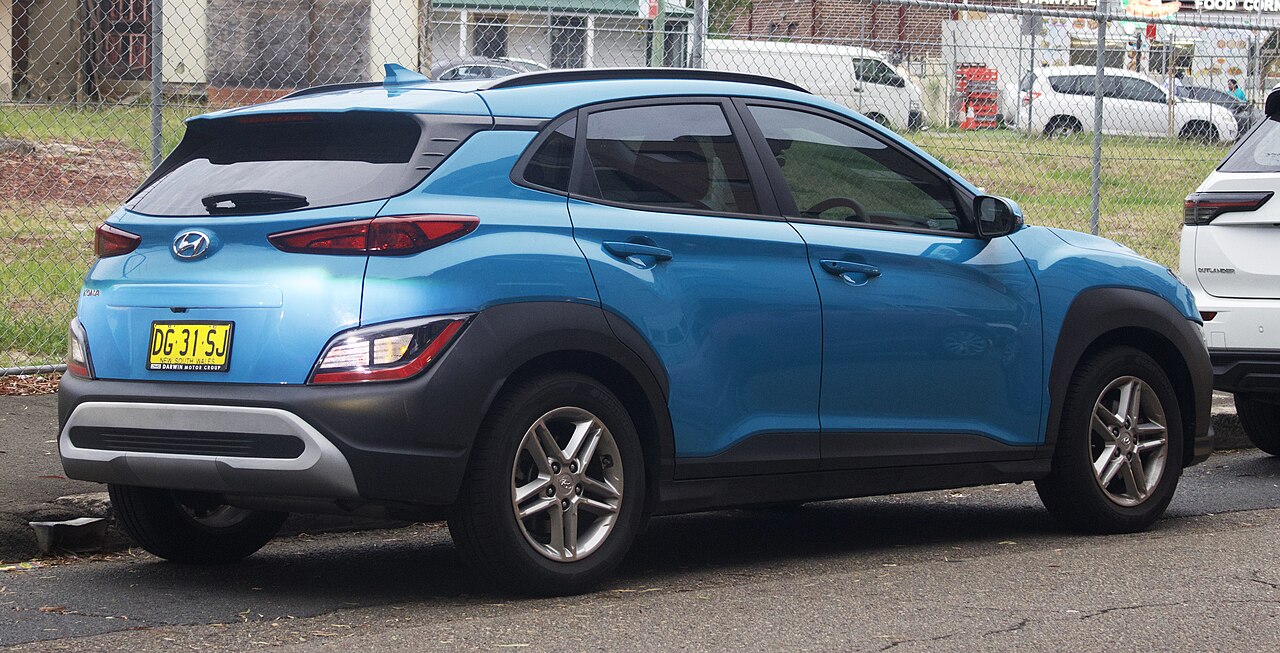
Here’s the short version: the rear center seat belt in nearly 48,000 Hyundais may not hold a passenger in place during a crash. That’s not a nuisance rattle or a squeaky trim piece. That’s the one part of the seat whose entire job is to keep a body from being thrown forward when everything goes wrong. If you own one of these, the middle back seat is off-limits until it’s fixed.
Hyundai Motor America filed this recall with NHTSA on July 14, 2026. It carries campaign number 26V452000 and covers 47,749 vehicles — certain 2025 Kona Electric and 2026 Kona models.
What actually fails
The defect is in the rear center seat belt buckle assembly. In plain terms, that’s the receiver you click the metal tongue into for the middle seat in the back row.
The filing says that buckle may fail to properly restrain an occupant during a crash. So the concern isn’t that the belt won’t latch when you push it in. The concern is what happens under crash loads — the exact moment the buckle is supposed to do its work. If the buckle doesn’t hold, the belt can’t do its job, and the person in that seat isn’t restrained the way they should be.
Here’s why that matters mechanically. A seat belt only protects you if every link in the chain holds: the webbing, the retractor, the anchor, and the buckle. Break any one of them under load and the whole system gives. A buckle that lets go during a collision is the same as having no belt at all for that occupant. Hyundai’s own filing puts it directly — a buckle that fails to restrain someone in a crash increases the risk of injury.
You won’t feel this one coming. There’s no warning light, no noise, no symptom you’d notice on a normal drive. The only time it shows up is in a crash, which is the worst possible time to find out.
What the filing says
Hyundai reported the recall to NHTSA on July 14, 2026. The affected VINs became searchable on NHTSA.gov on July 15, 2026, so you can already check whether your specific vehicle is on the list.
Because there’s no early symptom, Hyundai is giving owners direct interim guidance: passengers should not use the rear center seat until the remedy is done. That’s an unusual step, and it tells you the automaker takes the buckle failure seriously enough to take that seat out of service rather than let people ride in it.
The fix is a full replacement. Dealers will replace the seat belt buckle assembly, free of charge. Owner notification letters are expected to go out September 11, 2026.
What this means if you own one
If you’ve got a 2025 Kona Electric or a 2026 Hyundai Kona, here’s how to handle it.
-
Run your VIN now. Don’t wait for the mailer. The VINs became searchable on July 15, 2026. Go to the NHTSA recall page for campaign 26V452000 and enter your 17-digit VIN. That confirms whether your exact vehicle is included.
-
Stop using the rear center seat until it’s fixed. This is straight from Hyundai’s filing, not me improvising. If you regularly carry three across the back — car seats, kids, a third rider — rearrange now. Put people in the outboard seats, which are not part of this recall. Nobody rides the middle until the buckle is replaced.
-
Watch for your letter, but don’t rely on the timing. Notification letters are expected to be mailed September 11, 2026. If yours shows up on the VIN list before then, you can call ahead. Hyundai’s customer service line for this is 1-855-371-9460, and their internal recall number is 306. Reference that number so you’re not stuck explaining the whole thing from scratch.
-
The repair is free. Keep it that way. Dealers replace the buckle assembly at no charge to you. If anyone at a dealership tries to bill you for a recall repair or ties it to unrelated service, that’s not how a federal safety recall works. Get the recall work itemized separately on the paperwork.
-
Document everything. Keep a copy of the notification letter, the repair order, and the date the buckle was replaced. If you ever sell the car or have a question down the road, that paper trail proves the recall was handled.
The honest take
This is a small, specific defect with a clean fix, and Hyundai caught it on a very new vehicle. Compared to a lot of recalls, the remedy here is simple — one part, replaced free, and clear instructions in the meantime.
But don’t let “one seat, one buckle” make you cavalier about it. A restraint that fails in a crash is exactly the kind of problem that stays invisible until the day it isn’t. If you carry passengers in the back regularly, treat the middle seat as out of service until your dealer swaps the buckle. Run your VIN, get on the schedule when parts are ready, and knock this out. It’s a short appointment for something that genuinely protects the person sitting there.