NHTSA opens defect probe into Tesla Model 3 emergency door releases
Occupants or rescuers may be unable to quickly open doors and exit or be extracted during an emergency such as a post-crash fire; at least one injury incid
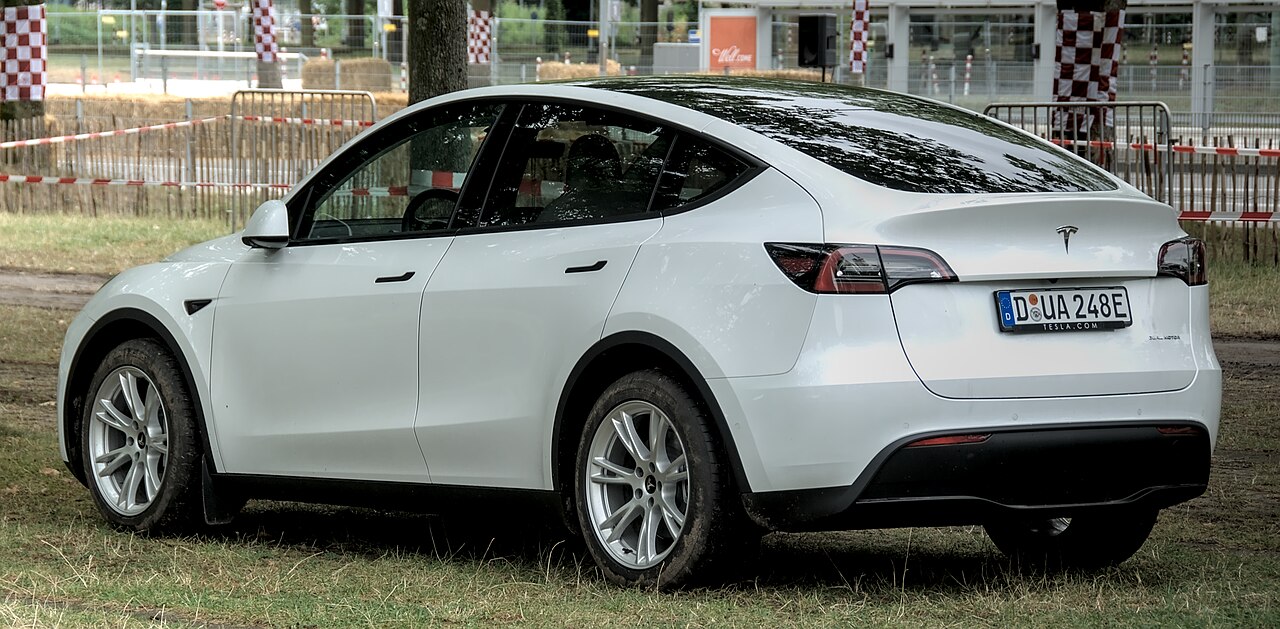
Here’s the short version: federal regulators want to know why the emergency door release in your 2022 Tesla Model 3 is so hard to find when the power goes out. If you own one of these cars, that’s not a press-release problem. That’s a get-out-of-the-car problem.
On December 23, 2025, NHTSA’s Office of Defects Investigation opened a defect petition — designated DP25002 — covering roughly 179,071 model-year 2022 Model 3 sedans. It was announced the next day, December 24, 2025.
What the filing actually says is wrong
The Model 3 opens its doors electronically. You press a button and a motor releases the latch. That works fine right up until it doesn’t — namely when the car loses power. After a crash, or a fire, or an electrical fault, those electronic handles can stop functioning.
Every one of these cars has a mechanical backup. A manual release you’re supposed to pull to pop the door open by hand, no electricity required. The petition’s whole argument is about that backup. NHTSA says the manual release on the 2022 Model 3 is hidden, unlabeled, and not intuitive to locate in an emergency, especially after a power loss when the electronic handles are dead.
Think about what that means in the real world. You’re rattled after a crash. Maybe there’s smoke. Maybe you’re a bystander or a firefighter trying to get someone out from the outside. The electronic button does nothing. The one control that will actually open the door is tucked somewhere you can’t see, with no marking to tell you what it is or which way to pull. Seconds matter in a post-crash fire, and the filing points to exactly that scenario — occupants or rescuers unable to open the doors quickly enough to get out or pull someone out.
The petition is tied to at least one injury incident. That’s what pushed this from a complaint into an open federal review.
Where this stands right now
This is a defect petition, not a recall. Nobody has ordered Tesla to fix anything yet. What happened is that NHTSA agreed there’s enough here to formally investigate. That’s the step that comes before a possible recall — the government looking under the hood, gathering data, and deciding whether the design creates an unreasonable safety risk.
The scope right now is the 2022 model year, about 179,071 cars. According to Electrek, the probe followed reports connected to deaths, and Jalopnik, citing Reuters, reported the same regulatory attention landing on how these doors operate. What the investigation concludes, and whether it grows or leads to a recall, is not settled. When an outcome exists, it’ll come through NHTSA — not a headline.
What this means if you own one
-
Find your manual release before you ever need it. This is the single most useful thing you can do today. Sit in every seat — driver, passenger, both rears — and physically locate the mechanical door release for each door. The whole point of the petition is that it’s hard to find under stress. Take the stress out of it by knowing exactly where it is and how it moves. Rear doors on some Teslas don’t have an obvious manual release at all, so check.
-
Teach everyone who rides in the car. Your spouse, your kids old enough to understand, anyone who regularly sits in back. If the power’s out and you’re not the one conscious, someone else needs to know how to get the door open.
-
Run your VIN and check for status changes. Right now this is an open petition, DP25002, not a recall on your specific car. But that can change. Check your VIN against NHTSA’s recall lookup periodically, and keep an eye on the 2022 Tesla Model 3 hub for updates as this investigation moves.
-
Document anything you experience. If your electronic handles ever fail, if a door won’t open, if you have any incident where getting out was harder than it should have been — write it down with the date, and file a complaint with NHTSA. Petitions like this one get opened because owners reported problems. Your report becomes part of the record.
-
Know how a recall would work if one comes. If NHTSA’s investigation ends in a recall, the fix — whatever it turns out to be — has to be free to you. That’s federal law on safety recalls. You don’t pay to have a safety defect corrected. Don’t let anyone tell you otherwise.
The honest take
Don’t panic, but don’t shrug either. The manual release in your car works. It’s there, it functions, and once you know where it is, this whole issue shrinks down to something you’ve already handled. The problem NHTSA is chasing isn’t that the release doesn’t exist — it’s that people can’t find it when their lives depend on it. That’s a design-and-labeling question the government now gets to answer.
Until they do, the responsibility falls on you to know your own car. Spend ten minutes finding every manual release and showing the people who ride with you. That’s a free fix you can do this afternoon, and it beats learning where the release is for the first time in the dark with smoke in the cabin.
I’ll update as DP25002 develops.