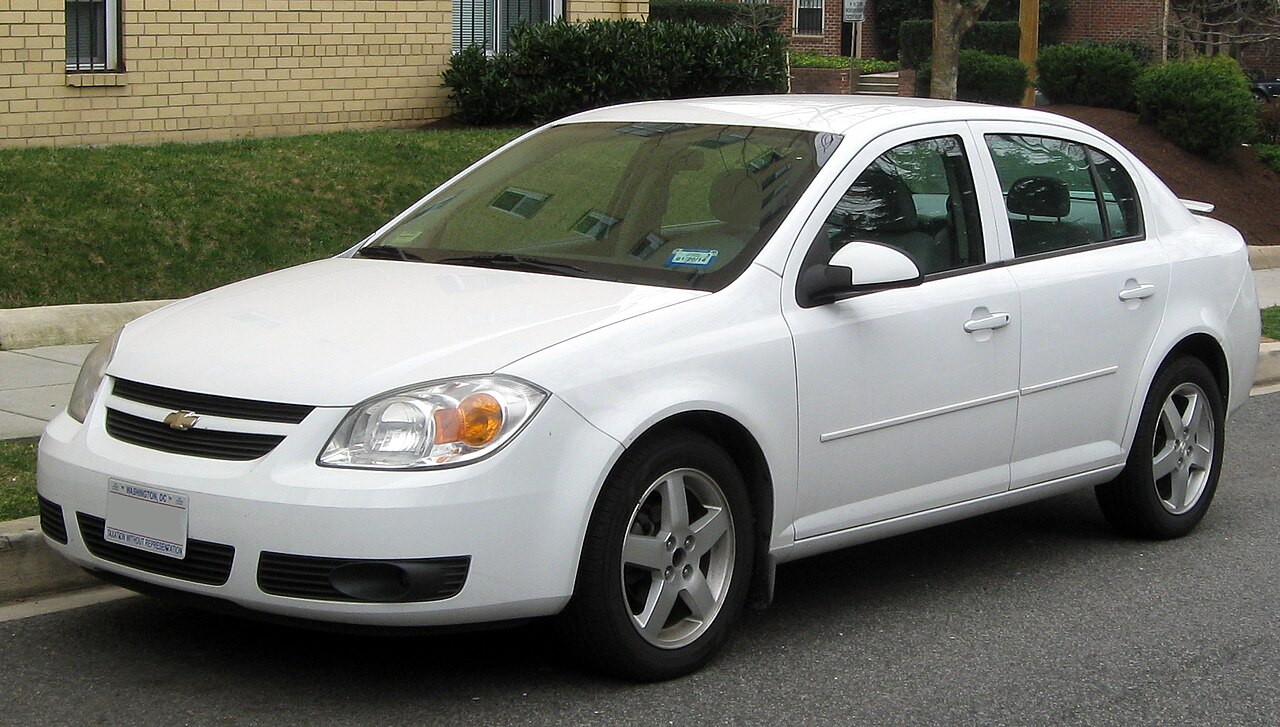
The 2006 Chevrolet Cobalt has 2,330 NHTSA owner complaints and 6 recalls on file (U.S. federal records, as of September 2026). The most-reported system is steering at 1,291 complaints, typically surfacing around 71,398 miles (~$700 to repair). Source: NHTSA Office of Defects Investigation.
The problems owners report most, open recalls, and the mileage where failures cluster — straight from the NHTSA record, in seconds.
Reliability score
5.0 / 10
Below average for the segment. Multiple systems have recurring complaints.
0
Critical
6
Severe
0
Moderate
Should you avoid this 2006 Cobalt?
Avoid — the steering
The data says walk unless this exact vehicle has documented proof the steering was repaired or replaced.
3 fatality reports and 4 fire-related complaints on the steering
Electrical system: 229 complaints, classified critical, failures cluster 50,125–115,000 mi
Reliability score 5.0/10 — around the segment average
6 recall campaigns on file
Our read of the federal NHTSA complaint and recall record for this exact year and model —
not a substitute for a pre-purchase inspection. How we score.
Buying a used 2006 Chevrolet Cobalt? Check these first
Here's what this model is known to do — so you can inspect for it, price it in, or
make the seller fix it before you sign.
What to inspect on this specific car
steering — 1291 owner reports
· tends to show around 71,398 mi · ~$700 to fix
electrical — 229 owner reports
· tends to show around 85,292 mi · ~$850 to fix
fuel system — 205 owner reports
· tends to show around 78,607 mi · ~$1,200 to fix
powertrain — 85 owner reports
· tends to show around 66,012 mi · ~$2,500 to fix
⚠ The one to take seriously: steering is flagged
critical on this model
, showing up around 71,398 mi.
Inspect it closely on a test drive.
Recalls to confirm are done
Run the VIN from the listing — 6 active recalls on this model. Recall repairs are always free.
Verdict for buyers: 5.0/10 model. The priciest documented failure is
engine (~$3,100) — get the
seller's service records for it or inspect closely. Otherwise an average-risk used buy at a fair price.
We tell you what this model is known for and what to inspect — a vehicle-history report
tells you what this exact car has been through. Smart buyers get both.
A noise, a warning light, a repair quote, "should I buy this?" — get an answer grounded in
this vehicle's actual NHTSA record, not generic advice.
Dash light, leak, worn part — snap it and we'll read it against this car's record.
Photo attached — type a question or just hit Ask.
Answers use this vehicle's NHTSA complaint & recall record — owner-reported and unverified, not a diagnosis. Verify anything safety-critical with a mechanic.
Embed this reliability snapshot
Free to use on your site, post, or video — just keep the "Source" credit line below the chart. Preview the widget →
When owners report each system failing, in actual miles — so you can see what's likely behind you,
what's due around now, and what to budget for next. Enter your mileage to mark where you are.
"Typical" = median owner-reported failure mileage from the NHTSA complaint record for this exact
year and model. Not a maintenance schedule — a heads-up on where this model's failures cluster.
What owners are saying
recent NHTSA-filed complaints · verbatim
2006 Cobalt· engine
Tl* the contact owns a 2006 Chevrolet cobalt. While driving approximately 50 MPH, the engine stalled. The vehicle was not able to restart. The vehicle was towed to a mechanic where it was diagnosed that the timing belt needed to be replaced. The vehicle was not repaired. The…
I have had alot of problems with my car, 1st my radio went out, it just went out and it would only work when I held the power button down and there were always things flashing on the screen, so after a few weeks of this happening my car wouldn't start, I would get it jumped and…
Tl*the contact owns a 2006 Chevrolet cobalt. The contact noticed issues with the power steering in her vehicle. While driving 20 MPH, the power steering would function for approximately .2 miles and then fail. She attempted to turn off the vehicle and restart it, but the…
2006 Chevy cobalt loses power steering while driving. I had just gotten off the highway and my car lost all power steering. Took it to a shop the next day and they said there was a bulletin out that these electric motors can overheat if you car sits idle for too long or you…
Had a problem with your 2006 Chevrolet Cobalt?
File a complaint with NHTSA → It's free and official — owner filings are what build the federal safety record behind this page.
Estimate your repair exposure
Drag to your current mileage. Numbers are derived from this vehicle's complaint history.
UCI-FRAM Group is recalling certain LS1328 ignition Switches sold as Wells LS1328, Duralast LS1328, Airtex 1S6097, and Carquest 53-27479, and LS1497 Ignition Switches sold as Wells LS1497, Duralast LS1497, Airtex 1S10961, and Carquest 53-27967, for use on various General Motors model and model year vehicles during repair and replacement of the original ignition switch
If the ignition switch moves from the run position to accessory, the car would stall and the air bags will not deploy in the event of a crash, increasing the risk of personal injury to the occupants.
Fix: UCI-FRAM Group has notified its purchasers to quarantine and return all inventory. Any switches already installed in vehicles will be replaced by GM dealers as part of NHTSA recall 14V-047, free of charge. UCI-Fram's purchasers should contact UCI-FRAM Group at 1-800-890-2075. GM vehicle owners requiring additional information on that recall campaign should contact GM at 1-800-222-1020 (Chevrolet), 1-800-762-2737 (Pontiac) or 1-800-553-6000 (Saturn).
General Motors LLC (GM) is recalling certain model year 2005-2010 Chevrolet Cobalt, 2006-2011 Chevrolet HHR, 2007-2010 Pontiac G5, 2006-2010 Pontiac Solstice, 2003-2007 Saturn Ion, and 2007-2010 Saturn Sky vehicles
If the key can be removed from the ignition when the ignition is not in the "off" position, the vehicle could roll away: (a) for an automatic transmission, if the transmission is not in the "Park" position; or (b) for a manual transmission, if the parking brake is not engaged and the transmission is not in the "Reverse" position. This potential for rollaway increases the risk for a crash and occupant or pedestrian injuries.
Fix: General Motors will notify owners, and for vehicles that were built with the defective ignition cylinder and have not
previously had the ignition cylinder replaced with the redesigned part, dealers will replace the ignition cylinder and cut and, if necessary, re-learn two ignition/door keys for each vehicle. For vehicles that were built with the redesigned ignition cylinder or had the ignition cylinder replaced with the redesigned part, dealers will cut and, if necessary, re-learn two ignition/door keys for each vehicle. The recall began on April 18, 2014. Chevrolet owners may contact General Motors at 1-800-222-1020, Pontiac owners at 1-800-762-2737, and Saturn owners at 1-800-553-6000. General Motors' number for this recall is 14113 for the ignition lock cylinder and key replacement, and 14133 for only key replacements. Note: Until a vehicle has been remedied, owners and operators are advised that when exiting, to be sure that the vehicle is in "Park," or in the case of a manual transmission, that the vehicle is in the "Reverse" position and the parking brake is engaged.
This defect can affect the safe operation of the airbag system
If the key is not in the run position, the air bags may not deploy if the vehicle is involved in a crash, increasing the risk of injury.
Fix: GM will notify owners, and dealers will replace the ignition switch, free of charge. An interim notification was issued to owners of 2007 and earlier models on March 10, 2014, informing them of the safety defect. Owners of 2008 and later vehicles will be mailed an interim letter on April 21, 2014. All affected owners will receive another letter once parts are available. The recall began on April 18, 2014. Owners may contact Chevrolet at 1-800-222-1020, Pontiac at 1-800-762-2737 or Saturn at 1-800-553-6000. GM's number for the initial recall is 13454 and 14063 for the expansion. GMs recall number for the vehicles that may have received the replacement parts is 14092. Note: Until the recall repairs have been performed, it is very important that customers remove all items from their key rings, leaving only the vehicle key. The key fob (if applicable), should also be removed from the key ring. Always wear your seatbelt.
It's got known weak points. With a reliability score of 5.0 out of 10 based on 2,330 owner complaints filed with NHTSA, the 2006 Chevrolet Cobalt has a higher-than-average rate of reported issues. The areas to watch are listed above. Whether it's worth owning depends on price, condition, and how much repair exposure you can absorb.
Should you avoid the 2006 Chevrolet Cobalt?
On the NHTSA data, the 2006 Chevrolet Cobalt is one to avoid unless a specific vehicle proves otherwise. The data says walk unless this exact vehicle has documented proof the steering was repaired or replaced. The record behind that call: 3 fatality reports and 4 fire-related complaints on the steering; Electrical system: 229 complaints, classified critical, failures cluster 50,125–115,000 mi; Reliability score 5.0/10 — around the segment average; 6 recall campaigns on file. This is our read of the federal complaint and recall data — not a substitute for a pre-purchase inspection.
What should I check before buying a used 2006 Chevrolet Cobalt?
Inspect the steering first — it's the most-reported issue on this model, with 1,291 owner complaints filed. Typical failure occurs around 71,398 miles. Average repair cost runs about $700 at an independent shop. Also confirm any open recalls have been completed by running the VIN, and ask for service records covering the problem areas listed above.
Is the 2006 Chevrolet Cobalt a good used car to buy?
It scores 5.0 out of 10 on our NHTSA-based read of 2,330 owner complaints. The main thing to watch is steering. Typical failure occurs around 71,398 miles. Priced fairly and clean on inspection, it's a reasonable used buy. Our data covers what this model is known for — pair it with a vehicle-history report on the VIN to see what that specific car has been through.
What's the most common problem on the 2006 Chevrolet Cobalt?
Based on NHTSA records, the most-reported issue is steering, with 1,291 complaints filed. Typical failure occurs around 71,398 miles. Average repair cost runs about $700 at an independent shop.
What's the most expensive thing that goes wrong?
The steering is one of the costlier repair items. Average repair cost runs about $700 at an independent shop. Typical failure occurs around 71,398 miles. Catching early warning signs can sometimes extend life by 20–30,000 miles.
How do I check if my Chevrolet Cobalt has open recalls?
Paste your VIN into the decoder at the top of this page. We pull live from NHTSA, so you'll see exactly which campaigns apply to your vehicle and whether the dealer has logged the fix. Recall repairs are always free regardless of mileage or warranty status.
Is an extended warranty worth it on a 2006 Chevrolet Cobalt?
Math is straightforward: a quality service contract runs $1,800–3,500 over 3 years. With 2,330 complaints on file and the costliest repair averaging $700, one major failure more than pays for it. The catch is reading the contract — many providers exclude wear items and require pre-authorization, so cheaper plans are not always better value.
Recall and complaint data sourced from the National Highway Traffic Safety Administration (NHTSA)
public records database, last synced 21 hours ago. Verify the raw federal record at
nhtsa.gov/vehicle/2006/Chevrolet/Cobalt.
Editorial commentary written by ProblemsByVin contributors and reviewed by ASE-certified mechanics.
We are not affiliated with Chevrolet. Some links on this page are affiliate links and we
may earn a commission if you purchase through them.