Free. Instant. No signup. Pulls recalls and complaints for your exact vehicle.
Couldn't find that VIN. Check the digits and try again.
ProblemsByVinFile / 2017-HONDA-RIDGELINENHTSA data synced 12 hours ago
Honda
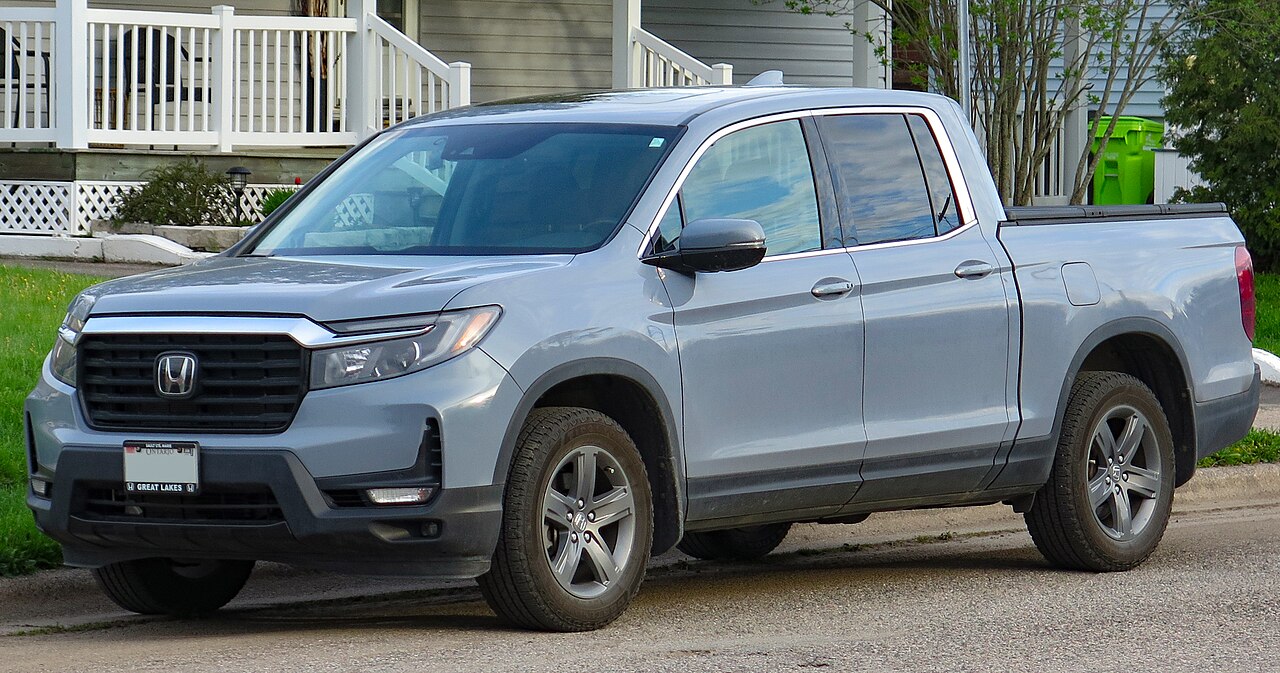
2017 Honda Ridgeline problems
The 2017 Honda Ridgeline has 337 NHTSA owner complaints and 9 active recall campaigns on file. Here's the breakdown — what's serious, what's noise, and what a working mechanic would actually do about it.
The 2017 Honda Ridgeline has 337 NHTSA owner complaints and 9 recalls on file (U.S. federal records, as of September 2026). The most-reported system is electrical at 83 complaints (~$850 to repair). Source: NHTSA Office of Defects Investigation.
Below average for the segment. Multiple systems have recurring complaints.
0
Critical
9
Severe
0
Moderate
Should you avoid this 2017 Ridgeline?
Acceptable — with caveats
Worth owning if you verify the specific issues below before you buy.
Engine: 71 complaints, classified severe
Reliability score 5.4/10 — around the segment average
9 recall campaigns on file
Our read of the federal NHTSA complaint and recall record for this exact year and model —
not a substitute for a pre-purchase inspection. How we score.
NHTSA crash-test safety ratings
5 / 5 overall
Overall★★★★★5/5
Frontal crash★★★★★5/5
Side crash★★★★★5/5
Rollover★★★★★4/5
Driver-assist features on the tested model:
Electronic stability control: Standard · Forward collision warning: Optional · Lane departure warning: Optional
Source: NHTSA New Car Assessment Program — tested configuration: 2017 Honda Ridgeline PU/CC AWD. Stars rate crash protection in NHTSA's tests, not overall reliability — see the owner-complaint data below for what actually goes wrong.
Buying a used 2017 Honda Ridgeline? Check these first
Here's what this model is known to do — so you can inspect for it, price it in, or
make the seller fix it before you sign.
What to inspect on this specific car
electrical — 83 owner reports
· ~$850 to fix
engine — 71 owner reports
· ~$3,100 to fix
powertrain — 41 owner reports
· ~$2,500 to fix
visibility — 12 owner reports
· ~$350 to fix
⚠ The one to take seriously: engine is flagged
severe on this model
.
Inspect it closely on a test drive.
Recalls to confirm are done
Run the VIN from the listing — 9 active recalls on this model. Recall repairs are always free.
Verdict for buyers: 5.4/10 model. The priciest documented failure is
engine (~$3,100) — get the
seller's service records for it or inspect closely. Otherwise an average-risk used buy at a fair price.
We tell you what this model is known for and what to inspect — a vehicle-history report
tells you what this exact car has been through. Smart buyers get both.
A noise, a warning light, a repair quote, "should I buy this?" — get an answer grounded in
this vehicle's actual NHTSA record, not generic advice.
Dash light, leak, worn part — snap it and we'll read it against this car's record.
Photo attached — type a question or just hit Ask.
Answers use this vehicle's NHTSA complaint & recall record — owner-reported and unverified, not a diagnosis. Verify anything safety-critical with a mechanic.
Embed this reliability snapshot
Free to use on your site, post, or video — just keep the "Source" credit line below the chart. Preview the widget →
While driving the road departure mitigation system problem lights come on anit lock brake system problem lights come on collision avoidance lights come on the lights all flash on and off and the issue is intermittent the steering wheel is jerked out of your hand if you…
Have taken in a few times for engine knocking, Honda has down oil changes and reported noise is normal but is getting louder, purchased extended warranty from Honda dealer. Also had at Honda for oil and filter change a month ago, they also were supposed to have completed the…
2 weeks ago multiple warning lights came on when I started the vehicle (power steering, vehicle stability assist, hill start assist, trailer stability assist, emission control, etc.). At the same time the vehicle's performance became sluggish. Acceleration, shifting and braking…
Had a problem with your 2017 Honda Ridgeline?
File a complaint with NHTSA → It's free and official — owner filings are what build the federal safety record behind this page.
Estimate your repair exposure
Drag to your current mileage. Numbers are derived from this vehicle's complaint history.
American Honda Motor Company (Honda) is recalling certain 2016-2022 Honda Pilot, 2017-2023 Ridgeline, 2019-2023 Passport, and 2014-2020 Acura MDX vehicles that were sold in Connecticut, Delaware, District of Columbia, Illinois, Indiana, Iowa, Kentucky, Maine, Maryland, Massachusetts, Michigan, Minnesota, Missouri, New Hampshire, New Jersey, New York, Ohio, Pennsylvania, Rhode Island, Vermont, Virginia, West Virginia, or Wisconsin
Failure of rear suspension components, such as the rear control arm, can cause a loss of vehicle handling and control, increasing the risk of a crash or injury.
Fix: Dealers will inspect the rear subframe and install a rear subframe reinforcement kit and, as necessary, repair or replace the rear subframe components, free of charge. Interim letters notifying owners of the safety risk were mailed July 27, 2026. Additional letters will be sent once the final remedy is available, anticipated in the fall of 2026. Owners may contact Honda's customer service at 1-888-234-2138. Honda's numbers for this recall are AOU and AOT. Vehicle Identification Numbers (VINs) involved in this recall will become searchable on NHTSA.gov beginning June 10, 2026.
Air bags that deploy unintentionally during a crash increase the risk of injury.
Fix: Dealers will replace the seat weight sensors, free of charge. Owner notification letters were mailed July 7, 2026. Owners may contact Honda's customer service at 1-888-234-2138. Honda's numbers for this recall are BOL, WO9, OOA, WOM, XOH, NOC, POD, BOE, UOF, POB, EOG, AOI, QO8, TOJ, DO7, and SOK. This recall expands previous NHTSA recall number 24V064. Vehicle Identification Numbers (VINs) involved in this recall will be searchable on NHTSA.gov beginning May 29, 2026.
Fuel pump failure can cause an engine stall while driving, increasing the risk of a crash.
Fix: Dealers will replace the fuel pump module, free of charge. Owner letters were mailed September 6, 2024. Owners may contact Honda customer service at 1-888-234-2138. Honda's numbers for this recall are KGC and KGD. This recall is an expansion of NHTSA recall numbers 21V-215 and 20V-314.
It's got known weak points. With a reliability score of 5.4 out of 10 based on 337 owner complaints filed with NHTSA, the 2017 Honda Ridgeline has a higher-than-average rate of reported issues. The areas to watch are listed above. Whether it's worth owning depends on price, condition, and how much repair exposure you can absorb.
Should you avoid the 2017 Honda Ridgeline?
The 2017 Honda Ridgeline is acceptable, with specific caveats. Worth owning if you verify the specific issues below before you buy. The record behind that call: Engine: 71 complaints, classified severe; Reliability score 5.4/10 — around the segment average; 9 recall campaigns on file. This is our read of the federal complaint and recall data — not a substitute for a pre-purchase inspection.
What should I check before buying a used 2017 Honda Ridgeline?
Inspect the electrical first — it's the most-reported issue on this model, with 83 owner complaints filed. Average repair cost runs about $850 at an independent shop. Also confirm any open recalls have been completed by running the VIN, and ask for service records covering the problem areas listed above.
Is the 2017 Honda Ridgeline a good used car to buy?
It scores 5.4 out of 10 on our NHTSA-based read of 337 owner complaints. The main thing to watch is electrical. Priced fairly and clean on inspection, it's a reasonable used buy. Our data covers what this model is known for — pair it with a vehicle-history report on the VIN to see what that specific car has been through.
What's the most common problem on the 2017 Honda Ridgeline?
Based on NHTSA records, the most-reported issue is electrical, with 83 complaints filed. Average repair cost runs about $850 at an independent shop.
What's the most expensive thing that goes wrong?
The electrical is one of the costlier repair items. Average repair cost runs about $850 at an independent shop. Catching early warning signs can sometimes extend life by 20–30,000 miles.
How do I check if my Honda Ridgeline has open recalls?
Paste your VIN into the decoder at the top of this page. We pull live from NHTSA, so you'll see exactly which campaigns apply to your vehicle and whether the dealer has logged the fix. Recall repairs are always free regardless of mileage or warranty status.
Is an extended warranty worth it on a 2017 Honda Ridgeline?
Math is straightforward: a quality service contract runs $1,800–3,500 over 3 years. With 337 complaints on file and the costliest repair averaging $850, one major failure more than pays for it. The catch is reading the contract — many providers exclude wear items and require pre-authorization, so cheaper plans are not always better value.
Recall and complaint data sourced from the National Highway Traffic Safety Administration (NHTSA)
public records database, last synced 12 hours ago. Verify the raw federal record at
nhtsa.gov/vehicle/2017/Honda/Ridgeline.
Editorial commentary written by ProblemsByVin contributors and reviewed by ASE-certified mechanics.
We are not affiliated with Honda. Some links on this page are affiliate links and we
may earn a commission if you purchase through them.