Ford recalls vehicles for seat belt pretensioner that can lock and fail to restrain occupants
A belt that cannot restrain an occupant increases the risk of injury in a crash.
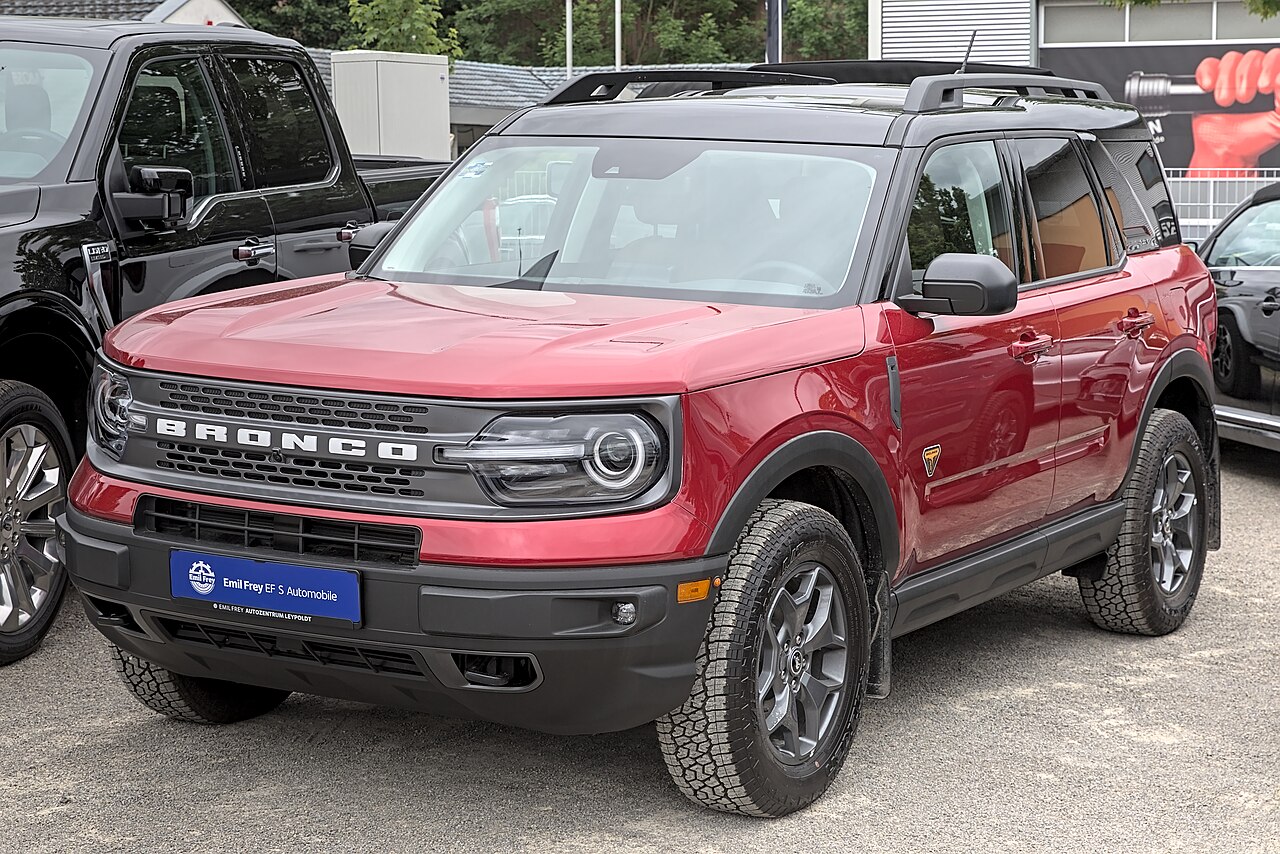
Here’s the short version: your seat belt is supposed to give and take. It lets you lean forward to grab your coffee, then locks up hard when you slam the brakes. On some 2022 Ford Broncos, that give-and-take can quit working — the belt locks and stays locked, and a belt that can’t move can’t do its job.
Ford has recalled 2022 Bronco vehicles under NHTSA campaign 26V344. The filing covers 419,967 vehicles, which makes it the largest of several Ford campaigns filed in early June 2026.
What actually fails
There’s a part in your seat belt called a pretensioner. In a crash, it snaps the belt tight to pull you back into the seat before you can pitch forward. The rest of the time, the belt system is designed to feed out and retract smoothly so the belt stays snug against you without fighting you.
On the affected Broncos, the pretensioner on the driver or front-passenger belt can lock the belt so it will not retract or extend. Once it’s locked like that, the belt can’t properly restrain the occupant.
Think about what that means in practice. A belt that won’t extend might not let you buckle in the way you need to. A belt that won’t retract sits loose against your body. Either way, in a crash the belt isn’t doing what it was engineered to do, and that raises your risk of injury. That’s the whole point of the recall.
What the filing says
The specifics from NHTSA are straightforward. The defect is a seat belt pretensioner that can lock the front belts. The consequence is a belt that cannot restrain an occupant, which increases the risk of injury in a crash.
Campaign 26V344 was filed between June 1 and June 16, 2026. It was one of several Ford campaigns that came out in that early-June window, and at nearly 420,000 vehicles, it was the biggest of the bunch.
What this means if you own one
If you’ve got a 2022 Bronco in the driveway, here’s how to handle it without guessing.
-
Run your VIN. Go to the NHTSA recall lookup and enter your 17-digit VIN, or check with a Ford dealer. A recall covering this many vehicles doesn’t mean every single Bronco is affected — the VIN tells you whether yours is on the list. You can also read up on the vehicle at the 2022 Ford Bronco hub.
-
Pay attention to how your belts behave. If your driver or front-passenger belt won’t pull out normally, or won’t retract and take up slack, that’s the exact symptom described in the filing. Don’t shrug it off as the belt being finicky. That’s the failure the recall is about.
-
Get the recall repair done — it’s free. Federal law requires the automaker to fix a safety recall at no charge to you. You don’t pay for parts or labor. If a dealer tries to charge you for the recall work, that’s not how it works. Push back.
-
Watch for your notification, but don’t just sit on your hands. Recall letters go out by mail. If your VIN comes back affected and you haven’t gotten a letter yet, you can still call a dealer to ask about parts and scheduling. There’s no reason to drive around waiting on an envelope when a safety restraint is involved.
-
Document everything. Keep your recall letter, any dealer paperwork, and notes on when you noticed a belt acting up. If you ever have a dispute over the repair, that paper trail is what backs you up.
The honest take
A seat belt is the one piece of safety equipment in your vehicle that does its job every single day, whether you crash or not. When the part that’s supposed to tighten it up instead locks it into place, you’ve lost the thing that’s meant to catch you. That’s why a recall like this matters more than a lot of the ones you see.
The good news is this is a defined defect with a free fix, and Ford has flagged it through NHTSA. If your VIN comes up in campaign 26V344, treat it like the priority it is — get it scheduled, get it done, and don’t let a front belt keep locking up in the meantime.
Source: How-To Geek, citing NHTSA.