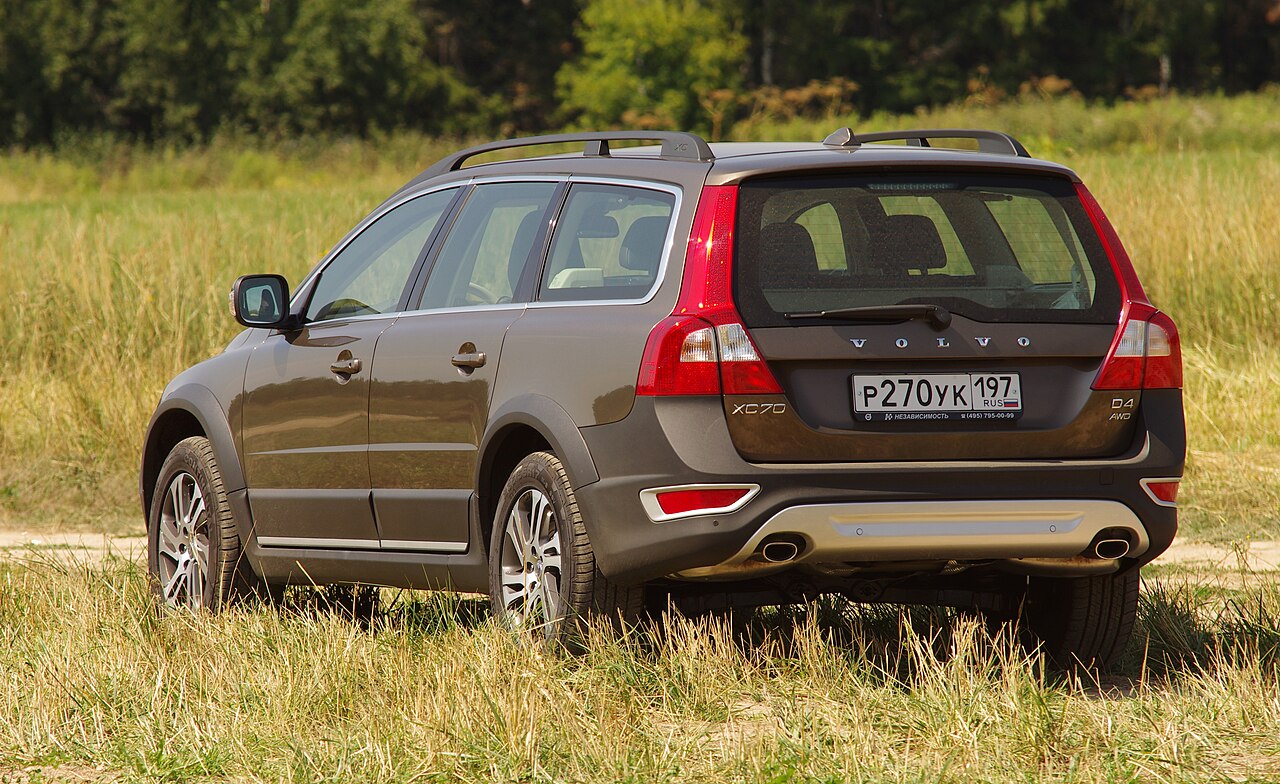
The 2010 Volvo XC70 has 15 NHTSA owner complaints and 5 recalls on file (U.S. federal records, as of September 2026). The most-reported system is powertrain at 3 complaints, typically surfacing around 49,250 miles (~$2,500 to repair). Source: NHTSA Office of Defects Investigation.
Solid reliability overall. Common issues are concentrated in a few systems.
0
Critical
4
Severe
1
Moderate
Should you avoid this 2010 XC70?
Acceptable — with caveats
Worth owning if you verify the specific issues below before you buy.
Reliability score 7.8/10 — above the segment average
5 recall campaigns on file
Our read of the federal NHTSA complaint and recall record for this exact year and model —
not a substitute for a pre-purchase inspection. How we score.
Buying a used 2010 Volvo XC70? Check these first
Here's what this model is known to do — so you can inspect for it, price it in, or
make the seller fix it before you sign.
What to inspect on this specific car
powertrain — 3 owner reports
· tends to show around 49,250 mi · ~$2,500 to fix
wheels — 3 owner reports
· tends to show around 53,050 mi · ~$400 to fix
Recalls to confirm are done
Run the VIN from the listing — 5 active recalls on this model. Recall repairs are always free.
Verdict for buyers: 7.8/10 model. The priciest documented failure is
powertrain (~$2,500) — get the
seller's service records for it or inspect closely. Otherwise an average-risk used buy at a fair price.
We tell you what this model is known for and what to inspect — a vehicle-history report
tells you what this exact car has been through. Smart buyers get both.
A noise, a warning light, a repair quote, "should I buy this?" — get an answer grounded in
this vehicle's actual NHTSA record, not generic advice.
Dash light, leak, worn part — snap it and we'll read it against this car's record.
Photo attached — type a question or just hit Ask.
Answers use this vehicle's NHTSA complaint & recall record — owner-reported and unverified, not a diagnosis. Verify anything safety-critical with a mechanic.
Embed this reliability snapshot
Free to use on your site, post, or video — just keep the "Source" credit line below the chart. Preview the widget →
What owners are saying
recent NHTSA-filed complaints · verbatim
2010 XC70· engine
Our car has about 93,000 miles on it. Beginning at 60,000 miles, the car began to use an excessive amount of oil. The low oil indicator comes on and we need to add one or more quarts of oil at each 3,000 to 3,500 miles. The car dealer tells us it is "normal" for some cars to…
On two P3 Volvo cars I have owned now, the front passenger and driver side seatbelt release button sometimes does not release the seatbelt, this happens almost daily and requires the button to be forcibly pressed to release, more commonly on the passenger side. Additionally, on…
Tl* the contact owns a 2010 Volvo xc70. While driving approximately 80 MPH, the rear passenger side tire deflated suddenly. The vehicle was taken to the dealer for diagnostic testing. The technician advised the contact that all four valve stems were cracked and would have to be…
I would appreciate your deepest consideration for assistance with the problematic rear differential on the 2010 XC70 Volvo. I have spent considerable funds to maintain my vehicle at top working order through maintenance at Volvo. I have always asked the Volvo advisors for…
Had a problem with your 2010 Volvo XC70?
File a complaint with NHTSA → It's free and official — owner filings are what build the federal safety record behind this page.
Estimate your repair exposure
Drag to your current mileage. Numbers are derived from this vehicle's complaint history.
An unsecured occupant has an increased risk of injury in the event of a crash.
Fix: Volvo will notify owners, and dealers will replace the seat belt anchor cable for both front seats. The recall began December 10, 2020. Owners may contact Volvo customer service at 1-800-458-1552. Volvo's number for this recall is R10029.
Volvo is recalling certain vehicles equipped with garmin 760 portable global positioning system (GPS) units because the batteries on those units may overheat
An overheated battery could lead to a fire.
Fix: Volvo advises owners to please stop using the garmin portable GPS device immediately, and visit the garmin website to determine if their unit is affected. The unit's battery will be replaced with a new battery and a spacer will be inserted on top of the battery next to the pcb. This service will be performed free of charge. The safety recall began on november 18, 2010. Owners may contact garmin at 866-957-1981 or visit garmin's website at www.garmin.com/nuvibatterypcbrecall.
Volvo is recalling certain model year 2010-2011 s80, xc70, model year 2011 xc60 and model year 2010 v70 vehicles
In the event of a crash, the driver's frontal airbag may not deploy as intended or at all, and therefore will not be able to properly protect the driver, increasing the risk of injuries.
Fix: Dealers will install a metal shim in the driver's air bag clockspring wiring connector. This service will be performed free of charge. The safety recall began on october 20, 2010. Owners may contact Volvo at 1-800-458-1552.
Mostly yes. With a reliability score of 7.8 out of 10 based on 15 owner complaints filed with NHTSA, the 2010 Volvo XC70 is generally a sound vehicle. The areas to watch are listed in the top problem section above — most are budget items, not deal-breakers.
Should you avoid the 2010 Volvo XC70?
The 2010 Volvo XC70 is acceptable, with specific caveats. Worth owning if you verify the specific issues below before you buy. The record behind that call: Reliability score 7.8/10 — above the segment average; 5 recall campaigns on file. This is our read of the federal complaint and recall data — not a substitute for a pre-purchase inspection.
What should I check before buying a used 2010 Volvo XC70?
Inspect the powertrain first — it's the most-reported issue on this model, with 3 owner complaints filed. Typical failure occurs around 49,250 miles. Average repair cost runs about $2,500 at an independent shop. Also confirm any open recalls have been completed by running the VIN, and ask for service records covering the problem areas listed above.
Is the 2010 Volvo XC70 a good used car to buy?
It scores 7.8 out of 10 on our NHTSA-based read of 15 owner complaints. The main thing to watch is powertrain. Typical failure occurs around 49,250 miles. Priced fairly and clean on inspection, it's a reasonable used buy. Our data covers what this model is known for — pair it with a vehicle-history report on the VIN to see what that specific car has been through.
What's the most common problem on the 2010 Volvo XC70?
Based on NHTSA records, the most-reported issue is powertrain, with 3 complaints filed. Typical failure occurs around 49,250 miles. Average repair cost runs about $2,500 at an independent shop.
What's the most expensive thing that goes wrong?
The powertrain is one of the costlier repair items. Average repair cost runs about $2,500 at an independent shop. Typical failure occurs around 49,250 miles. Catching early warning signs can sometimes extend life by 20–30,000 miles.
How do I check if my Volvo XC70 has open recalls?
Paste your VIN into the decoder at the top of this page. We pull live from NHTSA, so you'll see exactly which campaigns apply to your vehicle and whether the dealer has logged the fix. Recall repairs are always free regardless of mileage or warranty status.
Is an extended warranty worth it on a 2010 Volvo XC70?
Math is straightforward: a quality service contract runs $1,800–3,500 over 3 years. With 15 complaints on file and the costliest repair averaging $2,500, one major failure more than pays for it. The catch is reading the contract — many providers exclude wear items and require pre-authorization, so cheaper plans are not always better value.
Recall and complaint data sourced from the National Highway Traffic Safety Administration (NHTSA)
public records database, last synced 1 day ago. Verify the raw federal record at
nhtsa.gov/vehicle/2010/Volvo/XC70.
Editorial commentary written by ProblemsByVin contributors and reviewed by ASE-certified mechanics.
We are not affiliated with Volvo. Some links on this page are affiliate links and we
may earn a commission if you purchase through them.