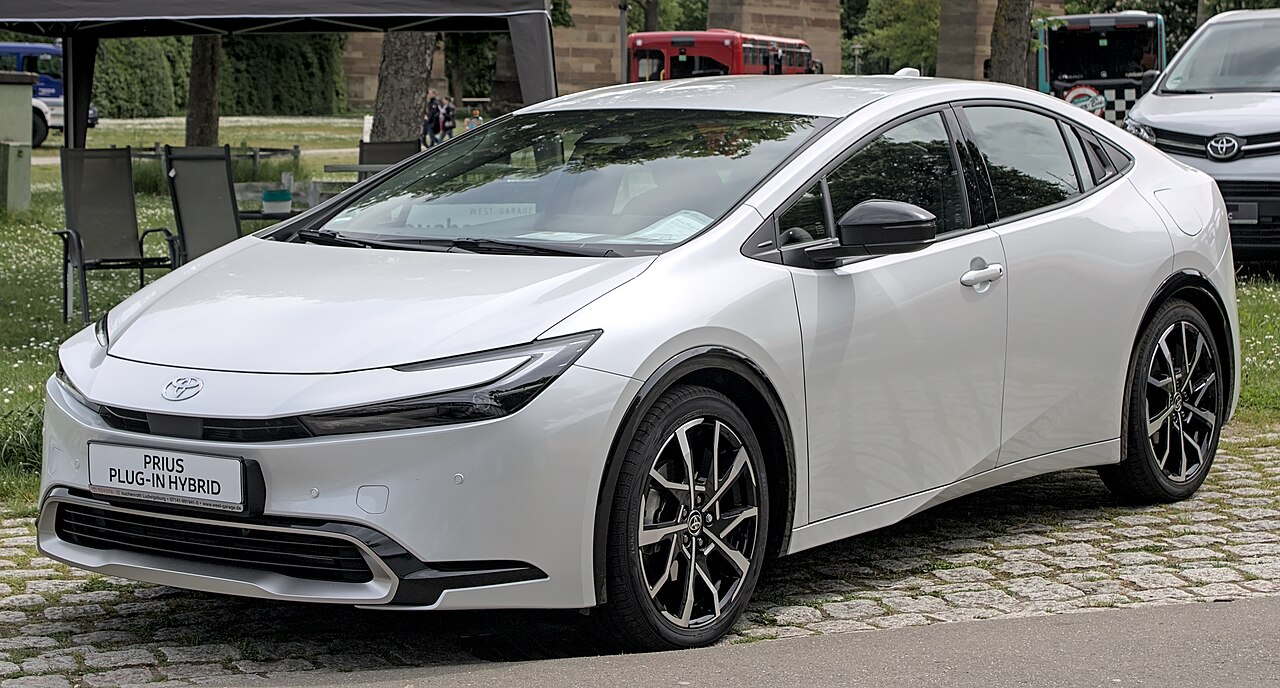
The 2012 Toyota Prius has 687 NHTSA owner complaints and 6 recalls on file (U.S. federal records, as of October 2026). The most-reported system is brakes at 290 complaints, typically surfacing around 94,033 miles (~$450 to repair). Source: NHTSA Office of Defects Investigation.
Average for the segment. Some recurring trouble spots worth knowing about.
0
Critical
6
Severe
0
Moderate
Should you avoid this 2012 Prius?
High-risk ownership
Repair exposure runs above average — only with money set aside and eyes open.
Electrical system: 79 complaints, classified severe, failures cluster 35,900–113,221 mi
Powertrain: 30 complaints, classified severe, failures cluster 14,000–85,000 mi
Reliability score 5.6/10 — around the segment average
6 recall campaigns on file
Our read of the federal NHTSA complaint and recall record for this exact year and model —
not a substitute for a pre-purchase inspection. How we score.
NHTSA crash-test safety ratings
5 / 5 overall
Overall★★★★★5/5
Frontal crash★★★★★4/5
Side crash★★★★★5/5
Rollover★★★★★4/5
Driver-assist features on the tested model:
Electronic stability control: Standard · Forward collision warning: No · Lane departure warning: No
Source: NHTSA New Car Assessment Program — tested configuration: 2012 Toyota Prius 5 HB FWD. Stars rate crash protection in NHTSA's tests, not overall reliability — see the owner-complaint data below for what actually goes wrong.
Buying a used 2012 Toyota Prius? Check these first
Here's what this model is known to do — so you can inspect for it, price it in, or
make the seller fix it before you sign.
What to inspect on this specific car
brakes — 290 owner reports
· tends to show around 94,033 mi · ~$450 to fix
electrical — 79 owner reports
· tends to show around 79,950 mi · ~$850 to fix
engine — 44 owner reports
· tends to show around 99,888 mi · ~$3,100 to fix
airbags — 40 owner reports
· tends to show around 35,671 mi · ~$1,100 to fix
⚠ The one to take seriously: electrical is flagged
severe on this model
, showing up around 79,950 mi.
Inspect it closely on a test drive.
Recalls to confirm are done
Run the VIN from the listing — 6 active recalls on this model. Recall repairs are always free.
Verdict for buyers: 5.6/10 model. The priciest documented failure is
engine (~$3,100) — get the
seller's service records for it or inspect closely. Otherwise an average-risk used buy at a fair price.
We tell you what this model is known for and what to inspect — a vehicle-history report
tells you what this exact car has been through. Smart buyers get both.
A noise, a warning light, a repair quote, "should I buy this?" — get an answer grounded in
this vehicle's actual NHTSA record, not generic advice.
Dash light, leak, worn part — snap it and we'll read it against this car's record.
Photo attached — type a question or just hit Ask.
Answers use this vehicle's NHTSA complaint & recall record — owner-reported and unverified, not a diagnosis. Verify anything safety-critical with a mechanic.
Embed this reliability snapshot
Free to use on your site, post, or video — just keep the "Source" credit line below the chart. Preview the widget →
<iframe src="https://problemsbyvin.com/embed/reliability/2012-toyota-prius/" width="100%" height="340" style="border:1px solid #e2e8f0;border-radius:8px;max-width:640px" title="2012 Toyota Prius reliability snapshot" loading="lazy"></iframe>
<p style="font:12px/1.5 system-ui,sans-serif;color:#64748b;max-width:640px;margin:6px 0 0">Source: <a href="https://problemsbyvin.com/2012-toyota-prius/" style="color:#b8540a;font-weight:600">2012 Toyota Prius reliability snapshot — ProblemsByVin</a></p>
Stories from the shop
The third-generation Prius (2010-2015) is the car people point to when they say Toyotas never break. It mostly earns that. But there’s one failure that runs through the whole generation, the 2012 included, and it’s the one most owners never see coming because it doesn’t announce itself until it’s expensive: the head gasket.
The 2012 Prius has nearly 700 NHTSA owner complaints. A meaningful share trace back to one chain of events in the 2ZR-FXE engine.
How it actually fails
It starts with the EGR system, not the gasket. The exhaust gas recirculation cooler and the intake manifold slowly clog with carbon — a normal byproduct of how this engine runs, accelerated by neglected oil. As the EGR passages choke, exhaust heat and flow get misdirected, localized temperatures climb, and the head gasket eventually lets go. Coolant gets where it shouldn’t, and now you’re looking at a head gasket job on a hybrid.
The important thing for a buyer: the third generation never got a fix for this. Toyota didn’t redesign it mid-generation. It was the fourth-generation Prius (2016+) that changed the EGR design and largely solved it. So a 2015 is no safer by design than a 2012 — it’s the same vulnerability with fewer years on it.
The good news is that this is a maintenance-neglect failure, not a random grenade. Kept ahead of, these engines go a very long way.
What you’ll see and hear
Coolant level dropping with no obvious external leak
Overheating, or temperature behaving oddly on longer drives
White smoke or a sweet smell
Combustion gases showing up in the coolant (a shop can test for this in minutes)
A rough cold idle or misfire as the EGR clog progresses
Should you buy one?
Yes — a 2012 Prius is still a genuinely good, durable, efficient car. But you buy it with this specific checklist:
Check the coolant for oil/contamination and ask about any overheating history. That’s the head gasket tell. Any “it ran hot once” story without a documented repair is a walk.
Ask whether the EGR cooler and intake manifold were ever cleaned. That’s the known preventive — it’s well-documented service-bulletin territory. Documented EGR service is a strong green flag. Never touched at high mileage means do it soon.
Keep the oil clean and changed on time. The carbon clog is fed by oil vapor; neglected oil accelerates the whole chain.
If you want the head gasket issue gone entirely, that’s a 2016+ fourth-gen — different EGR design. Otherwise, stay on top of the EGR and coolant on the third gen and it will go a long way.
The hybrid battery and the rest of the drivetrain on these are famously tough. This is one specific, preventable failure stacked on an otherwise excellent car — so the entire game is buying one with clean coolant and, ideally, documented EGR service. If you’re weighing one against a repair budget, the warranty calculator is worth a look, but honestly the bigger lever here is a pre-purchase coolant test and the EGR service record.
When owners report each system failing, in actual miles — so you can see what's likely behind you,
what's due around now, and what to budget for next. Enter your mileage to mark where you are.
"Typical" = median owner-reported failure mileage from the NHTSA complaint record for this exact
year and model. Not a maintenance schedule — a heads-up on where this model's failures cluster.
What owners are saying
recent NHTSA-filed complaints · verbatim
2012 Prius· electrical
While driving at night, all lights, especially red in color, which are viewed from front windshield, appear as three distinct images. The source light, then a distinct shadowed light above and below the source. This safety issue is extremely compounded when driving at night in…
The Brake Booster or Actuator is failing, without any indication or warning lights on the dash alarming us to the problem. The car has been making weird sounds, but after being inspected, this, according to the Authorized Toyota Dealer, on December 22, 2022, is a…
On 12/25/2021, I was driving in the country side under darkness and under heavy rain and I had a hard time seeing the road. There were no road lights so I could not make out where the divider, curve of the road or side of the road was. It was quite a safety hazards because cars…
It started with shaking on startup, idle and low speeds. Check engine light came on. Diagnosed with multiple cylinder misfire. Ignition coils replaced, but did not solve the problem. Subsequent analysis indicated coolant in the combustion chamber due to a failed head gasket.
Had a problem with your 2012 Toyota Prius?
File a complaint with NHTSA → It's free and official — owner filings are what build the federal safety record behind this page.
Estimate your repair exposure
Drag to your current mileage. Numbers are derived from this vehicle's complaint history.
Toyota Motor Engineering & Manufacturing (Toyota) is recalling certain 2010-2014 Toyota Prius and 2012-2014 Toyota Prius V vehicles
If the hybrid system shuts down unexpectedly, it can increase the risk of a crash.
Fix: Toyota will notify owners, and dealers will update the software for the motor/generator control electronic control unit (ECU) and the hybrid control ECU as necessary, free of charge. The recall began January 22, 2019. Owners may contact Toyota customer service at 1-888-270-9371. Toyota's number for this recall is J0V. Note: The software updates in this recall are needed even if the vehicle had the software previously updated under recalls 14V-053 or 15V-449.
Toyota Motor Engineering & Manufacturing (Toyota) is recalling certain model year 2010-2012 Toyota Prius, 2010 and 2012 Toyota Prius Plug-in Hybrid, and 2011-2012 Lexus CT200h vehicles
If either portion of the curtain shield air bag inflator ejects into the passenger cabin, there is an increased risk of injury to vehicle occupants.
Fix: Toyota will notify owners, and dealers will install retention brackets to the curtain shield air bags, free of charge. The recall began on October 17, 2016. Owners may contact Toyota Customer Service Department at 1-800-331-4331. Toyota's number for this recall is Toyota G0U, and Lexus GLJ.
Southeast Toyota Distributors, LLC (SET) is recalling certain 2005-2011 4Runner, Highlander, Sequoia, and Sienna, 2005-2010 Avalon and Tundra, 2006-2008 Camry Solara, 2006-2010 Highlander hybrid, 2006-2011 Rav4 and Tacoma, 2007-2010 FJ Cruiser, 2007-2011 Camry hybrid, 2009-2010 Venza, 2010-2012 Prius, 1988-1990 and 2005-2010 Camry, and 1989 and 2009-2010 Corolla vehicles equipped with aftermarket accessory seat heaters with a copper strand heating element
If damaged, the copper strand heating element may short circuit, increasing the risk of a fire.
Fix: SET will notify owners, and dealers will disconnect the seat heaters, free of charge, and refund the purchase price of the seat heater accessory. The recall began on July 14, 2016. Owners may contact SET customer service at 1-866-405-4226. SET number for this recall is SET16B.
It's got known weak points. With a reliability score of 5.6 out of 10 based on 687 owner complaints filed with NHTSA, the 2012 Toyota Prius has a higher-than-average rate of reported issues. The areas to watch are listed above. Whether it's worth owning depends on price, condition, and how much repair exposure you can absorb.
Should you avoid the 2012 Toyota Prius?
The 2012 Toyota Prius is a higher-risk ownership prospect. Repair exposure runs above average — only with money set aside and eyes open. The record behind that call: Electrical system: 79 complaints, classified severe, failures cluster 35,900–113,221 mi; Powertrain: 30 complaints, classified severe, failures cluster 14,000–85,000 mi; Reliability score 5.6/10 — around the segment average; 6 recall campaigns on file. This is our read of the federal complaint and recall data — not a substitute for a pre-purchase inspection.
What should I check before buying a used 2012 Toyota Prius?
Inspect the brakes first — it's the most-reported issue on this model, with 290 owner complaints filed. Typical failure occurs around 94,033 miles. Average repair cost runs about $450 at an independent shop. Also confirm any open recalls have been completed by running the VIN, and ask for service records covering the problem areas listed above.
Is the 2012 Toyota Prius a good used car to buy?
It scores 5.6 out of 10 on our NHTSA-based read of 687 owner complaints. The main thing to watch is brakes. Typical failure occurs around 94,033 miles. Priced fairly and clean on inspection, it's a reasonable used buy. Our data covers what this model is known for — pair it with a vehicle-history report on the VIN to see what that specific car has been through.
What's the most common problem on the 2012 Toyota Prius?
Based on NHTSA records, the most-reported issue is brakes, with 290 complaints filed. Typical failure occurs around 94,033 miles. Average repair cost runs about $450 at an independent shop.
What's the most expensive thing that goes wrong?
The steering is one of the costlier repair items. Average repair cost runs about $700 at an independent shop. Typical failure occurs around 72,096 miles. Catching early warning signs can sometimes extend life by 20–30,000 miles.
How do I check if my Toyota Prius has open recalls?
Paste your VIN into the decoder at the top of this page. We pull live from NHTSA, so you'll see exactly which campaigns apply to your vehicle and whether the dealer has logged the fix. Recall repairs are always free regardless of mileage or warranty status.
Is an extended warranty worth it on a 2012 Toyota Prius?
Math is straightforward: a quality service contract runs $1,800–3,500 over 3 years. With 687 complaints on file and the costliest repair averaging $700, one major failure more than pays for it. The catch is reading the contract — many providers exclude wear items and require pre-authorization, so cheaper plans are not always better value.
Recall and complaint data sourced from the National Highway Traffic Safety Administration (NHTSA)
public records database, last synced 1 day ago. Verify the raw federal record at
nhtsa.gov/vehicle/2012/Toyota/Prius.
Editorial commentary written by ProblemsByVin contributors and reviewed by ASE-certified mechanics.
We are not affiliated with Toyota. Some links on this page are affiliate links and we
may earn a commission if you purchase through them.