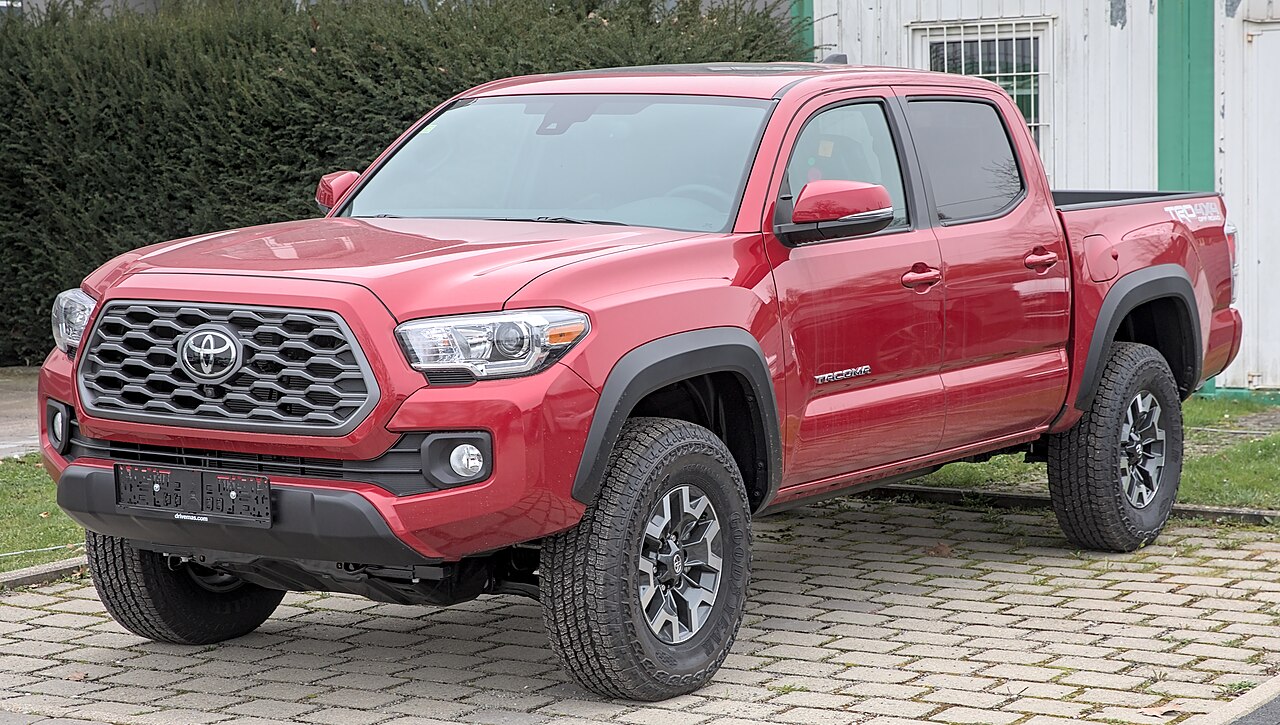
The Tacoma is a Toyota truck. People love these things. The reputation is — fairly — that you can drive a Tacoma into the ground and it just keeps running. Old 4-cylinder Tacomas from the 90s are still rolling around with 400,000 miles on them looking for the next shift.
But the 3rd-generation Tacoma — 2016 through 2023, the one with the 3.5L V6 and the new 6-speed automatic — has a problem that the Toyota faithful don’t wanna admit. The transmission in this truck is bad. Not “Nissan CVT bad,” not “Theta II bad,” but the real-world drivability is annoying enough that I see customers selling these trucks early because they can’t stand it.
The deal with the 6-speed
Toyota partnered with Aisin to develop a new 6-speed automatic for the Tacoma. The transmission is mechanically sound — solid hardware, good components, the unit itself doesn’t fail catastrophically often.
The problem is the software. Toyota tuned the transmission for fuel economy, which means it stays in the highest gear it can possibly get away with. So you’re driving 35 mph through Brooklyn, you tap the gas to merge, and the transmission has to think real hard about what to do. It might downshift. It might not. If it does, it drops two or three gears at once with a clunk. If it doesn’t, the engine bogs down and the truck feels like it’s pulling a trailer through wet sand.
Then the throttle response — Toyota added “throttle delay” to smooth shifts and improve EPA numbers, which translates to a noticeable lag between when you press the pedal and when the engine responds. On a sports car this would be a deal-breaker. On a truck people use to back trailers and navigate tight construction sites, it’s worse than a deal-breaker. It’s actively dangerous in some situations.
What you’ll feel
- Hesitation when pulling out from a stop, especially the first second after you press the gas
- Hard downshifts when accelerating, sometimes with a clunk
- Hunting between gears on hills (revving, then settling, then revving again)
- “Stuck in too high a gear” feeling at 40-55 mph
- Reluctance to drop into a lower gear for engine braking on downhills
- Sometimes a 1-2 shift flare or harshness when cold
These ain’t transmission failure symptoms. They’re “Toyota tuned the software wrong” symptoms. The transmission is doing exactly what Toyota told it to do. The owners just don’t want what Toyota told it to do.
Software updates and what they did
Toyota issued multiple TSBs (Technical Service Bulletins) with software updates for the transmission control module, claiming each one would improve the behavior. They did, marginally. The latest updates (2020-plus) are noticeably better than the original 2016 calibration. But even the latest version still has the basic problem — the truck wants to be in too high a gear too often.
If you’ve got a 2016-2018 Tacoma and the transmission’s annoying you, get the latest TCM software flash done at a Toyota dealer. It’s covered under warranty if you’re still in it, $130-180 if you’re out. It won’t fix everything. It’ll help.
The aftermarket fix
For owners who really can’t stand the behavior, there’s the OVTune calibration — a tuner who specifically targets the Tacoma transmission. About $400-600 for a Tacoma-specific calibration. Reflashes the TCM with custom shift logic that’s more responsive, less hesitant, less obsessed with hitting EPA fuel economy targets. Reviews are overwhelmingly positive. Most guys say the truck drives like a different vehicle after the tune.
You’re voiding the powertrain warranty on the transmission with this. So if you’ve got 30,000 miles left on warranty, maybe wait. If you’re past warranty already, the OVTune is the most-talked-about fix in Tacoma forums for a reason.
What you’ll see and hear (mechanically)
Beyond the software calibration issues, the 3rd-gen Tacoma has a couple other items worth knowing:
- Leaf spring rust on east coast trucks: The rear leaf springs on the 3rd-gen had a known rust issue similar to the older Tacomas. Toyota issued a service campaign on certain VINs. Check yours.
- Rear differential vent: Some Tacomas had a vent line route that allowed water intrusion into the diff during off-road use. Service bulletin for relocating the vent.
- Driveshaft carrier bearing: Around 80,000-120,000 miles, can develop a vibration. $200-400 part, $200 labor.
The 3.5L V6 engine itself (2GR-FKS, related to the 2GR-FE we talked about earlier but a different generation) is solid. Direct injection introduces some carbon buildup concerns, but nothing as bad as the VW we’ll talk about in a separate piece.
Should you buy one?
A 2016-2023 Tacoma is a yes if:
- You test drive long enough to confirm the transmission behavior is acceptable to you
- You’re willing to do the OVTune (or accept the stock behavior)
- You’re paying market price, not the inflated prices Toyota fans pay
- You actually need a midsize truck — these are expensive for what you get
If you can stretch budget, the 4Runner uses the same engine with a different (better-tuned) transmission and is honestly a better daily driver. The Tacoma earns its money off-road and as a “I want a truck but not a full-size” choice. For commuting, it’s annoying.
If you already own one:
- Get the latest TCM software flash done
- If still annoying after that, look at the OVTune (after warranty expires)
- Use Toyota WS automatic transmission fluid, no substitutes, change every 50,000 miles even though the dealer says “lifetime fill”
- Don’t tow at the max rated capacity — these trucks are rated optimistically and the transmission runs hot under heavy load
The Tacoma will run forever, mechanically. But the driving experience on the 3rd-gen is the worst of any modern Toyota truck. Toyota fixed most of this for the 4th-gen (2024+). If you’re shopping new, the 4th-gen is a substantially better truck. If you’re shopping used, factor the transmission annoyance into your offer.