2023 Hyundai Ioniq 5 Recalled Over Electrical System
A fire increases the risk of injury.
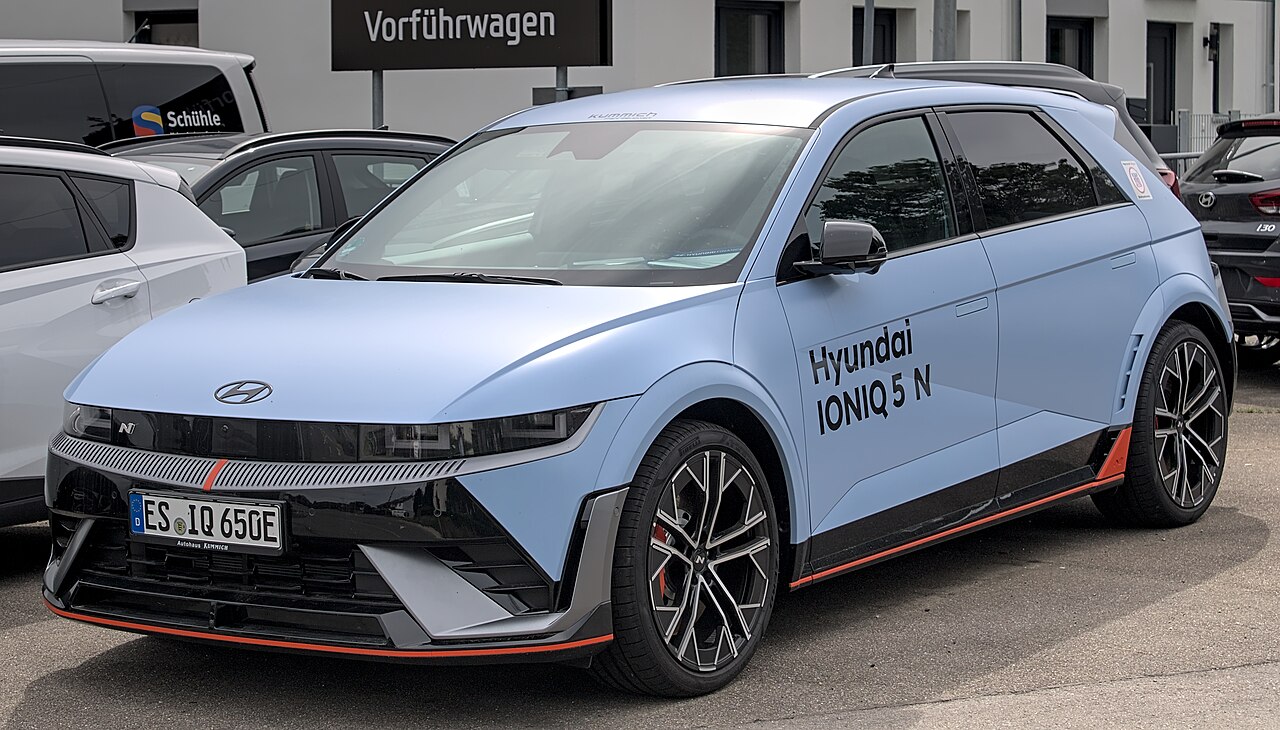
Here’s the short version: if you own a 2023 or 2024 Hyundai Ioniq 5, the battery under your floor could catch fire — parked in your garage or rolling down the highway. Hyundai has filed a recall, and the fix is a full battery replacement.
That’s not a nuisance recall. That’s a fire risk, and the automaker is telling owners to change how they park and charge until it’s fixed.
What’s actually going wrong
The problem is inside the high voltage traction battery — the big pack that powers the whole car. According to the filing, some of the battery cells may have misaligned electrodes.
Here’s what that means in plain terms. Inside a lithium battery cell, you’ve got layers that have to line up precisely. The positive and negative electrodes are separated by a thin barrier. When those electrodes sit where they’re supposed to, the cell charges and discharges cleanly. When they’re misaligned from the factory, you can get an internal short. An internal short in a high voltage cell builds heat, and heat in a lithium pack is how a thermal event — a fire — gets started.
The dangerous part is that it doesn’t wait for a crash. The filing says a fire can happen while the car is parked or while you’re driving. So this isn’t a “be careful in an accident” situation. The pack can go on its own.
The consequence, per NHTSA, is straightforward: a fire increases the risk of injury.
What the filing says
This is NHTSA campaign 26V432000. Hyundai received the recall on July 2, 2026, and VINs became searchable on NHTSA.gov on July 3, 2026.
The recall covers certain 2023-2024 Ioniq 5 vehicles. The affected count is small — just 6 vehicles. That’s not a typo. This is a tight, specific population, likely traced to a manufacturing issue in a limited batch of battery cells. A small number doesn’t make it less serious if yours is one of the six. A fire risk is a fire risk whether the recall covers six cars or six hundred thousand.
The remedy is a big one. Dealers will replace the entire high voltage battery system assembly, free of charge. That’s the most expensive component in the car, and Hyundai is covering it under the recall.
Until that repair is done, Hyundai is giving owners two interim instructions:
- Park outside, away from structures — so if a fire starts, it doesn’t take your garage or house with it.
- Limit your charge to a maximum of 80%.
Owner notification letters are expected to go out August 31, 2026. Hyundai’s internal number for this recall is 305, and their customer service line is 855-371-9460.
What this means if you own one
-
Run your VIN now. Don’t wait for the letter in the mail. The VINs went searchable on July 3, 2026. Go to the NHTSA lookup for campaign 26V432000 and enter your VIN. With only six vehicles involved, most Ioniq 5 owners will come back clean — but you want to know for certain, not guess.
-
If your VIN is covered, follow the parking and charging guidance immediately. Park outside and away from your house, garage, or anything else a fire could spread to. Cap your charge at 80%. These aren’t suggestions Hyundai threw in to cover itself — they exist because the pack can ignite while parked. Take them seriously.
-
Watch for any warning signs. A swelling battery, a burning or chemical smell, unusual heat from the floor, warning lights tied to the battery, or the car behaving oddly on charge. If anything like that shows up, stop using the vehicle and call Hyundai. Don’t try to charge through a symptom.
-
Get the free battery replacement scheduled. The repair — a full high voltage battery system assembly swap — costs you nothing under this recall. Call your dealer and reference Hyundai recall number 305 or campaign 26V432000. If a dealer tries to charge you for anything tied to this recall, that’s not right. A recall repair is free by law.
-
Document everything. Keep your repair orders, dates, and any communication with Hyundai. If you paid out of pocket for a related battery issue before this recall, hold onto those receipts — reimbursement can come up on recalls like this.
You can read more on the model pages for the 2023 Hyundai Ioniq 5 and the 2024 Hyundai Ioniq 5.
The honest take
The number here is tiny — six vehicles — and that tells me Hyundai and NHTSA tracked this down to a specific manufacturing defect in a small set of packs, not a design flaw across the whole model line. If your Ioniq 5 isn’t on the list, this isn’t your problem, and there’s no reason to worry about the car generally.
But if you are one of the six, treat it like the fire risk it is. Park outside, keep the charge under 80%, and get the battery replaced the moment your dealer can do it. A free full-pack replacement is the best remedy you can ask for on an EV recall. The catch is the timeline — notification letters aren’t scheduled until August 31, 2026 — so the responsibility to check your VIN early falls on you. Check it. It takes two minutes and it’s the difference between knowing and hoping.