Free. Instant. No signup. Pulls recalls and complaints for your exact vehicle.

Couldn't find that VIN. Check the digits and try again.

ProblemsByVin File / 2010-HONDA-ACCORD NHTSA data synced 7 hours ago
2010 · Honda

Honda Accord problems

579 owners have filed defect reports on this one. That's not a small number. 4 active recall campaigns on file.

0 5 10
Reliability score
6.2 / 10

Average for the segment. Some recurring trouble spots worth knowing about.

0
Critical
4
Severe
0
Moderate
Should you avoid this 2010 Accord?
High-risk ownership

Repair exposure runs above average — only with money set aside and eyes open.

Our read of the federal NHTSA complaint and recall record for this exact year and model — not a substitute for a pre-purchase inspection. How we score.

Embed this reliability snapshot

Free to use on your site, post, or video — keep the link back. Preview the widget →

<iframe src="https://problemsbyvin.com/embed/reliability/2010-honda-accord/" width="100%" height="340" style="border:1px solid #e2e8f0;border-radius:8px;max-width:640px" title="2010 Honda Accord reliability snapshot" loading="lazy"></iframe>

Stories from the shop

If you own a 2008 to 2012 Honda Accord, CR-V, or Acura TSX with the four-cylinder, and you’ve noticed a brief loud grunt or bang when you start the engine on a cold morning, you ain’t imagining it. That’s the VTC actuator. And while it’s annoying, the good news is it ain’t gonna kill your engine.

Most of the time.

The K24 four-cylinder Honda put in this generation of Accord, CR-V, Element, TSX, and a couple other applications is one of Honda’s best modern engines. Reliable, decent power for a four, fuel economy that holds up, parts cheap, the works. By Honda standards it’s not as legendary as the old B-series or K20A — those are revered — but the K24 is a workhorse you can build a 300,000-mile commuter around.

The one weak point: a part inside the timing chain area called the VTC actuator, sometimes also called the cam phaser, that controls intake valve timing. It uses oil pressure to advance and retard the cam relative to the crank, kinda like Ford’s Variable Cam Timing on the 5.4 3V but on a smaller scale.

What goes wrong

When the engine sits overnight, the oil drains out of the actuator. On startup, the pump has to refill it before the lockpin can engage. During those few seconds when the actuator has no oil and no lockpin engagement, the cam is free to bounce around relative to the crank. As the engine fires up and torque pulses hit the cam, the actuator slams against its physical stops. That bang you hear.

Honda issued a TSB (08-027) acknowledging the noise. Their position was that it was harmless cosmetic on most engines. They updated the actuator design twice — once in 2009, once in 2012 — and recommended a software flash on the engine computer that delays VTC engagement on cold start.

Here’s the truth: on most engines, Honda’s right. The bang sounds awful but doesn’t damage anything. The lockpin eventually catches, the actuator works normally, the engine runs out its 250,000 miles fine.

But on a small percentage of engines, the actuator wears prematurely. The internal vanes get sloppy, the lockpin doesn’t seat, and you start getting:

  • Continuous tick at idle, not just at startup
  • Codes for cam position correlation (P0341, P0344)
  • Slight power loss
  • Occasional misfire
  • Eventually, valve damage if the cam timing slips far enough

What you’ll see and hear

  • Just the cold-start bang, lasting under 2 seconds: Annoying but normal. Don’t worry about it. Use proper Honda 0W-20 or 5W-20 (depending on year), change every 5,000 miles, and drive on.
  • Continuous tick at idle, even warm: Now you got something. Time to investigate.
  • Check engine light with cam timing codes: Get it diagnosed. The actuator’s failing.
  • Power loss with the noise: Definitely the actuator, possibly the chain tensioner too. Don’t drive aggressively until it’s fixed.

What it costs

This is one of those repairs where DIY versus shop pricing diverges sharply.

  • VTC actuator part: $250-400 OEM Honda. Aftermarket is about half that and I generally don’t recommend aftermarket on this part. Cheap actuators are part of why this fails in the first place.
  • DIY install: 4-6 hours for somebody who’s done timing work before. It’s at the front of the engine, accessible after pulling the valve cover and the upper timing cover. Service manual is straightforward.
  • Independent shop: $700-1,000 for the job, parts and labor. Reasonable.
  • Honda dealer: $1,200-1,800. They’re not unreasonable, just thorough — they often do the chain tensioner at the same time, which is good practice.
  • If you ignored it and the chain skipped: $2,500-4,000 for valve job and chain replacement. Don’t get to this point.

The TSB software flash by itself, no parts: dealer should do it free under the TSB if your car’s still inside the bumper-to-bumper. Out of warranty, they’ll charge an hour of labor, $130-180 typically. Worth getting done if you’ve got the bang and want to delay parts replacement.

Should you buy one?

A 2008-2012 Accord, CR-V, Element, or TSX with the K24 is a solid yes if:

  • Maintenance records show oil changes at 5,000 miles or less, with proper Honda spec oil
  • The cold-start bang is brief (under 2 seconds) or absent
  • No tick at idle when warm
  • No cam timing codes in history

Hard pass on:

  • Cars maintained on the “minder” extended interval (10,000+ mile changes) — these engines hate that
  • Continuous tick or any cam timing codes
  • Any engine that’s been running on the wrong oil viscosity

If you already own one and the bang’s bothering you:

  • Get the TSB software flash done if you haven’t
  • Tighten the oil change interval to 4,000 miles
  • Use Honda OEM oil filter (the FRAM and Wix filters fit but the OEM has a better anti-drainback valve, which directly affects this issue)
  • Don’t crank-and-immediately-drive in cold weather — let it idle 15-30 seconds before pulling out

The K24 is a great engine that’s got one specific weak spot. The fix is well-understood. Honda did the right thing with the TSB and warranty extensions in the right years. If you’re paying attention, this engine’ll outlast the rest of the car.
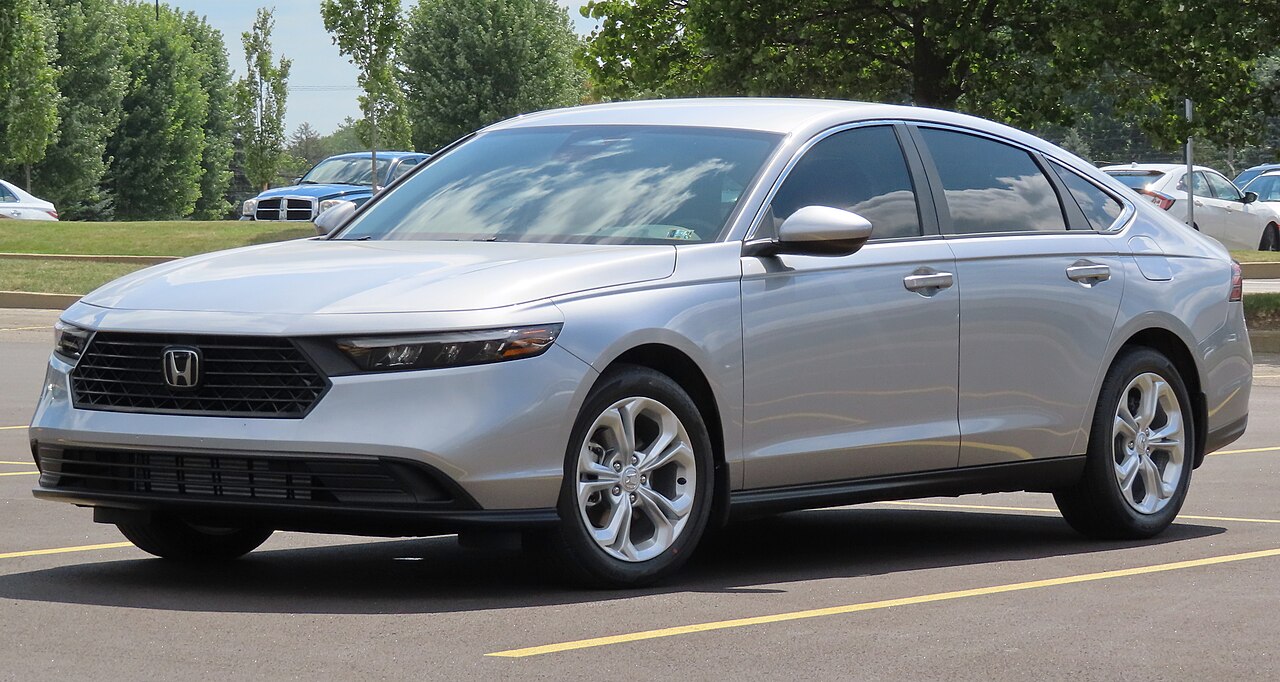
— Mark Driver

Top trouble spots 8 categories with 3+ complaints

airbags
131 reports · fails ~75,686 mi · avg $1,100
critical
brakes
115 reports · fails ~26,691 mi · avg $450
moderate
engine
98 reports · fails ~84,475 mi · avg $3,100
severe
powertrain
38 reports · fails ~93,194 mi · avg $2,500
severe
electrical
26 reports · fails ~69,300 mi · avg $850
severe
steering
18 reports · fails ~47,781 mi · avg $700
severe
suspension
17 reports · fails ~53,777 mi · avg $900
moderate
body
15 reports · fails ~78,857 mi · avg $1,500
critical
Buyer's checklist
Going to look at one? Use the pre-purchase inspection list.
Generated from this 2010 Accord's actual NHTSA complaint history — every item points at a documented failure pattern on this exact vehicle, not generic walkaround filler.
See the checklist ->
Honest Calculator
Should you buy an extended warranty on this 2010 Accord?
We pulled the math: risk-weighted exposure, typical contract cost, and our verdict on whether coverage pencils out for this specific vehicle.
See the calculator ->

What owners are saying recent NHTSA-filed complaints · verbatim

2010 Accord · airbags
Tl* the contact owns a 2010 Honda accord. The contact stated that the air bag warning light illuminated. The failure recurred multiple times. The vehicle was not diagnosed or repaired. The manufacturer was not notified of the failure. The failure mileage was unknown.
2010 Accord · airbags
Tl* takata recall. The contact owns a 2010 Honda accord. The contact received notification of NHTSA campaign number: 16v346000 (air bags). The parts to do the repair were unavailable. The contact stated that the manufacturer exceeded a reasonable amount of time for the recall…
2010 Accord · brakes
E brake failed three times since owning car in 8 years. Rear left brake rotor stuck brake pads burning replaced 4 times in 8 years Is this much recurrence dangerous?
2010 Accord · lighting
The daylight running lights on the 2008-2010 Honda accord are very bright and the signal lights are relatively dim and directly inboard of the running lights making the signal lights extremely difficult to see. The daylight running lights mask the signal light. As the daylight…
View all 579 owner complaints →
Had a problem with your 2010 Honda Accord? File a complaint with NHTSA → It's free and official — owner filings are what build the federal safety record behind this page.

Estimate your repair exposure

Drag to your current mileage. Numbers are derived from this vehicle's complaint history.

0 mi 200k mi
At 80,000 miles
Likely repair cost in next 24 months
$0

Active recalls showing 3 of 4

severe NHTSA 09E063000 November 18, 2009

Honda is recalling aftermarket full nose masks, part number 08p35-ta0-100 and 08p35-ta6-100 manufactured between august 9, 2007 through december 11, 2007

This may result in reduced driver visibility that could increase the risk of a crash.

Fix: Honda is asking owners to please remove the nose mask immediately and call any authorized Honda dealer to make an appointment to return the nose mask and have it replaced free of charge. The safety recall began on march 2009. Owners may contact Honda customer service at 1-800-999-1009.
severe NHTSA 11V004000 January 6, 2011

Honda is recalling certain model year 2010 Honda accord and cr-v vehicles

An engine stall will increase the risk of a crash.

Fix: Dealer will inspect and replace the ignition wiring harness connector free of charge. The safety recall is expected to begin on or before january 24, 2011. Owners may contact Honda at 1-800-999-1009.
severe NHTSA 11V395000 August 4, 2011

Honda is recalling certain model year 2005-2010 accord, 2007-2010 cr-v, and 2005-2008 element passenger cars manufactured from july 1, 2004, through september 3, 2010

This could result in a short circuit causing the engine to stall. Additionally, broken pieces of the outer race or ball bearing from the secondary shaft may become lodged in the parking pawl resulting in the vehicle rolling after the driver has placed the gear selector in the park position. Engine stall and unexpected vehicle movement increases the risk of a crash or personal injury to persons within the path of a rolling vehicle.

Fix: Honda will notify owners and dealers will update the automatic transmission control module software free of charge. The safety recall began on august 27, 2011. Owners may contact Honda automobile customer service at 1-800-999-1009.
View all 4 recalls →

Common questions

Is the 2010 Honda Accord reliable?

It's got known weak points. With a reliability score of 6.2 out of 10 based on 579 owner complaints filed with NHTSA, the 2010 Honda Accord has a higher-than-average rate of reported issues. The areas to watch are listed above. Whether it's worth owning depends on price, condition, and how much repair exposure you can absorb.

Should you avoid the 2010 Honda Accord?

The 2010 Honda Accord is a higher-risk ownership prospect. Repair exposure runs above average — only with money set aside and eyes open. The record behind that call: Engine: 98 complaints, classified severe, failures cluster 52,175–105,000 mi; Powertrain: 38 complaints, classified severe, failures cluster 40,000–140,000 mi; Reliability score 6.2/10 — around the segment average; 4 recall campaigns on file. This is our read of the federal complaint and recall data — not a substitute for a pre-purchase inspection.

What's the most common problem on the 2010 Honda Accord?

Based on NHTSA records, the most-reported issue is airbags, with 131 complaints filed. Typical failure occurs around 75,686 miles. Average repair cost runs about $1,100 at an independent shop.

What's the most expensive thing that goes wrong?

The airbags is one of the costlier repair items. Average repair cost runs about $1,100 at an independent shop. Typical failure occurs around 75,686 miles. Catching early warning signs can sometimes extend life by 20–30,000 miles.

How do I check if my Honda Accord has open recalls?

Paste your VIN into the decoder at the top of this page. We pull live from NHTSA, so you'll see exactly which campaigns apply to your vehicle and whether the dealer has logged the fix. Recall repairs are always free regardless of mileage or warranty status.

Is an extended warranty worth it on a 2010 Honda Accord?

Math is straightforward: a quality service contract runs $1,800–3,500 over 3 years. With 579 complaints on file and the costliest repair averaging $1,100, one major failure more than pays for it. The catch is reading the contract — many providers exclude wear items and require pre-authorization, so cheaper plans are not always better value.

Related

Recall and complaint data sourced from the National Highway Traffic Safety Administration (NHTSA) public records database, last synced 7 hours ago. Verify the raw federal record at nhtsa.gov/vehicle/2010/Honda/Accord. Editorial commentary written by ProblemsByVin contributors and reviewed by ASE-certified mechanics. We are not affiliated with Honda. Some links on this page are affiliate links and we may earn a commission if you complete a quote or purchase.
Get a free warranty quote →
Sponsored — we earn a commission if you complete a quote. Disclosure.