2023 Mercedes-Benz E-Class problems
Light NHTSA footprint — 24 owner complaints. Either a clean record or thin data; we'll show what's there.
Selling this one? Make a free for-sale sign with its recall record and a QR code.
The 2023 Mercedes-Benz E-Class has 24 NHTSA owner complaints on file (U.S. federal records, as of September 2026). The most-reported system is engine at 5 complaints, typically surfacing around 25,000 miles (~$3,100 to repair). Source: NHTSA Office of Defects Investigation.
| Model year | Owner complaints | Recalls |
|---|---|---|
| 2020 E-Class | 20 | 0 |
| 2021 E-Class | 20 | 0 |
| 2022 E-Class | 21 | 0 |
| 2023 E-Class (this page) | 24 | 0 |
| 2024 E-Class | 25 | 0 |
| 2026 E-Class | 0 | 0 |
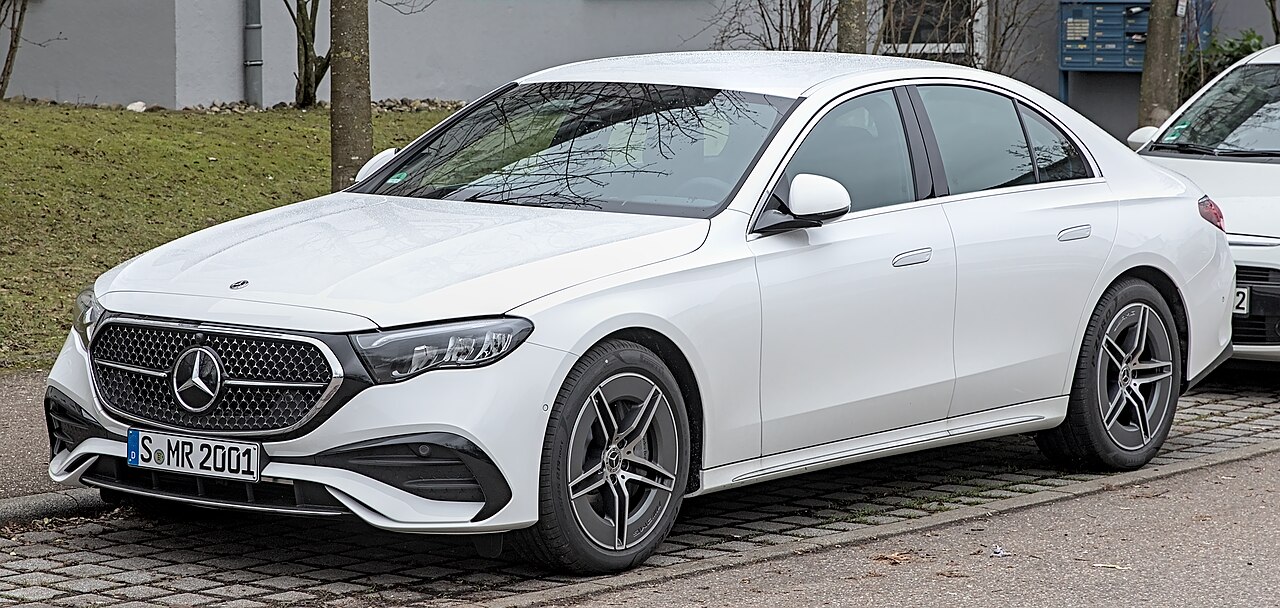
Solid reliability overall. Common issues are concentrated in a few systems.
Buyable on the data — keep up the usual maintenance and inspect normally.
- No systemic severe-failure pattern in the complaint record
- Reliability score 8.4/10 — above the segment average
Our read of the federal NHTSA complaint and recall record for this exact year and model — not a substitute for a pre-purchase inspection. How we score.
NHTSA crash-test safety ratings 5 / 5 overall
Driver-assist features on the tested model: Electronic stability control: Standard · Forward collision warning: Standard · Lane departure warning: Standard
Source: NHTSA New Car Assessment Program — tested configuration: 2023 Mercedes-Benz E-Class 4 DR AWD. Stars rate crash protection in NHTSA's tests, not overall reliability — see the owner-complaint data below for what actually goes wrong.
Buying a used 2023 Mercedes-Benz E-Class? Check these first
Here's what this model is known to do — so you can inspect for it, price it in, or make the seller fix it before you sign.
What to inspect on this specific car
- engine — 5 owner reports · tends to show around 25,000 mi · ~$3,100 to fix
- tires — 5 owner reports · ~$150 to fix
- powertrain — 4 owner reports · ~$2,500 to fix
- electrical — 3 owner reports · tends to show around 15,500 mi · ~$850 to fix
Recalls to confirm are done
Run the VIN from the listing — no active recalls on this model right now, but confirm none were opened after this car was built.
Verdict for buyers: 8.4/10 model. The priciest documented failure is engine (~$3,100) — get the seller's service records for it or inspect closely. Otherwise an average-risk used buy at a fair price.
We tell you what this model is known for and what to inspect — a vehicle-history report tells you what this exact car has been through. Smart buyers get both.
See the full pre-purchase inspection checklist →Ask anything about your 2023 Mercedes-Benz E-Class
A noise, a warning light, a repair quote, "should I buy this?" — get an answer grounded in this vehicle's actual NHTSA record, not generic advice.
Answers use this vehicle's NHTSA complaint & recall record — owner-reported and unverified, not a diagnosis. Verify anything safety-critical with a mechanic.
Top trouble spots 4 categories with 3+ complaints
What owners are saying recent NHTSA-filed complaints · verbatim
My 2023 Mercedes 450E car was purchased on June 11, 2023 and has 1,750 miles. On 2 to 3 different occasions, I was stopped at a light waiting to make a left turn, fortunately my light was red and not a green permitting turning, which would have meant I would have pulled up and…
While driving, malfunction warning flashed on dash, followed by 48v malfunction warning, then engine coolant overheat warning. The car then went into limp mode and finally stopped completely. Luckily this occurred on a residential street and not on a high speed freeway - the…
My first incident was on July 17, 2023, the transmission shifted from drive to neutral, with out me touching the gear shift lever in any way. My safety and any passengers I have in this car, could be at risk, at this point I was going about 40 MPH, going into a gradual curve,…
I had just left home and was about two blocks from my house when the engine stopped running and the word “malfunction” appeared on the display. It would not restart until I hit the off button and then I restarted it. Definite safety issue if I had been on the freeway or a busy…
Estimate your repair exposure
Drag to your current mileage. Numbers are derived from this vehicle's complaint history.
Common questions
Is the 2023 Mercedes-Benz E-Class reliable?
Mostly yes. With a reliability score of 8.4 out of 10 based on 24 owner complaints filed with NHTSA, the 2023 Mercedes-Benz E-Class is generally a sound vehicle. The areas to watch are listed in the top problem section above — most are budget items, not deal-breakers.
Should you avoid the 2023 Mercedes-Benz E-Class?
On the NHTSA data, the 2023 Mercedes-Benz E-Class does not need avoiding. Buyable on the data — keep up the usual maintenance and inspect normally. The record behind that call: No systemic severe-failure pattern in the complaint record; Reliability score 8.4/10 — above the segment average. This is our read of the federal complaint and recall data — not a substitute for a pre-purchase inspection.
What should I check before buying a used 2023 Mercedes-Benz E-Class?
Inspect the engine first — it's the most-reported issue on this model, with 5 owner complaints filed. Typical failure occurs around 25,000 miles. Average repair cost runs about $3,100 at an independent shop. Also confirm any open recalls have been completed by running the VIN, and ask for service records covering the problem areas listed above.
Is the 2023 Mercedes-Benz E-Class a good used car to buy?
It scores 8.4 out of 10 on our NHTSA-based read of 24 owner complaints. The main thing to watch is engine. Typical failure occurs around 25,000 miles. Priced fairly and clean on inspection, it's a reasonable used buy. Our data covers what this model is known for — pair it with a vehicle-history report on the VIN to see what that specific car has been through.
What's the most common problem on the 2023 Mercedes-Benz E-Class?
Based on NHTSA records, the most-reported issue is engine, with 5 complaints filed. Typical failure occurs around 25,000 miles. Average repair cost runs about $3,100 at an independent shop.
What's the most expensive thing that goes wrong?
The engine is one of the costlier repair items. Average repair cost runs about $3,100 at an independent shop. Typical failure occurs around 25,000 miles. Catching early warning signs can sometimes extend life by 20–30,000 miles.
How do I check if my Mercedes-Benz E-Class has open recalls?
Paste your VIN into the decoder at the top of this page. We pull live from NHTSA, so you'll see exactly which campaigns apply to your vehicle and whether the dealer has logged the fix. Recall repairs are always free regardless of mileage or warranty status.
Is an extended warranty worth it on a 2023 Mercedes-Benz E-Class?
Math is straightforward: a quality service contract runs $1,800–3,500 over 3 years. With 24 complaints on file and the costliest repair averaging $3,100, one major failure more than pays for it. The catch is reading the contract — many providers exclude wear items and require pre-authorization, so cheaper plans are not always better value.