2025 Kia EV9 Recalled Over Air Bags
A child in the front seat may be at a greater risk of injury if the air bag deploys during a crash.
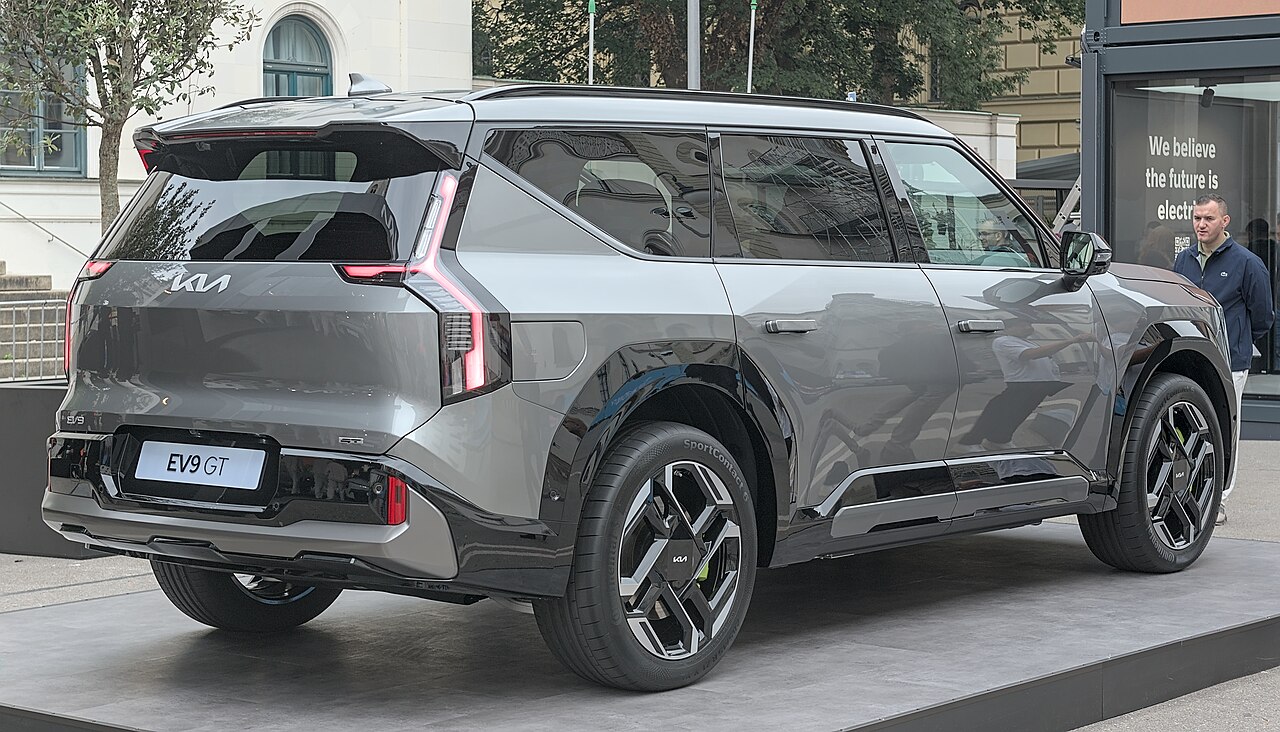
Here’s the short version: Kia is recalling certain EV9 electric SUVs because the system that’s supposed to shut off the front passenger air bag when a kid is sitting there might not do its job. If you put a child or a child seat up front, the air bag could stay live when it should be off. That’s exactly the scenario where an air bag does more harm than good.
This is NHTSA recall 26V545000, and it covers 2025 and 2026 Kia EV9 vehicles — about 21,290 of them.
What’s actually failing
Every modern vehicle with a front passenger air bag has an Occupant Detection System, or ODS. Kia’s setup uses a sensor mat built into the seat cushion, with a bladder tube that reads pressure and weight. The idea is simple: the system figures out whether an adult, a child, or a child seat is in that seat. When it senses a child or a child seat, it’s supposed to switch the front passenger air bag off. You’ve probably seen the little “PASSENGER AIR BAG OFF” light on the dash — that’s this system telling you it made the call.
On these EV9s, the bladder tube was routed improperly. Because of that bad routing, the ODS may not read the seat correctly, and it may fail to deactivate the air bag when a child or child seat is up front. That means the air bag can stay armed when it shouldn’t be.
Per the filing, that failure makes these vehicles non-compliant with Federal Motor Vehicle Safety Standard 208, “Occupant Crash Protection” — the federal rule that governs how air bags and restraints are supposed to behave.
Why it matters
An air bag deploys with real force. For an adult, that force is a good trade in a crash. For a small child or a child in a car seat, that same force is dangerous. That’s the whole reason the deactivation system exists.
Kia’s filing spells out the risk plainly: a child in the front seat may be at greater risk of injury if the air bag deploys during a crash. You wouldn’t know the system missed until it was too late, and that’s what makes this one worth taking seriously even though it hasn’t been tied to a widespread symptom you’d feel while driving.
The timeline
Kia reported this recall to NHTSA on August 21, 2026. The VINs tied to the recall become searchable on NHTSA.gov starting September 4, 2026. Owner notification letters are scheduled to go out beginning October 20, 2026.
The fix
Dealers will inspect the vehicle, replace the ODS mat and bladder tube with new parts, and make sure everything is routed properly. That repair is free. Kia’s internal number for this campaign is SC379.
What this means if you own one
-
Run your VIN. Starting September 4, 2026, you can check whether your specific vehicle is included at NHTSA’s recall page for campaign 26V545000. Your VIN is the only thing that tells you for sure. Two EV9s built weeks apart can have different recall status.
-
Until it’s fixed, keep kids in the back. This is the single most useful thing you can do right now. Children are safest in the rear seat anyway, and with this defect, the front passenger seat is exactly where the system might fail you. Don’t put a child or a child seat in the front passenger position on an affected 2025 Kia EV9 or 2026 Kia EV9 until the repair is done.
-
Watch the dash light. The “PASSENGER AIR BAG OFF” indicator is your window into what this system is doing. If you must have someone small up front and the light doesn’t come on the way you’d expect, treat that as a warning. But understand the light isn’t a guarantee here — the recall exists because the system’s reading can be wrong.
-
Wait for your letter, then book the repair. Notification letters start mailing October 20, 2026. You don’t have to wait for the paper to call, though. Kia Customer Service is at 1-800-333-4542, and you can reference SC379.
-
The repair is free — keep it that way. This is a federal safety recall, not a maintenance item. No dealer should charge you for the ODS mat, the bladder tube, the labor, or the inspection. If anyone tries to bill you, that’s not how a recall works.
-
Document everything. Save your VIN check result, the notification letter, and the repair order after the work is done. If you ever sell the vehicle or need to prove the fix was completed, that paper trail matters.
Mark’s take
This isn’t a stalling engine or a fire risk that’ll strand you on the highway, so it’s easy to shrug off. Don’t. The defect targets the one situation where an air bag can hurt instead of help — a child in the front seat during a crash. The good news is the fix is straightforward, the parts are defined, and it costs you nothing. The number affected is relatively small at around 21,000 vehicles, which suggests a specific build issue rather than a fleet-wide problem.
The practical move is simple: keep kids in the back, run your VIN when the list goes live, and get the repair scheduled once your car shows up as included. It’s a real safety issue, but it’s a fixable one.