NHTSA opens engineering analysis into 1 million Honda/Acura vehicles over engines failing to auto-restart
Engines may fail to restart at traffic lights or intersections, potentially leaving drivers stalled/stranded and affecting visibility and traffic flow for
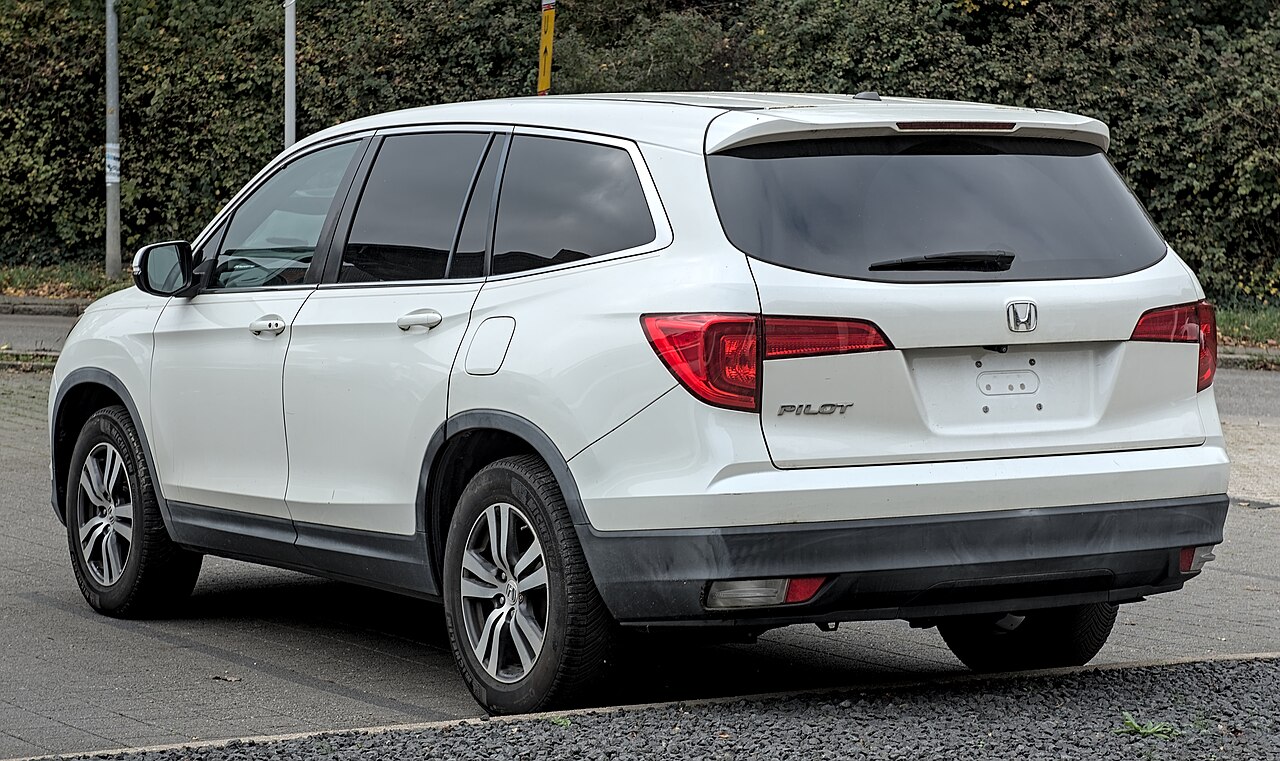
Here’s the short version: your engine shuts itself off at a red light, and then it doesn’t turn back on. You’re sitting in traffic going nowhere. Federal regulators have now opened a formal engineering analysis into roughly a million Honda and Acura vehicles because owners say that’s exactly what’s happening.
If you own one of these vehicles, that’s not a press-release problem. That’s you stuck in an intersection with cars behind you.
What’s actually failing
Every one of these vehicles has an auto start/stop system. The idea is simple: when you come to a full stop at a light, the engine shuts off to save fuel. Take your foot off the brake, and the engine is supposed to fire back up instantly so you can go.
The complaints say the first half works fine. It’s the restart that doesn’t. The engine cuts out at the stop like it’s designed to, and then it just sits there dead. No auto-restart. You’re not rolling, and depending on the situation you may be scrambling to get it going again while traffic stacks up behind you.
NHTSA’s Office of Defects Investigation makes one point in the filing that’s worth paying attention to. The newer vehicles in the group appear to have different root causes and respond differently to repairs. In plain English: this isn’t necessarily one single broken part with one single fix. That’s part of why they’ve bumped it up to an engineering analysis instead of leaving it as a lower-level probe.
What the filing says
On November 13, 2026, NHTSA opened engineering analysis EA26007. It covers the 2024-2026 model years of the Honda Pilot, Passport, Odyssey, and Ridgeline, plus the 2024-2026 Acura MDX. All told, the investigation reaches 1,033,632 vehicles.
The numbers behind it: 701 complaints from owners saying the engine won’t auto-restart after the start/stop system shuts it down.
An engineering analysis is a step up from a preliminary evaluation. It’s the stage where regulators dig deeper into how widespread and how serious the problem is. It is not a recall. No recall has been issued for this. That matters, because until there’s a recall, there’s no ordered free fix on the table yet.
The safety concern is straightforward. An engine that won’t restart at a light or an intersection can leave you stalled and stranded. That affects your visibility to other drivers and the flow of traffic around you. A dead vehicle sitting in a live lane is a hazard to you and to everyone behind you.
What this means if you own one
If you’re driving a 2024-2026 Pilot, Passport, Odyssey, Ridgeline, or Acura MDX, here’s how I’d handle it.
-
Run your VIN. Even though there’s no recall yet, you want to be checking NHTSA’s recall lookup regularly. An engineering analysis can lead to a recall, and if it does, that’s where the campaign will show up tied to your exact vehicle. Check the hubs too — 2024 Honda Pilot, 2024 Honda Odyssey, 2024 Honda Ridgeline, and 2024 Acura MDX.
-
If you’ve had a no-restart event, don’t shrug it off. The whole investigation is built on 701 complaints from people like you. If the engine cut out at a stop and wouldn’t come back, that’s the exact failure regulators are examining. Take it to your dealer and have them document what happened.
-
Document everything. Write down the date, the location, what you were doing, and how you got the vehicle running again. Keep any repair orders. If this turns into a recall or a wider remedy, that paper trail is what protects you.
-
Consider turning the system off. Most of these vehicles let you disable auto start/stop with a button near the start switch — though on many it re-enables itself every time you start the vehicle. It’s not a fix, and I’m not telling you it cures the underlying problem. But if the failure is the engine not restarting after an auto-shutoff, keeping the system off means it never shuts off on its own in the first place. That’s a judgment call for you.
-
File your own complaint with NHTSA. If you’ve had this happen, add it to the record at NHTSA’s website. The count of complaints is exactly what drives these investigations forward. More data from real owners is what pushes a probe toward a remedy.
-
Know where you stand on a repair. Right now there’s no recall, so there’s no manufacturer-ordered free fix yet. If a recall does come out of EA26007, the repair would be free to you. Until then, if your vehicle is still under warranty, a no-restart failure should be a warranty conversation with your dealer. Don’t let them hand you a bill for something that’s the subject of a federal safety investigation without pushing back.
My honest take
This is early. An engineering analysis means regulators think there’s enough smoke to keep digging, not that they’ve reached a conclusion. The note about different root causes across model years tells me Honda and NHTSA may be looking at more than one problem wearing the same symptom, and that can make a clean, single fix harder to land.
What I’d tell you across the counter is this: a stall at a light is a real safety issue, not a nuisance. If it’s happened to you, treat it seriously, document it, and get it in front of your dealer now rather than waiting on the outcome of EA26007. If it hasn’t happened to you, keep an eye on your VIN and watch for a recall. A million vehicles is a lot of vehicles, and this one is worth tracking closely.
Source: Yahoo Autos.