NHTSA opens probe into 1.2 million Ford Explorers over side airbags causing burns
Drivers and front-seat passengers have reported second- and third-degree burns requiring medical treatment after side-airbag deployment.
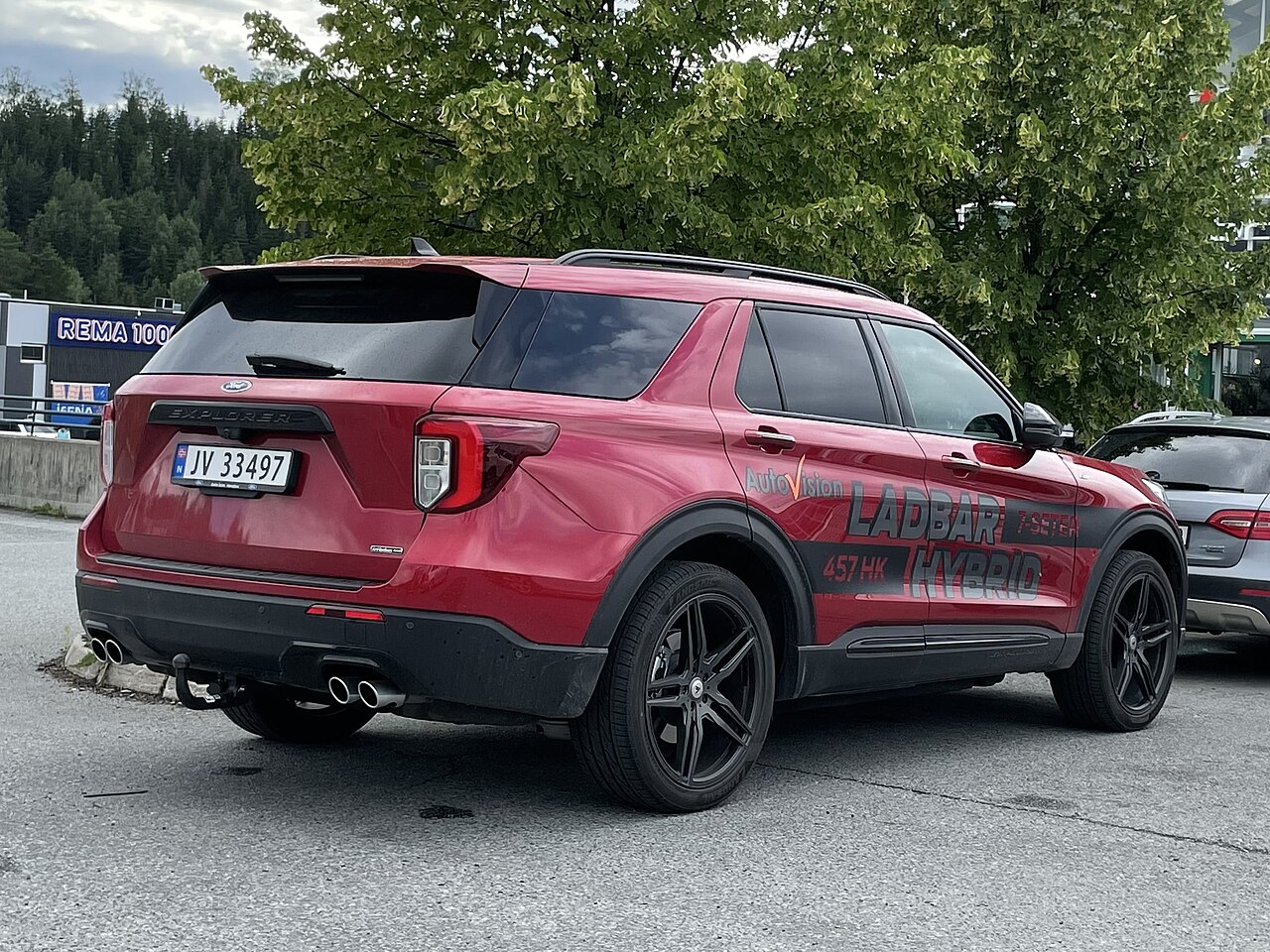
Here’s the short version: the safety device that’s supposed to protect you in a side crash is burning people. The federal government just opened an investigation into about 1.2 million Ford Explorers because the side airbags — the ones built into the seats — are leaving drivers and front passengers with serious burns when they go off.
If you drive one of these SUVs, this is worth your attention. Not panic. But attention.
What’s actually going wrong
Your Explorer has seat-mounted side airbags. They sit in the outboard edge of the front seats and fire sideways in a crash to put a cushion between you and the door or the intruding object. That’s the job.
The problem federal investigators are looking at is what happens when that bag deploys. An airbag doesn’t inflate on compressed air — it uses a small, fast-burning chemical charge to generate gas in a fraction of a second. That process is hot by nature. When it works right, you feel the hit and maybe a scrape, and that’s it. When something’s off, the hot gas or the deployment itself can reach your skin.
Owners here are reporting second- and third-degree burns. Third-degree means full-thickness — through the skin. These aren’t carpet-burn scrapes. People went in for medical treatment.
What the filing says
On November 6, 2026, NHTSA’s Office of Defects Investigation opened a preliminary evaluation, numbered PE26008, covering the 2021 through 2026 Ford Explorer. That’s roughly 1,236,155 vehicles in the investigation’s scope.
A preliminary evaluation is the first formal step. It is not a recall. The agency is collecting data to decide whether there’s a real safety defect and how widespread it is. From here it can close with no action, move up to an engineering analysis, or push Ford toward a recall. Right now it’s at step one.
What triggered it: the agency cited eight owner questionnaires — complaints owners filed directly with NHTSA — plus four Early Warning Reporting death-and-injury reports submitted by the manufacturer. Together those add up to 11 incidents, and 10 of them involved burns. Some of the affected vehicles were Police Interceptor units, which is the fleet/law-enforcement version of the Explorer.
The reporting on this came out around November 9 through 12, 2026, through outlets including CarScoops, Forbes, and Motor1.
Let me be straight about the numbers, because they matter. Eleven incidents across 1.2 million vehicles is a small fraction. But burn injuries from a device meant to save you are exactly the kind of thing NHTSA opens a file on, because the whole point of an airbag is that it shouldn’t hurt you worse than the crash. The investigation exists to find out whether those 11 are the whole story or the early edge of a bigger pattern.
What this means if you own one
-
Check whether your vehicle is in scope. This covers the 2021 Ford Explorer, 2022 Ford Explorer, 2023 Ford Explorer, 2024 Ford Explorer, 2025 Ford Explorer, and 2026 Ford Explorer. If yours is one of these model years, you’re inside the population the agency is examining.
-
Understand there’s no repair to go get — yet. This is an investigation, not a recall. There is no fix ordered, no parts, no service bulletin tied to it right now. You don’t need to call your dealer and demand anything, because there’s nothing for them to do at this stage.
-
Don’t disable your airbags. Whatever you’ve read, the side airbags are still doing their job in a crash. The risk being investigated is a burn during deployment. The far bigger risk is not having the airbag at all in a side impact. Leave the system alone.
-
If you’ve already been burned by an airbag deployment, document everything. Keep your medical records, photos of the injuries, the crash report, and anything from the repair that replaced the airbag. File a complaint with NHTSA at nhtsa.gov — those owner questionnaires are literally part of what opened this investigation. Your report could shape where it goes.
-
Watch for a recall notice. If PE26008 escalates and Ford issues a recall, the repair is free to you by law. Ford has to notify registered owners by mail. Make sure your address is current with Ford and your state so that letter actually reaches you.
The honest take
A preliminary evaluation is early. Most of them don’t end in a recall, and 11 reported incidents across more than a million vehicles is not a reason to stop driving your Explorer tomorrow. The side airbags are still the thing standing between you and a door in a side hit.
What makes this one worth following is the nature of the injury. Second- and third-degree burns from a safety device cross a line that regulators take seriously, and the fact that Ford’s own Early Warning reports fed into it tells you the data was already surfacing. If you own one of these Explorers, keep your contact info current, file a complaint if this has happened to you, and watch for where PE26008 lands. Right now the honest answer is that the government is asking the question — and it’s a fair one to ask.