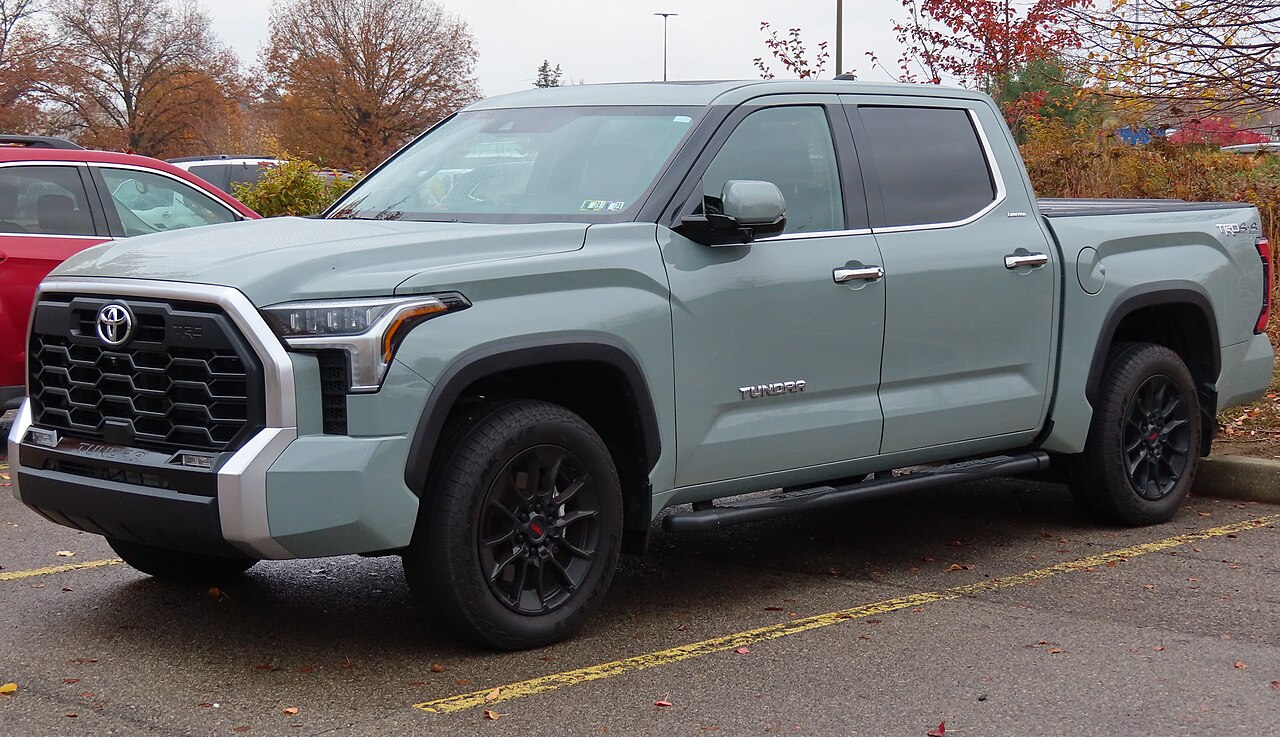
No owner complaints on NHTSA yet, so the reliability score is provisional. 16 active recalls on file — read those first.
1
Critical
14
Severe
1
Moderate
Should you avoid this 2010 Tundra?
Not enough data for a verdict
Only 0 NHTSA complaints on file — too few for a confident call. The 16 active recalls above remain authoritative; read those first.
Our read of the federal NHTSA complaint and recall record for this exact year and model —
not a substitute for a pre-purchase inspection. How we score.
Embed this reliability snapshot
Free to use on your site, post, or video — just keep the "Source" credit line below the chart. Preview the widget →
The 2010-2016 Tundra is one of the most reliable trucks in our database, and it’s worth saying without hedging. Complaint counts are tiny — most years well under 150, 2015 down around 46 — and it’s not on our worst-platforms list. The 5.7L V8 (3UR-FE) is a legitimate 300,000-mile engine.
The few things that do come up
None of these are dealbreakers, but a buyer should know them:
Cam tower oil leak on the UR-series V8s — common. The part is cheap, the labor isn’t (you’re going in deep to reach it). Check for seepage.
Secondary air injection (AIR) pump/valve — throws P2440/P0418, mostly on cold-climate trucks, and can get pricey. Ask if it’s been done.
Frame rust if it lived in a salt state — not a recall on this generation like the older Tundras/Tacomas, but still: get it on a lift and look hard.
Should you buy one?
Yes — buy the cleanest one you can afford. Check for the cam-tower seepage, ask about the AIR system, and rust-inspect the frame if it’s a northern truck. Past that, it’s boring, expensive to fuel, and basically unkillable. It’ll outlast most of what’s parked next to it.
This is one of the clearest cases where the warranty calculator will tell you to keep your money — and that’s the honest answer, not a missed sale. A maintained 5.7 Tundra doesn’t need it.
Toyota is recalling certain model year 2004-2010 passenger vehicles
A stuck open accelerator pedal may result in very high vehicle speeds and make it difficult to stop the vehicle, which could cause a crash, serious injury or death.
Fix: Toyota filed an amended defect report on november 25, 2009, stating that dealers will modify the accelerator pedal and, on certain vehicles, alter the shape of the floor surface under the pedal. These changes address the risk of pedal entrapment due to interference with the floor mat. Redesigned accelerator pedals will become available beginning in april 2010 and dealers will replace any modified pedal with the new pedal if desired. Also, dealers will replace any genuine Toyota or Lexus all-weather floor mats with redesigned all-weather mats, or repurchase the previous mats from owners who do not want the new ones. Additionally, software modifications will be installed on camry, avalon and Lexus es 350, is 350 and is 250 models that will ensure that the brake overrides the accelerator in the event both brake and accelerator pedals are applied. Toyota will begin mailing letters to owners on december 31, 2009. Owners may contact Toyota at 1-800-331-4331, Lexus at 1-800-255-3987.
Toyota Motor Engineering & Manufacturing (Toyota) is recalling certain JTEKT power steering gear assembly service parts for 2007-2021 Tundra and 2008-2022 Sequoia, part numbers 44250-0C160, 44250-0C131, 44250-0C170, and 11250-0C121
An oil leak may cause a sudden loss of power steering assist, increasing the risk of a crash.
Fix: Dealers will inspect and replace the power steering gear assembly, free of charge. Owner notification letters were mailed on February 17, 2022. Owners may contact Toyota customer service at 1-800-331-4331. Toyota's number for this recall is 21TH01.
Toyota Motor Engineering & Manufacturing (Toyota) is recalling certain 2008-2022 Sequoia and 2007-2021 Tundra vehicles
An oil leak may cause a sudden loss of power steering assist, increasing the risk of a crash.
Fix: Dealers will inspect and replace the power steering gear assembly as necessary, free of charge. Owner notification letters were mailed on January 21, 2022. Owners may contact Toyota customer service at 1-800-331-4331. Toyota's numbers for this recall are 21TB10 and 21TA10.
Limited NHTSA data. Only 0 owner complaints have been filed for the 2010 Toyota Tundra, which is not enough for a meaningful reliability score. Active recalls (if any) are listed on this page and remain authoritative — those are verified defects regardless of complaint volume. For a confident reliability read we look for at least 10 owner complaints in the federal database.
Should you avoid the 2010 Toyota Tundra?
Only 0 NHTSA complaints on file — too few for a confident call. The 16 active recalls above remain authoritative; read those first. We don't issue a buy/avoid verdict on the 2010 Toyota Tundra without a meaningful complaint sample — doing so off a handful of filings would be guesswork.
What should I check before buying a used 2010 Toyota Tundra?
There isn't enough NHTSA complaint data on the 2010 Toyota Tundra to flag a standout failure pattern. Run the VIN for open recalls — those are free to fix regardless of warranty — get a standard pre-purchase inspection, and ask the seller for service records.
Is the 2010 Toyota Tundra a good used car to buy?
Hard to say from federal data alone — only 0 owner complaints have been filed. Lean on the recall list above, a pre-purchase inspection, and a vehicle-history report on the specific VIN. Our data tells you what the model is known for; a history report tells you what that exact car has been through.
What's the most common problem on the 2010 Toyota Tundra?
No problem area has crossed our reporting threshold yet, which is a good sign for this vehicle.
What's the most expensive thing that goes wrong?
Major repair items haven't been flagged often enough on this vehicle to single one out.
How do I check if my Toyota Tundra has open recalls?
Paste your VIN into the decoder at the top of this page. We pull live from NHTSA, so you'll see exactly which campaigns apply to your vehicle and whether the dealer has logged the fix. Recall repairs are always free regardless of mileage or warranty status.
Is an extended warranty worth it on a 2010 Toyota Tundra?
Hard to say from NHTSA data alone with only 0 complaints on file. A quality service contract runs $1,800–3,500 over 3 years. The decision comes down to your specific situation: vehicle cost, miles on it, how long you plan to keep it, and whether you can absorb a $3K–$8K repair without straining cashflow. With limited public data on this vehicle, lean on the recall list above and check owner forums before committing.
Recall and complaint data sourced from the National Highway Traffic Safety Administration (NHTSA)
public records database, last synced 21 hours ago. Verify the raw federal record at
nhtsa.gov/vehicle/2010/Toyota/Tundra.
Editorial commentary written by ProblemsByVin contributors and reviewed by ASE-certified mechanics.
We are not affiliated with Toyota. Some links on this page are affiliate links and we
may earn a commission if you purchase through them.