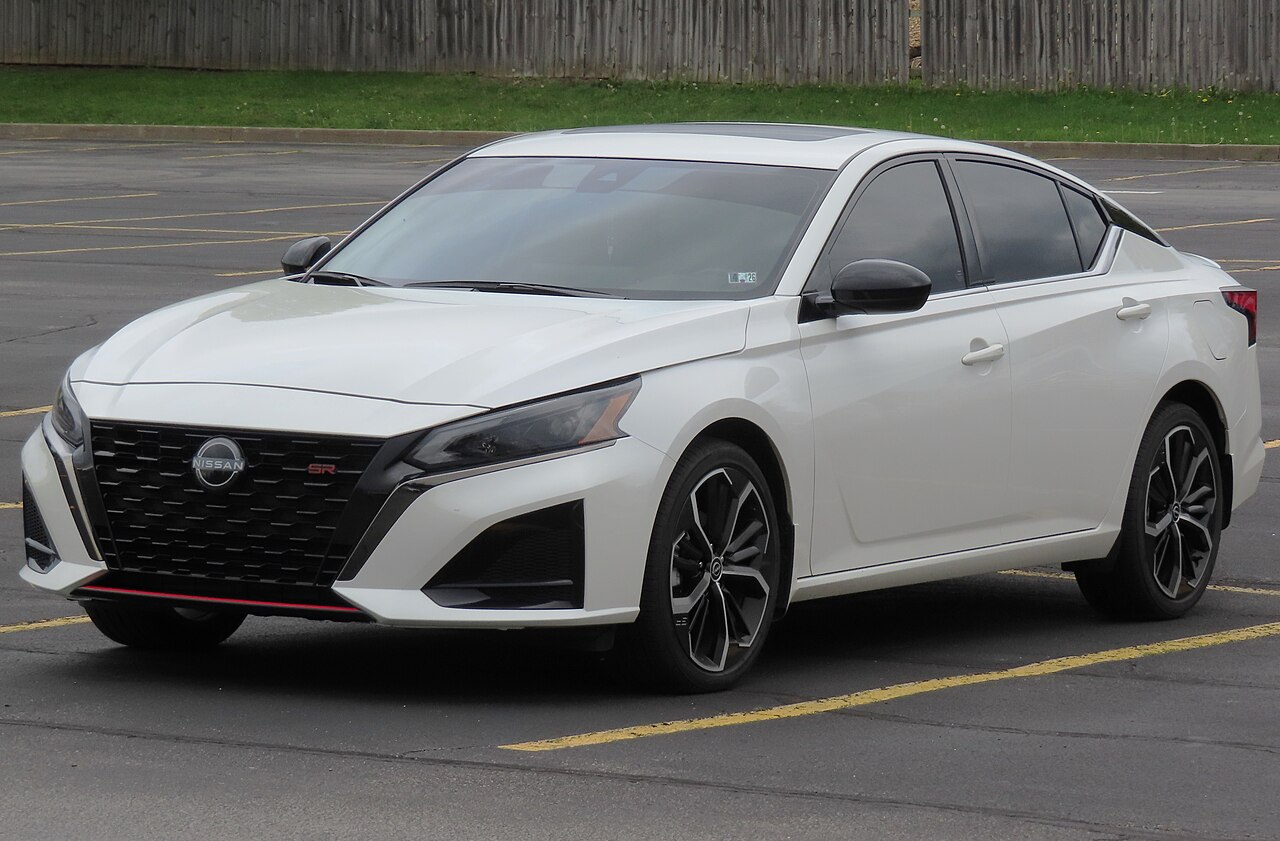
Nissan bet the company on continuously variable transmissions in the late 2000s. The CVT promised better fuel economy, smoother acceleration, and lower manufacturing costs than a traditional automatic. Nissan committed earlier and harder than any other manufacturer, putting Jatco-built CVTs in the Altima, Sentra, Versa, Rogue, Pathfinder, Murano, Maxima, and Quest across roughly 2007 through 2018, and continuing in updated form even today.
The bet didn’t pay off for owners. By 2014 the class-action lawsuits were filed, and by 2017 Nissan had quietly extended powertrain warranties on most affected models from 5/60k to 10/120k, an admission of a problem they wouldn’t otherwise own.
If you have a 2013-2018 Altima, 2013-2018 Sentra, 2008-2018 Rogue, 2007-2014 Maxima, or any other Nissan with a CVT, this is the conversation.
How a CVT works and why these failed
A traditional automatic has fixed gear ratios and shifts between them. A CVT uses two pulleys (a drive and a driven) connected by a steel push belt, and changes ratio continuously by varying the diameter of the pulleys. Fewer parts, smoother power delivery, theoretically more efficient.
The Jatco CVT failure modes:
-
Belt slip and judder. The fluid loses its friction characteristics as it ages and overheats. The belt starts to slip on the pulleys. You feel it as a vibration or shudder under light acceleration around 30-50 mph. The slip damages the pulley faces, and once the surface is glazed, it’s a transmission replacement.
-
Overheating. The CVT generates more heat than a traditional automatic, especially under load. Nissan’s cooling capacity was marginal. Hot fluid breaks down faster, lubricates worse, and the death spiral accelerates. Towing or sustained high speed in heat — say, west Texas summer — kills these transmissions twice as fast.
-
Valve body and pressure regulation. Internal solenoids and the pressure control system fail, leading to harsh engagement, no-go conditions, and warning lights.
The result: Nissan CVTs commonly fail between 60,000 and 130,000 miles. Some make it to 200,000. Many don’t make 100,000.
What you’ll see and hear
- Shudder or vibration around 40 mph under light acceleration — belt slip starting
- Whine that increases with vehicle speed but doesn’t change with engine RPM
- Hesitation from a stop, “rubber band” feel where the engine revs before the car responds
- Sudden loss of acceleration, often with a “transmission overheated” warning on the dash
- Limp mode — engine runs but car won’t accelerate above 25 mph
- Burnt smell from the engine bay
- Whine or growl on deceleration
What to do if yours is still healthy
The single best preventive maintenance on a Nissan CVT is fluid changes. Nissan’s service interval is “lifetime” or 60,000 miles depending on which manual you read. Both are wrong for the real world.
- Change CVT fluid every 30,000 miles, no exceptions
- Use only Nissan NS-2 or NS-3 fluid (depending on year) — NOT a “compatible” CVT fluid from a parts store. Generic CVT fluids will trash your transmission faster than running it dry.
- Add an external transmission cooler if you live somewhere hot or do any towing. Nissan sold one as a dealer accessory for some models. Aftermarket coolers are around $150 and pay for themselves the first summer.
- Drive easy. Hard launches and aggressive acceleration kill CVTs. Smooth throttle inputs add miles.
What to do when symptoms show up
If yours is under 120,000 miles and you’re in the affected model years, Nissan extended the warranty. Take it to a Nissan dealer, document the symptoms, and let them diagnose. If they confirm CVT failure under the extension, you get a new (reman) transmission on Nissan’s dime. Don’t take it to an independent first, don’t try to diagnose it yourself, don’t add fluid and hope. Dealer first.
If you’re outside warranty:
- Reman CVT from Nissan: $4,500-$6,500 installed
- Reman from a specialist (Cobb, JATCO rebuilders): $3,500-$5,000 installed
- Used unit from a salvage yard: $1,500-$2,500 installed — but you’re buying someone else’s known-bad transmission with unknown miles
- Sell the car as-is: A 2015 Altima with a failed CVT brings $1,800-$2,800 on the market. The same car running brings $7,500-$9,500. The math says fixing it makes sense if you’ll keep it 3+ more years.
Should you buy one?
Generally, no. The Altima and Sentra are otherwise fine cars — the engines (QR25, MR20) are reliable, the chassis is decent, the electronics are unremarkable. The CVT is the one component that ruins them.
If you must buy one:
- Confirm the CVT fluid has been changed (records, not promises)
- Test drive long enough to put it through some stop-and-go and some highway running
- Check for shudder around 40-50 mph under light throttle
- Listen for any whine
- Verify the car is within the extended warranty period for the year and model
- Negotiate assuming you’ll need a transmission within 50,000 miles
If you already own one: the fluid change is non-negotiable. Every 30,000. Set a calendar reminder. The cooler is the second-best money you’ll spend. And if it starts to shudder, take it to the dealer immediately while the warranty extension is still on the table.
The Nissan CVT story is what happens when finance and marketing decide a powertrain instead of engineering. The technology is fine in principle — Honda and Toyota have made CVTs work since. Nissan went too cheap on cooling, fluid spec, and pulley material, and a generation of owners paid for it.