2025 Chrysler Pacifica Recalled Over Electronic Stability Control (Esc)
A loss of electronic stability control increases the risk of a crash.
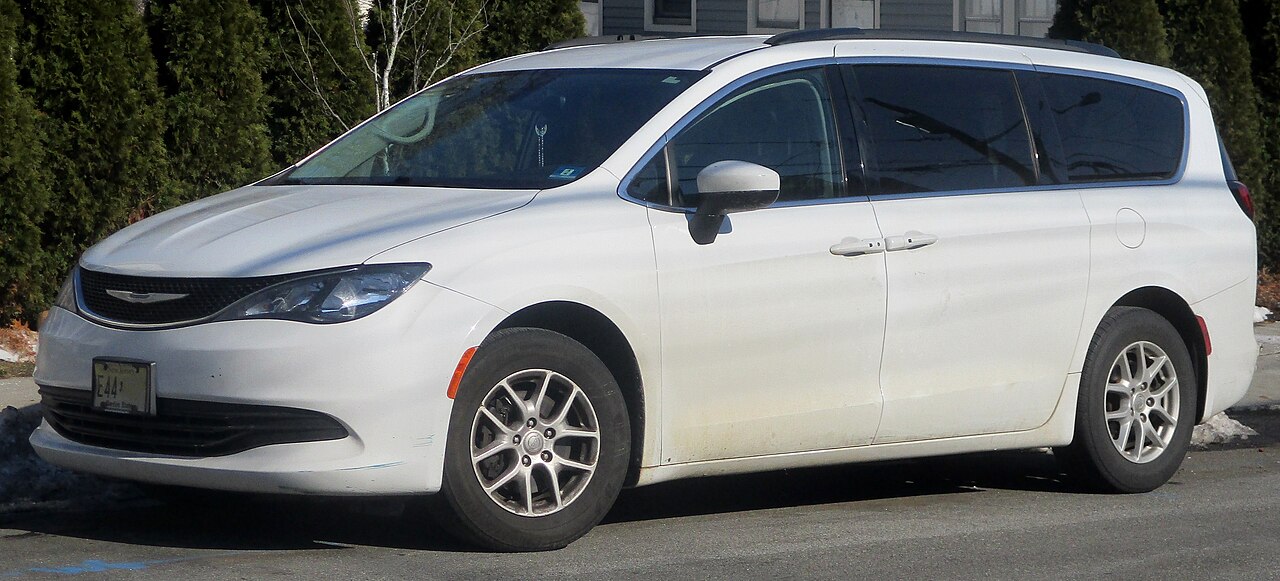
Here’s the short version: Chrysler is recalling a batch of new minivans because a cracked capacitor inside a brake pedal sensor can knock out your electronic stability control. If you drive one of these vans, that’s the system that helps keep you pointed straight when the road turns slick or you swerve hard. Losing it isn’t something you’ll notice on a dry parking lot. You’ll notice it at the worst possible moment.
The recall is NHTSA campaign 26V561000, filed September 1, 2026. It covers about 2,017 vehicles.
What actually fails
The part in question is the brake pedal position sensor. That sensor tells the vehicle’s computer where your brake pedal is and how hard you’re pressing. Inside that sensor is a small capacitor, and on the affected vans that capacitor can crack.
When it cracks, the stability control system can lose the input it needs to do its job. The result is a loss of electronic stability control (ESC).
Here’s why that matters mechanically. ESC watches your steering angle, wheel speeds, and how the vehicle is actually rotating. When it senses the van starting to slide or plow wide in a turn, it brakes individual wheels and can cut engine power to pull you back in line. It works in the background, and most drivers never feel it kick in. That’s the point. When it fails, you don’t get a warning shove — you just don’t have the safety net there when a wet on-ramp or a sudden lane change asks for it.
Because of this, these vans don’t meet Federal Motor Vehicle Safety Standard 126, the federal rule that governs electronic stability control systems. That’s not a Chrysler preference. It’s the law these vehicles are required to comply with, and right now they don’t.
The safety risk in the filing is straightforward: a loss of electronic stability control increases the risk of a crash.
What the filing says
Chrysler (FCA US, LLC) is recalling certain 2025-2026 Chrysler Voyager and Pacifica vehicles, plus 2026 Chrysler Voyager Plug-In Hybrid models.
The fix: dealers will inspect the brake pedal position sensor and replace it if needed, at no cost to you.
A few dates to put on your calendar. VINs tied to this recall become searchable on NHTSA.gov starting September 9, 2026. Owner notification letters are expected to go out September 29, 2026.
What this means if you own one
-
Run your VIN. Starting September 9, 2026, you can plug your VIN into the recall lookup at nhtsa.gov and see if your van is on the list. Your VIN is the only way to know for sure — model year and body style alone don’t tell you whether your specific vehicle is affected.
-
Watch for the letter. Chrysler expects to mail owner notification letters around September 29, 2026. If you bought your van used or recently moved, make sure your address is current with the dealer or manufacturer so that letter actually reaches you.
-
The repair is free — keep it that way. Dealers will inspect and replace the sensor as necessary at no charge. If any dealer tries to bill you for a recall repair covered under 26V561000, that’s not how a federal safety recall works. Push back.
-
Don’t shrug off a stability control warning light. With this defect, you may not feel anything different day to day. But if your ESC or traction control warning light comes on, treat it as real. Don’t assume it’s a glitch. Get it looked at, and mention this recall by name.
-
Document everything. Note the date you got the notice, when you called, and when the work was done. Chrysler’s number for this recall is 69D, and FCA customer service is 1-800-853-1403. If you have to make more than one trip or the parts are on backorder, a paper trail protects you.
-
Know your hubs. You can track this and any follow-up on the ProblemsByVin pages for the 2025 Chrysler Pacifica, 2026 Chrysler Pacifica, 2025 Chrysler Voyager, and 2026 Chrysler Voyager.
The honest take
This is a small recall — around 2,000 vehicles — and the fix is simple: inspect the sensor, swap it if it’s bad. Nobody’s talking about tearing your van apart.
But don’t file this one under “no big deal.” Stability control is exactly the kind of system you forget about until the day it saves you, and this defect means it might not be there when you need it. The trouble with a silent failure is that you can’t test for it in your driveway. That’s why the free inspection matters, and why it’s worth getting done once your VIN clears the lookup and the parts are available.
If you own one of these Pacificas or Voyagers, put the September dates on your calendar, check your VIN, and get the van in when Chrysler’s ready to fix it. It’s a quick job for peace of mind on a system you can’t afford to guess about.