Free. Instant. No signup. Pulls recalls and complaints for your exact vehicle.
Couldn't find that VIN. Check the digits and try again.
ProblemsByVinFile / 2009-MAZDA-CX-7NHTSA data synced 1 day ago
Mazda
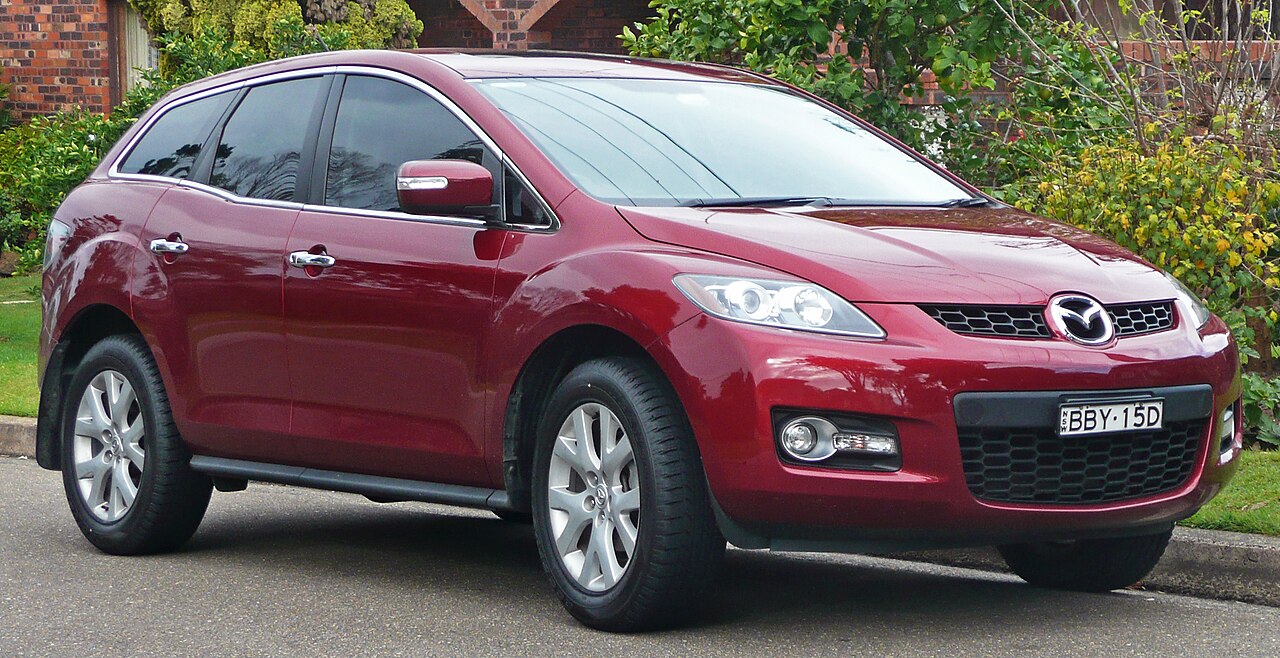
2009 Mazda CX-7 problems
The 2009 Mazda CX-7 has 4 critical safety recalls on file — the kind NHTSA opens when crashes, fires, or injuries are documented. 65 owner complaints alongside. Read those first.
The 2009 Mazda CX-7 has 65 NHTSA owner complaints and 6 recalls on file (U.S. federal records, as of October 2026). The most-reported system is engine at 16 complaints, typically surfacing around 69,083 miles (~$3,100 to repair). Source: NHTSA Office of Defects Investigation.
Below average for the segment. Multiple systems have recurring complaints.
4
Critical
2
Severe
0
Moderate
Should you avoid this 2009 CX-7?
Acceptable — with caveats
Worth owning if you verify the specific issues below before you buy.
Reliability score 5.2/10 — around the segment average
6 recall campaigns on file
Our read of the federal NHTSA complaint and recall record for this exact year and model —
not a substitute for a pre-purchase inspection. How we score.
Buying a used 2009 Mazda CX-7? Check these first
Here's what this model is known to do — so you can inspect for it, price it in, or
make the seller fix it before you sign.
What to inspect on this specific car
engine — 16 owner reports
· tends to show around 69,083 mi · ~$3,100 to fix
suspension — 16 owner reports
· tends to show around 117,571 mi · ~$900 to fix
airbags — 10 owner reports
· tends to show around 87,025 mi · ~$1,100 to fix
steering — 5 owner reports
· tends to show around 97,807 mi · ~$700 to fix
⚠ The one to take seriously: steering is flagged
severe on this model
, showing up around 97,807 mi.
Inspect it closely on a test drive.
Recalls to confirm are done
Run the VIN from the listing — 6 active recalls on this model. Recall repairs are always free.
Verdict for buyers: 5.2/10 model. The priciest documented failure is
engine (~$3,100) — get the
seller's service records for it or inspect closely. Otherwise an average-risk used buy at a fair price.
We tell you what this model is known for and what to inspect — a vehicle-history report
tells you what this exact car has been through. Smart buyers get both.
A noise, a warning light, a repair quote, "should I buy this?" — get an answer grounded in
this vehicle's actual NHTSA record, not generic advice.
Dash light, leak, worn part — snap it and we'll read it against this car's record.
Photo attached — type a question or just hit Ask.
Answers use this vehicle's NHTSA complaint & recall record — owner-reported and unverified, not a diagnosis. Verify anything safety-critical with a mechanic.
Embed this reliability snapshot
Free to use on your site, post, or video — just keep the "Source" credit line below the chart. Preview the widget →
What owners are saying
recent NHTSA-filed complaints · verbatim
2009 CX-7· suspension
We were notified on the lower control arm recall in september. It's ridiculous that the replacement parts have not been made available. Why is Mazda dragging their feet on a safety issue like this
In the last 2 weeks, when the vehicle is started, the airbag light by the speedometer flashes twice, stops, flashes twice, then stops. This continues for about 20-30 seconds after the car is started and is running/idling. Once the 20-30 seconds have passed, the airbag light then…
Both rear tail lights looked cloudy and the red color of the rear lights appeared white. I removed the light bulbs, thinking that maybe they had burned out. I noticed the light bulbs had melted through the internal red plastic lens of the tail light assembly and left a hole…
I bought this used around june 2010 with approx. 16000 mile. I had oil change at the local garage station. They told me that the oil was very thick. So I had it changed again within three month. It was running fine without any indication and all of a sudden I lost the power and…
Had a problem with your 2009 Mazda CX-7?
File a complaint with NHTSA → It's free and official — owner filings are what build the federal safety record behind this page.
Estimate your repair exposure
Drag to your current mileage. Numbers are derived from this vehicle's complaint history.
Mazda North American Operations (Mazda) is recalling certain 2007-2012 CX-7, CX-9, and 2009-2012 Maza6 vehicles
An inflator explosion may result in sharp metal fragments striking the driver or other occupants resulting in serious injury or death.
Fix: Owners are advised not to drive their vehicles until the repair has been performed. Mazda will notify owners, and dealers will replace the front passenger air bag inflator with an alternate one, free of charge. The recall began December 3, 2019. Owners may contact Mazda customer service at 1-800-222-5500, option 4. Mazda's number for this recall is 1317F. Note: This recall supersedes recalls 16V356 and 17V012.
Mazda North American Operations (Mazda) is recalling certain 2013 Mazda6 and CX-9 vehicles sold, or ever registered in the states of Alabama, California, Florida, Georgia, Hawaii, Louisiana, Mississippi, South Carolina, Texas, Puerto Rico, American Samoa, Guam, the Northern Mariana Islands (Saipan), and the U
An inflator explosion may result in sharp metal fragments striking the driver or other occupants resulting in serious injury or death.
Fix: Mazda will notify owners, and dealers will replace the front passenger air bag inflator with an alternate inflator, free of charge. The recall began March 2, 2018. Owners may contact Mazda customer service at 1-800-222-5500. Mazda's number for this recall is 1317F.
Mazda North America Operations (Mazda) is recalling certain 2012 CX-7, CX-9 and Mazda6 vehicles sold, or ever registered, in the states of Alabama, California, Florida, Georgia, Hawaii, Louisiana, Mississippi, South Carolina, Texas, Puerto Rico, American Samoa, Guam, the Northern Mariana Islands (Saipan), and the U
An inflator rupture may result in metal fragments striking the vehicle occupants resulting in serious injury or death.
Fix: Owners are advised not to drive their vehicles until the remedy is performed. Mazda will notify owners, and dealers will replace the front passenger side air bag inflator with an alternate inflator, free of charge. The recall began October 4, 2017. Owners may contact Mazda customer service at 1-800-222-5500. Mazda's number for this recall is 1317F. Note: This recall supersedes recall 17V-012.
It's got known weak points. With a reliability score of 5.2 out of 10 based on 65 owner complaints filed with NHTSA, the 2009 Mazda CX-7 has a higher-than-average rate of reported issues. The areas to watch are listed above. Whether it's worth owning depends on price, condition, and how much repair exposure you can absorb.
Should you avoid the 2009 Mazda CX-7?
The 2009 Mazda CX-7 is acceptable, with specific caveats. Worth owning if you verify the specific issues below before you buy. The record behind that call: Reliability score 5.2/10 — around the segment average; 6 recall campaigns on file. This is our read of the federal complaint and recall data — not a substitute for a pre-purchase inspection.
What should I check before buying a used 2009 Mazda CX-7?
Inspect the engine first — it's the most-reported issue on this model, with 16 owner complaints filed. Typical failure occurs around 69,083 miles. Average repair cost runs about $3,100 at an independent shop. Also confirm any open recalls have been completed by running the VIN, and ask for service records covering the problem areas listed above.
Is the 2009 Mazda CX-7 a good used car to buy?
It scores 5.2 out of 10 on our NHTSA-based read of 65 owner complaints. The main thing to watch is engine. Typical failure occurs around 69,083 miles. Priced fairly and clean on inspection, it's a reasonable used buy. Our data covers what this model is known for — pair it with a vehicle-history report on the VIN to see what that specific car has been through.
What's the most common problem on the 2009 Mazda CX-7?
Based on NHTSA records, the most-reported issue is engine, with 16 complaints filed. Typical failure occurs around 69,083 miles. Average repair cost runs about $3,100 at an independent shop.
What's the most expensive thing that goes wrong?
The engine is one of the costlier repair items. Average repair cost runs about $3,100 at an independent shop. Typical failure occurs around 69,083 miles. Catching early warning signs can sometimes extend life by 20–30,000 miles.
How do I check if my Mazda CX-7 has open recalls?
Paste your VIN into the decoder at the top of this page. We pull live from NHTSA, so you'll see exactly which campaigns apply to your vehicle and whether the dealer has logged the fix. Recall repairs are always free regardless of mileage or warranty status.
Is an extended warranty worth it on a 2009 Mazda CX-7?
Math is straightforward: a quality service contract runs $1,800–3,500 over 3 years. With 65 complaints on file and the costliest repair averaging $3,100, one major failure more than pays for it. The catch is reading the contract — many providers exclude wear items and require pre-authorization, so cheaper plans are not always better value.
Recall and complaint data sourced from the National Highway Traffic Safety Administration (NHTSA)
public records database, last synced 1 day ago. Verify the raw federal record at
nhtsa.gov/vehicle/2009/Mazda/CX-7.
Editorial commentary written by ProblemsByVin contributors and reviewed by ASE-certified mechanics.
We are not affiliated with Mazda. Some links on this page are affiliate links and we
may earn a commission if you purchase through them.