2010 Mercedes-Benz E-Class problems
The 2010 Mercedes-Benz E-Class has 257 NHTSA owner complaints and no active recalls. Here's where owners say it breaks.
Selling this one? Make a free for-sale sign with its recall record and a QR code.
The 2010 Mercedes-Benz E-Class has 257 NHTSA owner complaints on file (U.S. federal records, as of September 2026). The most-reported system is airbags at 94 complaints, typically surfacing around 61,482 miles (~$1,100 to repair). Source: NHTSA Office of Defects Investigation.
| Model year | Owner complaints | Recalls |
|---|---|---|
| 2007 E-Class | 435 | 0 |
| 2008 E-Class | 226 | 0 |
| 2009 E-Class | 85 | 0 |
| 2010 E-Class (this page) | 257 | 0 |
| 2011 E-Class | 296 | 0 |
| 2012 E-Class | 234 | 0 |
| 2013 E-Class | 185 | 0 |
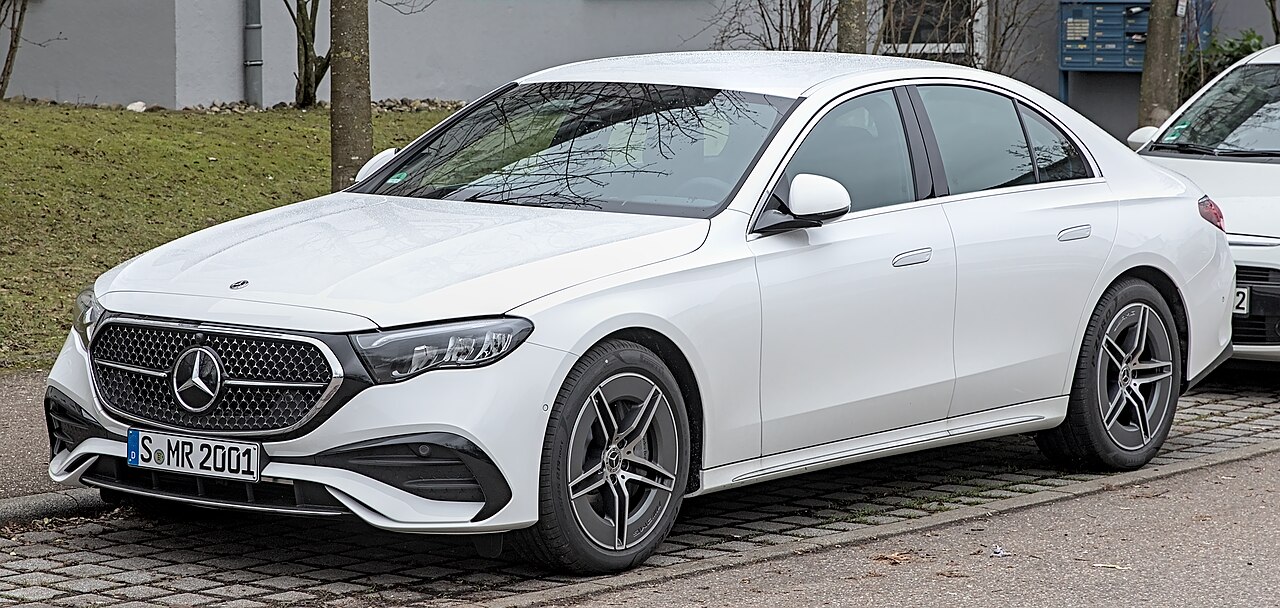
Solid reliability overall. Common issues are concentrated in a few systems.
Worth owning if you verify the specific issues below before you buy.
- Suspension: 43 complaints, classified severe, failures cluster 47,000–100,000 mi
- Reliability score 7.4/10 — around the segment average
Our read of the federal NHTSA complaint and recall record for this exact year and model — not a substitute for a pre-purchase inspection. How we score.
Buying a used 2010 Mercedes-Benz E-Class? Check these first
Here's what this model is known to do — so you can inspect for it, price it in, or make the seller fix it before you sign.
What to inspect on this specific car
- airbags — 94 owner reports · tends to show around 61,482 mi · ~$1,100 to fix
- suspension — 43 owner reports · tends to show around 77,973 mi · ~$900 to fix
- powertrain — 15 owner reports · tends to show around 85,362 mi · ~$2,500 to fix
- electrical — 12 owner reports · tends to show around 62,067 mi · ~$850 to fix
⚠ The one to take seriously: airbags is flagged severe on this model , showing up around 61,482 mi. Inspect it closely on a test drive.
Recalls to confirm are done
Run the VIN from the listing — no active recalls on this model right now, but confirm none were opened after this car was built.
Verdict for buyers: 7.4/10 model. The priciest documented failure is engine (~$3,100) — get the seller's service records for it or inspect closely. Otherwise an average-risk used buy at a fair price.
We tell you what this model is known for and what to inspect — a vehicle-history report tells you what this exact car has been through. Smart buyers get both.
See the full pre-purchase inspection checklist →Ask anything about your 2010 Mercedes-Benz E-Class
A noise, a warning light, a repair quote, "should I buy this?" — get an answer grounded in this vehicle's actual NHTSA record, not generic advice.
Answers use this vehicle's NHTSA complaint & recall record — owner-reported and unverified, not a diagnosis. Verify anything safety-critical with a mechanic.
Stories from the shop
You know what kills me about working on Mercedes? It’s not the parts prices, that’s the cost of doing business. It’s not the tight engine bays, you learn to deal. It’s when the manufacturer makes a $30 design decision that turns the whole engine into a paperweight at 80,000 miles. And you sit there explaining to a guy who paid $55,000 for his E-Class six years ago that he’s looking at a $5,500 repair bill.
The M272 V6 — 3.0L and 3.5L variants — went into the E350, C350, CLK350, GLK350, ML350, R350, S350, and a couple SLK variants from roughly 2005 through 2011. The bigger M273 V8 in the E550, S550, and various AMG-light cars from the same era has the same problem. Mercedes built about 700,000 of these engines with the defect. Then they fixed it quietly in 2008 production runs and never officially admitted what they’d done.
The defect
The engine has a balance shaft that runs off the timing chain. It cancels secondary vibration that’s inherent to a 90-degree V6 layout. The balance shaft is driven by a small idler gear connected to the timing chain. That idler gear was made of an inferior alloy — basically too soft for the application — and the teeth wear down at an accelerated rate.
By 80,000 to 130,000 miles, the gear is so worn that the timing chain skips against it, the cam timing goes out of sync, and the engine throws codes. P0016, P0017, P0018, P0019 — cam position correlation codes, all four banks possible. Then the engine runs rough, loses power, and eventually you can’t start it because the cams are too far out of time for the computer to compensate.
The really nasty part: the balance shaft is inside the engine. To replace the gear, you have to pull the engine out, split the case, and rebuild the timing system from the inside. There’s no shortcut. It’s an engine-out job.
What you’ll see and hear
- Codes for cam position correlation across multiple banks (P0016, P0017, P0018, P0019)
- Rough running, especially at cold start
- Power loss, sometimes severe
- Hard starting after sitting overnight
- Eventually, no-start
- Sometimes a faint metallic ticking from inside the engine
The codes alone, without a running issue yet, mean you’ve got time to plan but not time to ignore. The codes plus rough running means you’re getting close to the wire.
What it actually costs
This is one of those repairs where the price varies wildly depending on who’s doing the work and how much they’re willing to do at once.
- At a Mercedes dealer: $7,500-12,000 depending on which model. They’ll quote engine-out, complete tear-down, gear replacement, full timing system service, fresh fluids, and they don’t apologize for the price.
- At a Mercedes independent specialist: $4,500-6,500. Same job, less brand premium. Find one with experience on the M272, they exist in every major city.
- DIY: $400-700 in parts (the updated gear, gaskets, chain, tensioners, fluids), 30-50 hours of work for somebody who’s never done it. I wouldn’t recommend it as a first-time engine job. The Mercedes service manual on this engine is dense and unforgiving.
- The “we’ll just live with the codes” option: Some folks reset the codes and drive. The engine runs progressively worse. Eventually it stops. Don’t do this.
The class action
There was a class action settlement on the M272 balance shaft issue. Mercedes denied wrongdoing but paid out reimbursements to qualifying owners through about 2014. That window is closed. If your engine fails today, you’re paying out of pocket.
Should you buy one?
A 2005-2007 Mercedes with the M272 or M273 is a tough sell unless:
- The balance shaft gear has been replaced (get the receipts; this isn’t a small repair to fake)
- OR the price is so low you can absorb the eventual repair into the purchase math
- The car’s otherwise been well-maintained — no skipped service intervals, proper synthetic oil, regular ATF changes
A 2008-2011 Mercedes with the M272/M273 is generally safer because Mercedes had updated the gear by then on later production runs. But not all of them — verify the specific build date and service history.
If you’re shopping a higher-mileage E-Class or C-Class from this era cheap (under $8,000), assume the balance shaft job is in your future and price accordingly. A $7,000 buy plus a $5,000 engine job equals a $12,000 used Mercedes. Whether that’s worth it depends on the rest of the car and your tolerance for one big bill.
If you already own one and the codes haven’t appeared yet:
- Synthetic 0W-40 Mobil 1 ESP, change every 5,000 miles. Cheap insurance.
- Don’t extend service intervals based on the dash computer’s recommendation.
- Hope.
If yours has the codes already:
- Get it diagnosed at an independent specialist before the dealer.
- Get a written estimate.
- Decide whether the car’s worth the repair. On a 200,000 mile E350 with body damage and tired interior, no. On a 90,000 mile C350 with one owner and clean records, yes.
The M272 is otherwise a competent engine. Smooth, reasonable power, the rest of the architecture lasts. The balance shaft was a single bad design call that took out hundreds of thousands of cars. Mercedes never made it right publicly. That’s the story.
Top trouble spots 8 categories with 3+ complaints
Your road ahead on this 2010 Mercedes-Benz E-Class
When owners report each system failing, in actual miles — so you can see what's likely behind you, what's due around now, and what to budget for next. Enter your mileage to mark where you are.
- ~49,900 mielectrical~$850
- ~59,956 miairbags~$1,100
- ~74,980 misuspension~$900
- ~103,000 mipowertrain~$2,500
"Typical" = median owner-reported failure mileage from the NHTSA complaint record for this exact year and model. Not a maintenance schedule — a heads-up on where this model's failures cluster.
What owners are saying recent NHTSA-filed complaints · verbatim
Tl* takata recall. The contact owns a 2010 Mercedes-benz e350c. The contact received notification of NHTSA campaign numbers: 18v043000 (air bags) and 16v081000 (air bags). The contact stated that no one contacted him regarding part availability as indicated in the recall notice.…
I procured the vehicles 32,000 miles as a cpo. It had new brake rotors on it. Over the next 75,000 miles the brake rotors had to be replaced 7 times for warping and dangerously increasing stopping distances. This apparently not unusual for this vehicle.
The electronic key fails to recognize key. Vehicle does not start, does not turn off once started, and transmission shifts to park (p) at speeds below 6mph. This occured while driving into driveway at shopping center, parking spot, and multiple times in restraunt parking lot.…
During maintenance check, mechanic indicated rust on the rear subframe that can lead to failure. Failure on this car would cause a puncture of the fuel tank due to car design. Upon further research, this is a well known issue with MB and is covered as a recall in all countries…
Estimate your repair exposure
Drag to your current mileage. Numbers are derived from this vehicle's complaint history.
Common questions
Is the 2010 Mercedes-Benz E-Class reliable?
Mostly yes. With a reliability score of 7.4 out of 10 based on 257 owner complaints filed with NHTSA, the 2010 Mercedes-Benz E-Class is generally a sound vehicle. The areas to watch are listed in the top problem section above — most are budget items, not deal-breakers.
Should you avoid the 2010 Mercedes-Benz E-Class?
The 2010 Mercedes-Benz E-Class is acceptable, with specific caveats. Worth owning if you verify the specific issues below before you buy. The record behind that call: Suspension: 43 complaints, classified severe, failures cluster 47,000–100,000 mi; Reliability score 7.4/10 — around the segment average. This is our read of the federal complaint and recall data — not a substitute for a pre-purchase inspection.
What should I check before buying a used 2010 Mercedes-Benz E-Class?
Inspect the airbags first — it's the most-reported issue on this model, with 94 owner complaints filed. Typical failure occurs around 61,482 miles. Average repair cost runs about $1,100 at an independent shop. Also confirm any open recalls have been completed by running the VIN, and ask for service records covering the problem areas listed above.
Is the 2010 Mercedes-Benz E-Class a good used car to buy?
It scores 7.4 out of 10 on our NHTSA-based read of 257 owner complaints. The main thing to watch is airbags. Typical failure occurs around 61,482 miles. Priced fairly and clean on inspection, it's a reasonable used buy. Our data covers what this model is known for — pair it with a vehicle-history report on the VIN to see what that specific car has been through.
What's the most common problem on the 2010 Mercedes-Benz E-Class?
Based on NHTSA records, the most-reported issue is airbags, with 94 complaints filed. Typical failure occurs around 61,482 miles. Average repair cost runs about $1,100 at an independent shop.
What's the most expensive thing that goes wrong?
The airbags is one of the costlier repair items. Average repair cost runs about $1,100 at an independent shop. Typical failure occurs around 61,482 miles. Catching early warning signs can sometimes extend life by 20–30,000 miles.
How do I check if my Mercedes-Benz E-Class has open recalls?
Paste your VIN into the decoder at the top of this page. We pull live from NHTSA, so you'll see exactly which campaigns apply to your vehicle and whether the dealer has logged the fix. Recall repairs are always free regardless of mileage or warranty status.
Is an extended warranty worth it on a 2010 Mercedes-Benz E-Class?
Math is straightforward: a quality service contract runs $1,800–3,500 over 3 years. With 257 complaints on file and the costliest repair averaging $1,100, one major failure more than pays for it. The catch is reading the contract — many providers exclude wear items and require pre-authorization, so cheaper plans are not always better value.