Honda (American Honda Motor Co
If the label information can be wiped away, the operator may not be able to refer to the information, possibly resulting in the vehicle being overloaded, which can increase the risk of a crash.
Free. Instant. No signup. Pulls recalls and complaints for your exact vehicle.
Couldn't find that VIN. Check the digits and try again.
1,723 owners have filed defect reports on this one. That's not a small number. 2 active recall campaigns on file.
Average for the segment. Some recurring trouble spots worth knowing about.
Repair exposure runs above average — only with money set aside and eyes open.
Our read of the federal NHTSA complaint and recall record for this exact year and model — not a substitute for a pre-purchase inspection. How we score.
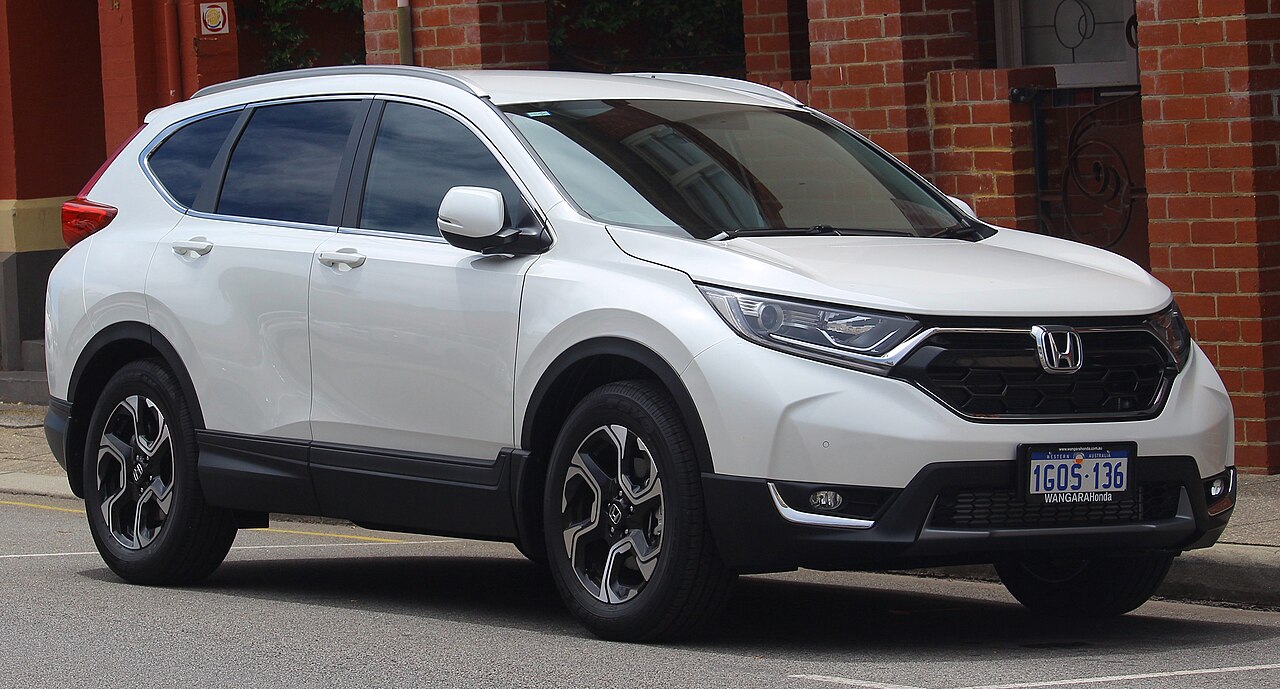
The 2017 CR-V was the launch year of the 5th-gen platform and Honda’s first compact SUV with a turbocharged engine — the 1.5L L15B7. It’s also the year Honda’s reliability halo took its first real hit in two decades. Worth understanding before you buy this truck.
Direct-injection 1.5L turbo. In cold-climate driving with short trips — the engine never reaches full operating temperature — unburned fuel washes past the rings and ends up diluting the engine oil. You see the dipstick rising above the full mark, oil that smells like gasoline, eventually misfires, rough idle, check engine light. In severe cases, bearings get washed and you’re into a long block.
Honda denied the problem at first. Then extended the powertrain warranty on the 1.5T cars to 6 years / 60,000 miles (some markets longer). Then issued service bulletin 19-001 with a software update for ECU, transmission, climate, and HVAC logic. The software update helps. It doesn’t make the problem go away — the fundamental engineering is direct injection plus short-trip operation plus a cold climate.
First thing to check on a 2017 CR-V today: Is the 19-001 software flash documented on the service record? If not, get it done at the dealer. Second thing: pull the dipstick and smell the oil. Gasoline = dilution. If the seller has been doing oil changes every 4,000-5,000 miles instead of the 7,500 OLM interval, that’s a good sign.
CVT. Honda’s own, not a Jatco. It’s not in the same trouble category as the Nissan Rogue’s Jatco — see the CVT failure hub for the ranking — but it’s still a CVT, and the 1.5T dilution problem feeds into it because diluted oil contaminates everything downstream when fluid migrates. Service the CVT fluid on time. Honda spec’d HCF-2 fluid — don’t let anyone put a generic CVT fluid in this transmission.
If 19-001 software is flashed, oil-change records are tight, and the car lived in a warm climate or saw long highway commutes: buyable, with warranty math run on the 1.5T side. The dilution is a real risk that didn’t exist on the 2013-2014 CR-V’s K24 four-cylinder.
If 19-001 isn’t flashed, records are loose, and the car lived through Minnesota winters with short commutes: walk, or buy at a price that lets you eat a long block.
The 2017 CR-V is still a Honda. It is not the same Honda the K24 cars were.
Tl* the contact owns a 2017 Honda cr-v. The contact stated that there was an abnormal sound coming from the engine. Dch Honda of nanuet (10 ny-304, nanuet, ny 10954, (845) 367-4380) stated that the noise was normal. The contact also notified the dealer of a strong odor of fuel…
Audio head unit (7" LED panel on ex-l) on dashboard does not dim at night. When you try and move the dimmer slider on the unit, it tries to dim, than goes back to full brightness. The dealer has tried to fix this for over a year, and it's still not fixed. Doing a quick google…
After a 30 minute drive on the highway I stopped for around 15 minutes and when I started the engine the dash board would not light up all lights were off, although the engine was running. The indicators were not working and the screen inside the car also stopped working. I also…
On three recent occasions while driving, the dashboard warning lights indicated multiple system failures including a brake system problem. The car was going about 25-35 MPH each time going straight. On all instances, the car seemed fine despite the warnings. In the first two…
Drag to your current mileage. Numbers are derived from this vehicle's complaint history.
If the label information can be wiped away, the operator may not be able to refer to the information, possibly resulting in the vehicle being overloaded, which can increase the risk of a crash.
If the pipe disconnects, the engine will stall, increasing the risk of a crash. Additionally, the disconnected pipe may leak fuel, which, in the presence of an ignition source, can increase the risk of a fire.
NHTSA has an open defect investigation covering this vehicle — the step that can precede a recall, not a finding of fault. EA24002 on NHTSA →
How NHTSA investigations work, and what's open now →
It's got known weak points. With a reliability score of 6.0 out of 10 based on 1,723 owner complaints filed with NHTSA, the 2017 Honda CR-V has a higher-than-average rate of reported issues. The areas to watch are listed above. Whether it's worth owning depends on price, condition, and how much repair exposure you can absorb.
The 2017 Honda CR-V is a higher-risk ownership prospect. Repair exposure runs above average — only with money set aside and eyes open. The record behind that call: Brakes: 91 complaints, classified severe, failures cluster 10,800–37,000 mi; Steering: 57 complaints, classified severe, failures cluster 17,000–50,000 mi; Reliability score 6.0/10 — around the segment average; 2 recall campaigns on file. This is our read of the federal complaint and recall data — not a substitute for a pre-purchase inspection.
Based on NHTSA records, the most-reported issue is electrical, with 364 complaints filed. Typical failure occurs around 27,392 miles. Average repair cost runs about $850 at an independent shop.
The electrical is one of the costlier repair items. Average repair cost runs about $850 at an independent shop. Typical failure occurs around 27,392 miles. Catching early warning signs can sometimes extend life by 20–30,000 miles.
Paste your VIN into the decoder at the top of this page. We pull live from NHTSA, so you'll see exactly which campaigns apply to your vehicle and whether the dealer has logged the fix. Recall repairs are always free regardless of mileage or warranty status.
Math is straightforward: a quality service contract runs $1,800–3,500 over 3 years. With 1,723 complaints on file and the costliest repair averaging $850, one major failure more than pays for it. The catch is reading the contract — many providers exclude wear items and require pre-authorization, so cheaper plans are not always better value.