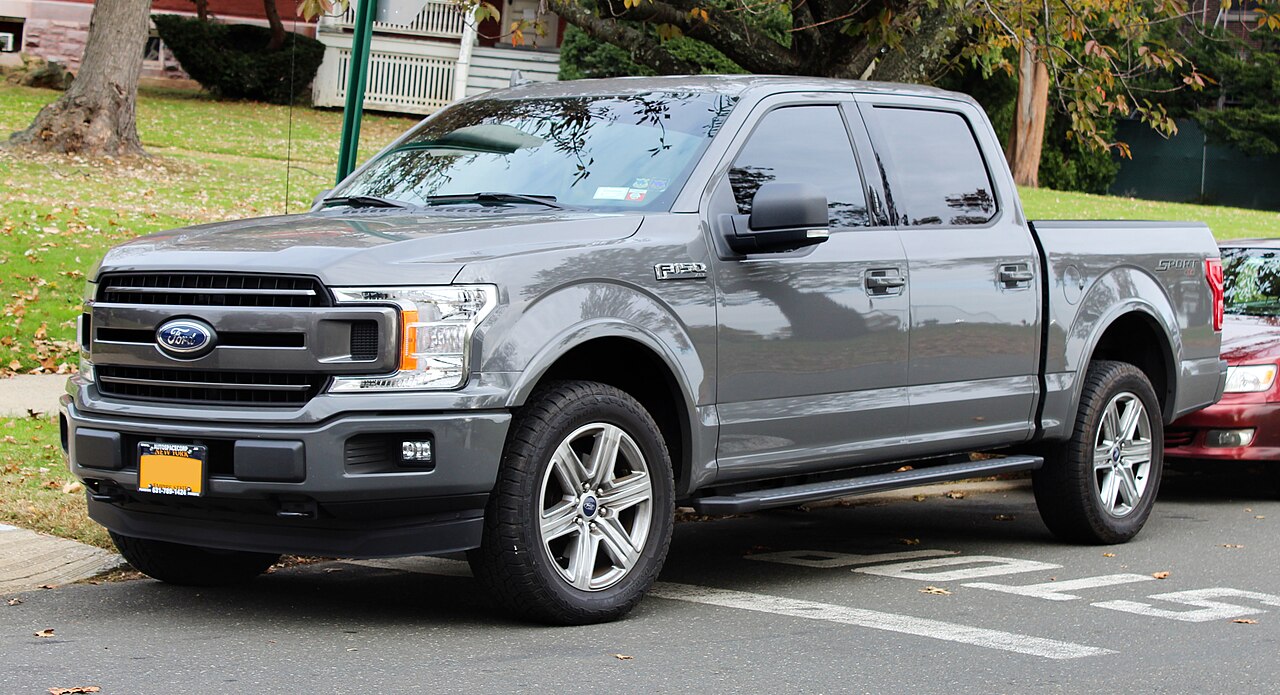
The 2018 Ford F-150 has 1,835 NHTSA owner complaints and 19 recalls on file (U.S. federal records, as of September 2026). The most-reported system is powertrain at 45 complaints (~$2,500 to repair). Source: NHTSA Office of Defects Investigation.
The problems owners report most, open recalls, and the mileage where failures cluster — straight from the NHTSA record, in seconds.
Reliability score
4.2 / 10
Below average for the segment. Multiple systems have recurring complaints.
0
Critical
19
Severe
0
Moderate
Should you avoid this 2018 F-150?
High-risk ownership
Repair exposure runs above average — only with money set aside and eyes open.
Reliability score 4.2/10 — below the segment average
19 recall campaigns on file
Our read of the federal NHTSA complaint and recall record for this exact year and model —
not a substitute for a pre-purchase inspection. How we score.
Buying a used 2018 Ford F-150? Check these first
Here's what this model is known to do — so you can inspect for it, price it in, or
make the seller fix it before you sign.
What to inspect on this specific car
powertrain — 45 owner reports
· ~$2,500 to fix
brakes — 4 owner reports
· ~$450 to fix
engine — 4 owner reports
· ~$3,100 to fix
Recalls to confirm are done
Run the VIN from the listing — 19 active recalls on this model. Recall repairs are always free.
Verdict for buyers: 4.2/10 model. The priciest documented failure is
engine (~$3,100) — get the
seller's service records for it or inspect closely. Otherwise an average-risk used buy at a fair price.
We tell you what this model is known for and what to inspect — a vehicle-history report
tells you what this exact car has been through. Smart buyers get both.
A noise, a warning light, a repair quote, "should I buy this?" — get an answer grounded in
this vehicle's actual NHTSA record, not generic advice.
Dash light, leak, worn part — snap it and we'll read it against this car's record.
Photo attached — type a question or just hit Ask.
Answers use this vehicle's NHTSA complaint & recall record — owner-reported and unverified, not a diagnosis. Verify anything safety-critical with a mechanic.
Embed this reliability snapshot
Free to use on your site, post, or video — just keep the "Source" credit line below the chart. Preview the widget →
What owners are saying
recent NHTSA-filed complaints · verbatim
2018 F-150· powertrain
Loss of power while acceleration from a stop sign. Vehicle would not shift into gear and acted like it could only drive very slowly. Repair shop inspected it and stated that the transmission needed work and would cost 8200.00 to fix issue that has a TSB out meaning ford knows…
I have a 10 speed automatic transmission that intermittently works in 2nd and third gears. It began doing this at 60,000 miles. I'm not sure if it is the adaptive learning transmission control module (TCM) or the transmission itself. Ford dealer wants over 10,000 to replace…
My Ford F-150 Supercrew XLT 10R80 10-speed completely failed resulting Ford replacing it with a new transmission unit for a cost to be of 7,300. As the transmission failed at 96,000 miles the gears would be skipped with harsh shifting, not fully engaging 4th gear and at times…
1st problem transmission: Hard shifting up and down in certain gears. 3 gear seems the worst. When slowing down to almost stop it down shifts and lurks forward which can cause a safety issue. Loud banging noise when it does this hard shift. 2nd problem when starting the truck…
Had a problem with your 2018 Ford F-150?
File a complaint with NHTSA → It's free and official — owner filings are what build the federal safety record behind this page.
Estimate your repair exposure
Drag to your current mileage. Numbers are derived from this vehicle's complaint history.
Ford Motor Company (Ford) is recalling certain 2018-2020 F-150 vehicles previously repaired incorrectly under recall number 20V097
Daytime Running Lamps that do not dim may reduce the visibility of other drivers, increasing the risk of a crash.
Fix: ,Dealers will reprogram the body control module software, free of charge. Owner notification letters were mailed July 17, 2026. Owners may contact customer service at 1-866-436-7332. Ford's number for this recall is 26C28. Vehicle Identification Numbers (VINs) involved in this recall will become searchable on NHTSA.gov on July 6, 2026.
Ford Motor Company (Ford) is recalling certain 2018 F-150 vehicles previously repaired incorrectly under recall number 17V669
Unintended gear selection may cause the vehicle to move in an unexpected direction, increasing the risk of crash or injury.
Fix: Dealers will update the powertrain control module software, free of charge. Owner notification letters were mailed July 9, 2026. Owners may contact customer service at 1-866-436-7332. Ford's number for this recall is 26S42. Vehicle Identification Numbers (VINs) involved in this recall will become searchable on NHTSA.gov on July 6, 2026.
Ford Motor Company (Ford) is recalling certain 2017-2018 F-150, Expedition, and Lincoln Navigator vehicles
A brake fluid leak can cause reduced brake function and extend the distance required to stop, increasing the risk of a crash.
Fix: Dealers will replace the brake master cylinder. If the master cylinder is leaking, the brake booster will also be replaced. Repairs will be performed free of charge. Owner notification letters were mailed September 25, 2025. Owners may contact Ford customer service at 1-866-436-7332. Ford's number for this recall is 25S37. This recall is an expansion of NHTSA recall number 22V-150.
It's got known weak points. With a reliability score of 4.2 out of 10 based on 1,835 owner complaints filed with NHTSA, the 2018 Ford F-150 has a higher-than-average rate of reported issues. The areas to watch are listed above. Whether it's worth owning depends on price, condition, and how much repair exposure you can absorb.
Should you avoid the 2018 Ford F-150?
The 2018 Ford F-150 is a higher-risk ownership prospect. Repair exposure runs above average — only with money set aside and eyes open. The record behind that call: Reliability score 4.2/10 — below the segment average; 19 recall campaigns on file. This is our read of the federal complaint and recall data — not a substitute for a pre-purchase inspection.
What should I check before buying a used 2018 Ford F-150?
Inspect the powertrain first — it's the most-reported issue on this model, with 45 owner complaints filed. Average repair cost runs about $2,500 at an independent shop. Also confirm any open recalls have been completed by running the VIN, and ask for service records covering the problem areas listed above.
Is the 2018 Ford F-150 a good used car to buy?
It scores 4.2 out of 10 on our NHTSA-based read of 1,835 owner complaints. The main thing to watch is powertrain. Priced fairly and clean on inspection, it's a reasonable used buy. Our data covers what this model is known for — pair it with a vehicle-history report on the VIN to see what that specific car has been through.
What's the most common problem on the 2018 Ford F-150?
Based on NHTSA records, the most-reported issue is powertrain, with 45 complaints filed. Average repair cost runs about $2,500 at an independent shop.
What's the most expensive thing that goes wrong?
The powertrain is one of the costlier repair items. Average repair cost runs about $2,500 at an independent shop. Catching early warning signs can sometimes extend life by 20–30,000 miles.
How do I check if my Ford F-150 has open recalls?
Paste your VIN into the decoder at the top of this page. We pull live from NHTSA, so you'll see exactly which campaigns apply to your vehicle and whether the dealer has logged the fix. Recall repairs are always free regardless of mileage or warranty status.
Is an extended warranty worth it on a 2018 Ford F-150?
Math is straightforward: a quality service contract runs $1,800–3,500 over 3 years. With 1,835 complaints on file and the costliest repair averaging $2,500, one major failure more than pays for it. The catch is reading the contract — many providers exclude wear items and require pre-authorization, so cheaper plans are not always better value.
Recall and complaint data sourced from the National Highway Traffic Safety Administration (NHTSA)
public records database, last synced 12 hours ago. Verify the raw federal record at
nhtsa.gov/vehicle/2018/Ford/F-150.
Editorial commentary written by ProblemsByVin contributors and reviewed by ASE-certified mechanics.
We are not affiliated with Ford. Some links on this page are affiliate links and we
may earn a commission if you purchase through them.