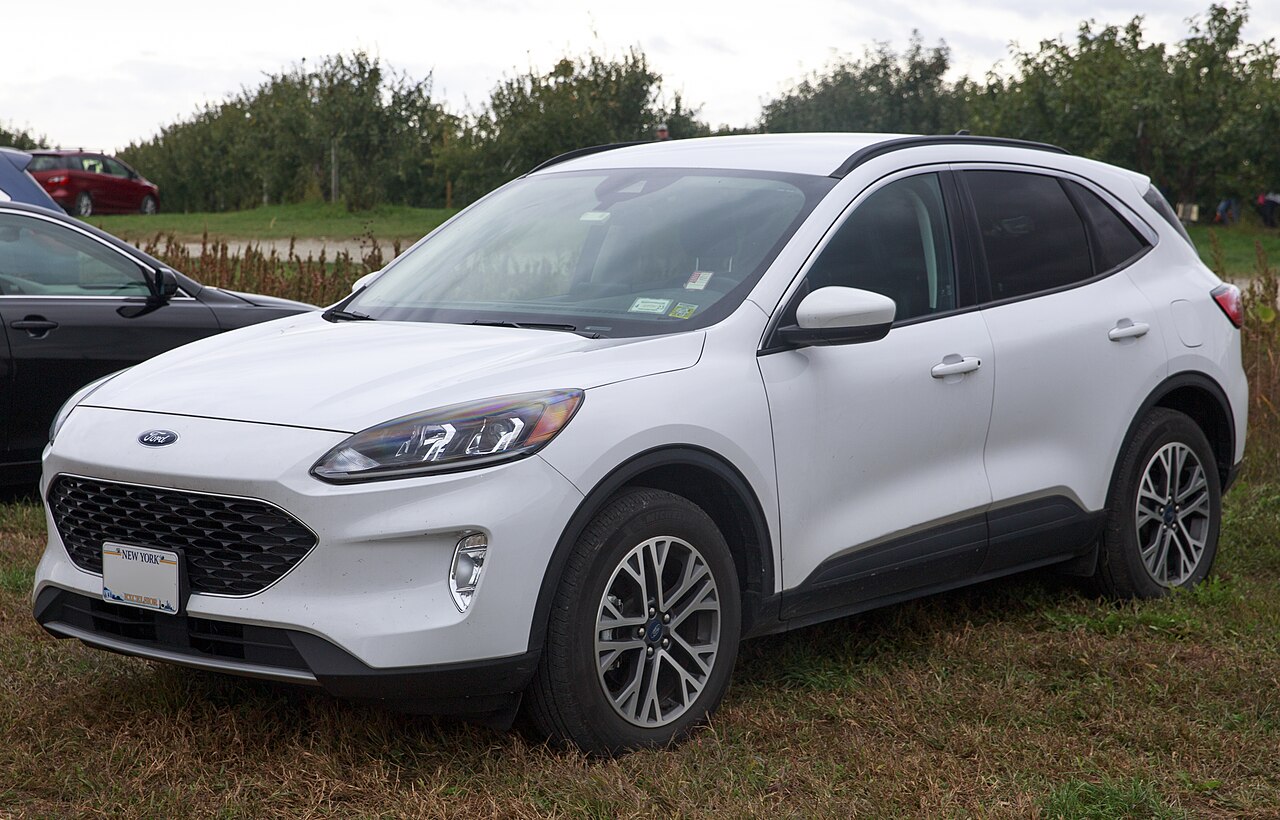
The 2013 Ford Escape has 2,752 NHTSA owner complaints and 18 recalls on file (U.S. federal records, as of September 2026). The most-reported system is engine at 1,036 complaints (~$3,100 to repair). Source: NHTSA Office of Defects Investigation.
The problems owners report most, open recalls, and the mileage where failures cluster — straight from the NHTSA record, in seconds.
Reliability score
2.6 / 10
Significant reliability concerns on file. Read the trouble spots before buying.
0
Critical
18
Severe
0
Moderate
Should you avoid this 2013 Escape?
Avoid — the powertrain
The data says walk unless this exact vehicle has documented proof the powertrain was repaired or replaced.
45 fire-related complaints and 2 crash-related complaints on the engine
Powertrain: 383 complaints, classified severe
Electrical system: 282 complaints, classified severe
Reliability score 2.6/10 — below the segment average
Our read of the federal NHTSA complaint and recall record for this exact year and model —
not a substitute for a pre-purchase inspection. How we score.
NHTSA crash-test safety ratings
4 / 5 overall
Overall★★★★★4/5
Frontal crash★★★★★4/5
Side crash★★★★★5/5
Rollover★★★★★4/5
Driver-assist features on the tested model:
Electronic stability control: Standard · Forward collision warning: No · Lane departure warning: No
Source: NHTSA New Car Assessment Program — tested configuration: 2013 Ford Escape SUV 4x4. Stars rate crash protection in NHTSA's tests, not overall reliability — see the owner-complaint data below for what actually goes wrong.
Buying a used 2013 Ford Escape? Check these first
Here's what this model is known to do — so you can inspect for it, price it in, or
make the seller fix it before you sign.
What to inspect on this specific car
engine — 1036 owner reports
· ~$3,100 to fix
powertrain — 383 owner reports
· ~$2,500 to fix
steering — 302 owner reports
· ~$700 to fix
electrical — 282 owner reports
· ~$850 to fix
⚠ The one to take seriously: powertrain is flagged
severe on this model
.
Inspect it closely on a test drive.
Recalls to confirm are done
Run the VIN from the listing — 18 active recalls on this model. Recall repairs are always free.
Verdict for buyers: 2.6/10 model. The priciest documented failure is
engine (~$3,100) — get the
seller's service records for it or inspect closely. Otherwise an average-risk used buy at a fair price.
We tell you what this model is known for and what to inspect — a vehicle-history report
tells you what this exact car has been through. Smart buyers get both.
A noise, a warning light, a repair quote, "should I buy this?" — get an answer grounded in
this vehicle's actual NHTSA record, not generic advice.
Dash light, leak, worn part — snap it and we'll read it against this car's record.
Photo attached — type a question or just hit Ask.
Answers use this vehicle's NHTSA complaint & recall record — owner-reported and unverified, not a diagnosis. Verify anything safety-critical with a mechanic.
Embed this reliability snapshot
Free to use on your site, post, or video — just keep the "Source" credit line below the chart. Preview the widget →
Twenty model years of Ford Escape and Edge ranked by NHTSA owner complaint count. The data covers two engine eras (Duratec V6 / Mazda I4 platform through 2012, EcoBoost-dominant from 2013 onward) and reveals which years took the worst beating from owners.
#
Year
Model
Complaints
Recalls
Slug
1
2013
Escape
2,737
5
New 1.6L EcoBoost coolant intrusion fires, transmission
The 2013 Ford Escape you are researching now sits at the top of this list with 2,737 owner complaints filed, more than any other Ford compact SUV in our database. The dominant failure modes are the 1.6L EcoBoost engine and the 6F35 automatic transmission.
The 1.6L EcoBoost (engine code GTDI 1.6L, internal Ford code Sigma) was a small-displacement turbocharged four-cylinder that Ford pushed across the 2013-2016 Escape lineup. The block design routed engine coolant through a cylinder head passage that was prone to cracking. Cracked passages dumped coolant into the cylinders, and at the worst end of the failure mode, the engines caught fire. Ford issued multiple recall campaigns covering the 1.6L from 2013 forward and replaced thousands of engines under warranty.
The 6F35 transmission was Ford’s six-speed automatic shared with the Fusion. Hard shifts, delayed engagement, and torque converter shudder are documented in hundreds of complaints. Ford issued reflash TSBs but never produced a redesigned valve body for the 6F35.
Two takeaways for someone shopping a used Ford compact SUV. First, check the engine block for the coolant-intrusion service campaign completion on any 1.6L EcoBoost from 2013 to 2016. The dealer service record will show the campaign code. Second, the 2014-2016 Escape with the 2.0L EcoBoost has its own timing belt issue (the wet belt in oil design) that fails between 80,000 and 120,000 miles. Belt-in-oil engines are not user-serviceable and require dealer intervention.
If you are shopping any year on this list, get the recall completion records before money changes hands. Ford will fix open recalls at no cost regardless of vehicle ownership history.
Methodology
Recall and complaint counts pulled from the NHTSA recallsByVehicle and complaintsByVehicle APIs. Filter: Ford Escape, Edge, and Bronco Sport, all model years tracked. Sort: owner complaint count descending. Bronco Sport years 2021-2024 produced lower complaint volumes and are not in this top 15 because the model has been in production fewer years.
What owners are saying
recent NHTSA-filed complaints · verbatim
2013 Escape· powertrain
The transmission has completely gone out. On this car model, there isn't a dip stick for the owner to check transmission fluid levels. While pulling out of a parking space the car hesitated on going into first gear and then jerked really hard before continuing to move. While…
On 12-22-2021during routine vehicle servicing of my 2013 Ford Escape at Mac Haik Ford in Georgetown, TX, Invoice Number 776999, I was told by the Service Advisor that the mechanic was having troubles getting the wheels off to rotate and balance. Sophie Rosa, Service Advisor…
Tl* the contact owns a 2013 Ford escape. The contact stated that engine coolant leaked from the vehicle with the engine coolant warning message on the instrument panel. The contact stated that he frequently refilled the coolant due to the failure. Neither the dealer nor the…
I own a 2013 Ford escape. I can be driving along and all of a sudden it stalls with no warning. We have taken it to the shop and after lots of money out of pocket , I still do not have a resolution. They can't find anything wrong. Ford needs to recall these vehicles and fix the…
Had a problem with your 2013 Ford Escape?
File a complaint with NHTSA → It's free and official — owner filings are what build the federal safety record behind this page.
Estimate your repair exposure
Drag to your current mileage. Numbers are derived from this vehicle's complaint history.
Ford Motor Company (Ford) is recalling certain 2013-2018 Focus, 2013-2019 Escape, and 2015-2016 MKC vehicles equipped with a 2
An electrical short circuit can increase the risk of a fire.
Fix: Owners are advised not to plug in their block heater until the vehicle is remedied. Dealers will replace the block heater, free of charge. Owners will also have a alternative option to replace engine block heater element with a threaded plug, and remove the block heater electrical cord. Interim letters, notifying owners of the safety risk, were mailed March 6, 2026. Additional letters will be sent once the final remedy is available. Owners may contact Ford customer service at 1-866-436-7332. Ford's number for this recall is 26S01. Vehicle Identification Numbers (VINs) involved in this recall became searchable on NHTSA.gov on January 16, 2026.
Ford Motor Company (Ford) is recalling certain 2013-2019 Escape, 2013-2018 C-Max, 2013-2016 Fusion, 2013-2021 Transit Connect, and 2015-2018 Edge vehicles
A damaged or missing bushing may prevent the vehicle from shifting into the intended gear, and cause the vehicle to move in an unexpected direction. Additionally, the vehicle may roll after the driver selects the 'Park' position. Either scenario increases the risk of a crash or injury.
Fix: Dealers will replace the under hood shift bushing and add a protective cap over the shift cable bushing, free of charge. Interim owner notification letters, informing owners of the safety risk, were mailed July 1, 2022. Remedy parts are expected to be available in 4th Quarter 2022. Owner notification letters were mailed October 27, 2022. Owners may contact Ford customer service at 1-866-436-7332. Ford's number for this recall is 22S43.
Ford Motor Company (Ford) is recalling certain 2011-2014 Fiesta, 2013-2014 Fusion, 2015 Mustang, 2013-2015 Escape and C-Max, 2012-2015 Focus, 2014-2016 Transit Connect, 2013-2014 Lincoln MKZ, and 2015 MKC vehicles
A door that is not securely latched could open while the vehicle is in motion, increasing the risk of injury to a vehicle occupant.
Fix: Ford will notify owners, and dealers will inspect the latch date codes to confirm if the repair was done correctly, and replace the side door latches if necessary, free of charge. Owners will also have the option to inspect their own vehicle's door latches and enter the date codes into a website to determine if the latches are correct. Owner notification letters were mailed on July 27, 2020. Owners may contact Ford customer service at 1-866-436-7332. Ford's number for this recall is 20S30.
It's got known weak points. With a reliability score of 2.6 out of 10 based on 2,752 owner complaints filed with NHTSA, the 2013 Ford Escape has a higher-than-average rate of reported issues. The areas to watch are listed above. Whether it's worth owning depends on price, condition, and how much repair exposure you can absorb.
Should you avoid the 2013 Ford Escape?
On the NHTSA data, the 2013 Ford Escape is one to avoid unless a specific vehicle proves otherwise. The data says walk unless this exact vehicle has documented proof the powertrain was repaired or replaced. The record behind that call: 45 fire-related complaints and 2 crash-related complaints on the engine; Powertrain: 383 complaints, classified severe; Electrical system: 282 complaints, classified severe; Reliability score 2.6/10 — below the segment average. This is our read of the federal complaint and recall data — not a substitute for a pre-purchase inspection.
What should I check before buying a used 2013 Ford Escape?
Inspect the engine first — it's the most-reported issue on this model, with 1,036 owner complaints filed. Average repair cost runs about $3,100 at an independent shop. Also confirm any open recalls have been completed by running the VIN, and ask for service records covering the problem areas listed above.
Is the 2013 Ford Escape a good used car to buy?
It scores 2.6 out of 10 on our NHTSA-based read of 2,752 owner complaints. The main thing to watch is engine. Priced fairly and clean on inspection, it's a reasonable used buy. Our data covers what this model is known for — pair it with a vehicle-history report on the VIN to see what that specific car has been through.
What's the most common problem on the 2013 Ford Escape?
Based on NHTSA records, the most-reported issue is engine, with 1,036 complaints filed. Average repair cost runs about $3,100 at an independent shop.
What's the most expensive thing that goes wrong?
The engine is one of the costlier repair items. Average repair cost runs about $3,100 at an independent shop. Catching early warning signs can sometimes extend life by 20–30,000 miles.
How do I check if my Ford Escape has open recalls?
Paste your VIN into the decoder at the top of this page. We pull live from NHTSA, so you'll see exactly which campaigns apply to your vehicle and whether the dealer has logged the fix. Recall repairs are always free regardless of mileage or warranty status.
Is an extended warranty worth it on a 2013 Ford Escape?
Math is straightforward: a quality service contract runs $1,800–3,500 over 3 years. With 2,752 complaints on file and the costliest repair averaging $3,100, one major failure more than pays for it. The catch is reading the contract — many providers exclude wear items and require pre-authorization, so cheaper plans are not always better value.
Recall and complaint data sourced from the National Highway Traffic Safety Administration (NHTSA)
public records database, last synced 12 hours ago. Verify the raw federal record at
nhtsa.gov/vehicle/2013/Ford/Escape.
Editorial commentary written by ProblemsByVin contributors and reviewed by ASE-certified mechanics.
We are not affiliated with Ford. Some links on this page are affiliate links and we
may earn a commission if you purchase through them.