Rivian recalls 2025-2026 R1S and R1T over front turn signals that may fail
Turn signals that fail reduce a driver's ability to signal intent to other motorists, increasing the risk of a crash.
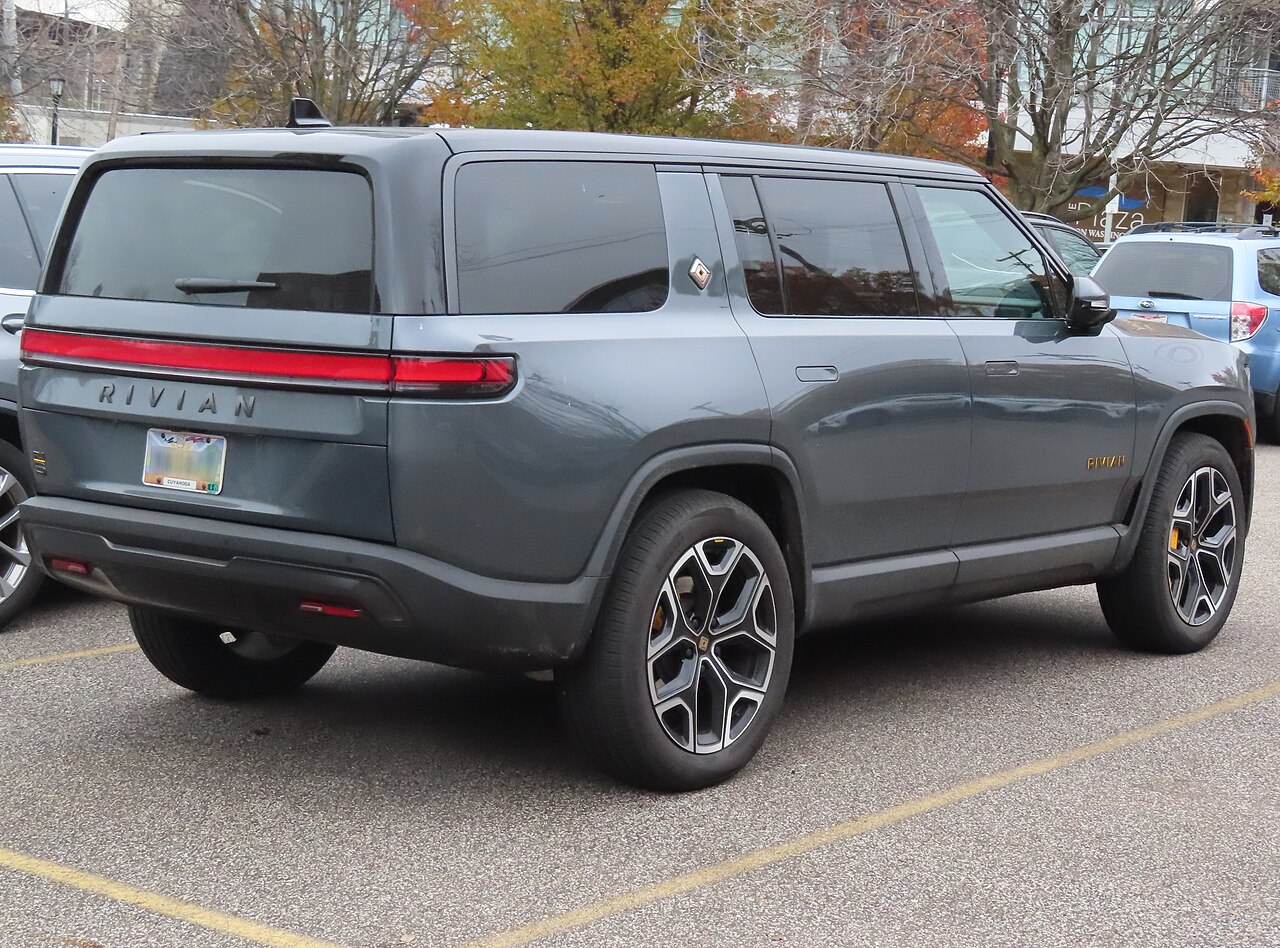
Here’s the short version: if you drive a newer Rivian, the front turn signals might quit on you, and Rivian is recalling almost 4,000 of them to fix it.
The recall covers the 2025 and 2026 R1S SUV and the 2025 and 2026 R1T pickup. NHTSA is tracking it under campaign number 26V508. It showed up in the federal recall batch reported the week of August 17, 2026. The total on the hook is 3,829 vehicles.
What actually fails
The problem is straightforward. The front exterior turn signals may fail. When a turn signal fails, it stops doing the one job it has, which is telling the driver next to you or behind you where you’re about to go.
That failure puts the vehicle out of compliance with FMVSS 108. That’s the federal standard covering lamps, reflective devices, and associated equipment. Every vehicle sold in the U.S. has to meet it. A turn signal that doesn’t light isn’t just annoying, it’s a legal noncompliance, and that’s why this becomes a recall instead of a shrug.
Here’s what it means from behind the wheel. You flip the stalk to change lanes or make a turn, and the front signal doesn’t do what it’s supposed to. Depending on how the failure plays out, you might notice a signal that doesn’t come on, or you might not notice at all until someone else does. That’s the part that matters. You could be signaling in your head while the car in your mirror sees nothing.
Why a dead turn signal is a real safety problem
People tend to treat turn signals as a courtesy. They’re not. They’re the primary way you tell other drivers your intent before you act. When the front signal fails, the drivers around you lose that warning.
NHTSA’s filing spells out the consequence plainly: turn signals that fail reduce a driver’s ability to signal intent to other motorists, which increases the risk of a crash. That’s the whole reason this gets a federal campaign number and a required repair. A signal that other traffic can’t see is a signal that isn’t working, and on a lane change or a left turn across traffic, that’s exactly when you need to be seen.
What the filing tells us so far
This one is thin on the deeper mechanical details, and I’m not going to invent them for you. What we know from the federal batch is the vehicles involved, the count of 3,829, the campaign number 26V508, and the nature of the defect and its risk. The recall was reported roughly three days before August 20, 2026, as part of NHTSA’s larger multi-vehicle recall batch covering passenger cars, buses, and commercial trucks.
When more of the remedy details come out, that’s when you’ll learn exactly what the fix is and whether it’s a part swap or a software correction. For now, the important thing is that Rivian has acknowledged the problem and it’s an official recall, which means the repair is on them, not you.
What this means if you own one
If you’re driving one of these Rivians, here’s how I’d handle it.
-
Run your VIN. Go to NHTSA’s recall lookup and enter your vehicle identification number, or check with Rivian directly. Campaign 26V508 covers the 2025 Rivian R1S, 2026 Rivian R1S, 2025 Rivian R1T, and 2026 Rivian R1T, but only your VIN tells you whether your specific truck or SUV is on the list. Not every vehicle in these model years is affected.
-
Check your signals yourself. You don’t need a shop for this. Have someone stand in front of the vehicle while you cycle the left and right turn signals. Watch that both front lamps flash steadily. If one is dead or acting up, you’ve confirmed the symptom.
-
Don’t ignore a dead signal. If your front turn signal isn’t working, treat it as a real problem now, not later. Use hand signals if you have to in the meantime, and get the vehicle in for the recall repair as soon as parts and appointments are available.
-
The repair is free. This is a safety recall, which means the fix comes at no cost to you. Don’t let anyone charge you for it. If a shop tries, that’s your cue to push back and go through Rivian’s recall process instead.
-
Document everything. Keep your recall notice, note the date you contacted Rivian, and hang onto any paperwork from the repair. If you have to wait for parts, write down when you asked and what you were told. That record protects you if anything goes sideways.
The honest take
This isn’t a fire risk or a stalling problem, and I’m not going to dress it up as one. But a turn signal that fails is a genuine safety issue, and the feds treat it that way because the people most at risk are the ones who can’t see your intent. On a lane change at highway speed, that gap in communication is how crashes happen.
The good news is the fix is free, the campaign is officially open under 26V508, and the affected count is small at 3,829 vehicles. If you own one of these Rivians, run your VIN, confirm your signals work, and get the repair scheduled. It’s a quick thing to check and an easy thing to let Rivian make right.