Free. Instant. No signup. Pulls recalls and complaints for your exact vehicle.
Couldn't find that VIN. Check the digits and try again.
ProblemsByVinFile / 2024-TOYOTA-TUNDRANHTSA data synced 1 day ago
Toyota
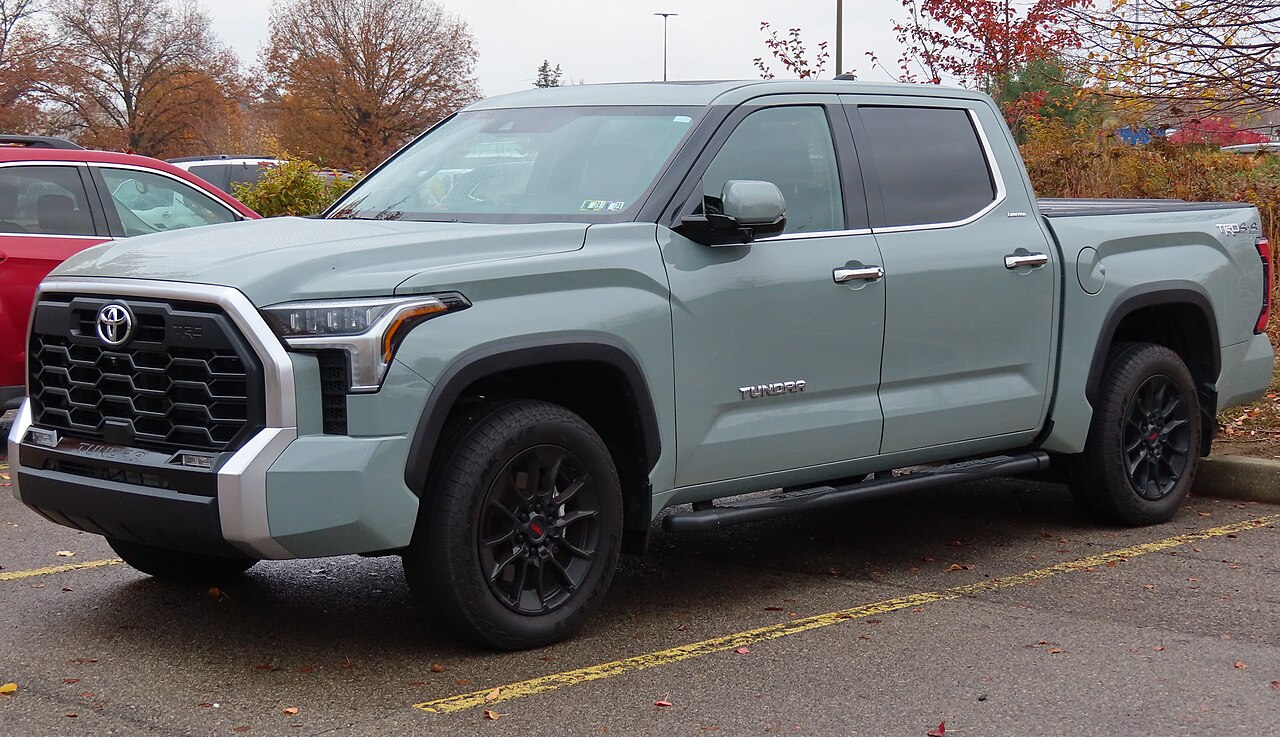
2024 Toyota Tundra problems
The 2024 Toyota Tundra has 347 NHTSA owner complaints and 10 active recall campaigns on file. Here's the breakdown — what's serious, what's noise, and what a working mechanic would actually do about it.
The 2024 Toyota Tundra has 347 NHTSA owner complaints and 10 recalls on file (U.S. federal records, as of October 2026). The most-reported system is engine at 110 complaints, typically surfacing around 24,552 miles (~$3,100 to repair). Source: NHTSA Office of Defects Investigation.
Below average for the segment. Multiple systems have recurring complaints.
0
Critical
10
Severe
0
Moderate
Should you avoid this 2024 Tundra?
Acceptable — with caveats
Worth owning if you verify the specific issues below before you buy.
Reliability score 5.2/10 — around the segment average
10 recall campaigns on file
Our read of the federal NHTSA complaint and recall record for this exact year and model —
not a substitute for a pre-purchase inspection. How we score.
NHTSA crash-test safety ratings
5 / 5 overall
Overall★★★★★5/5
Frontal crash★★★★★5/5
Side crash★★★★★5/5
Rollover★★★★★4/5
Driver-assist features on the tested model:
Electronic stability control: Standard · Forward collision warning: Standard · Lane departure warning: Standard
Source: NHTSA New Car Assessment Program — tested configuration: 2024 Toyota TUNDRA PU/CC 4WD. Stars rate crash protection in NHTSA's tests, not overall reliability — see the owner-complaint data below for what actually goes wrong.
Buying a used 2024 Toyota Tundra? Check these first
Here's what this model is known to do — so you can inspect for it, price it in, or
make the seller fix it before you sign.
What to inspect on this specific car
engine — 110 owner reports
· tends to show around 24,552 mi · ~$3,100 to fix
powertrain — 82 owner reports
· tends to show around 7,450 mi · ~$2,500 to fix
electrical — 31 owner reports
· tends to show around 4,000 mi · ~$850 to fix
cruise control — 18 owner reports
· ~$600 to fix
⚠ The one to take seriously: lighting is flagged
severe on this model
.
Inspect it closely on a test drive.
Recalls to confirm are done
Run the VIN from the listing — 10 active recalls on this model. Recall repairs are always free.
Verdict for buyers: 5.2/10 model. The priciest documented failure is
engine (~$3,100) — get the
seller's service records for it or inspect closely. Otherwise an average-risk used buy at a fair price.
We tell you what this model is known for and what to inspect — a vehicle-history report
tells you what this exact car has been through. Smart buyers get both.
A noise, a warning light, a repair quote, "should I buy this?" — get an answer grounded in
this vehicle's actual NHTSA record, not generic advice.
Dash light, leak, worn part — snap it and we'll read it against this car's record.
Photo attached — type a question or just hit Ask.
Answers use this vehicle's NHTSA complaint & recall record — owner-reported and unverified, not a diagnosis. Verify anything safety-critical with a mechanic.
Embed this reliability snapshot
Free to use on your site, post, or video — just keep the "Source" credit line below the chart. Preview the widget →
The 15 highest recall counts on half-ton and midsize pickups in our database, ranked by total active NHTSA campaigns. Data current as of the latest sync.
Reading the table
Recall count alone does not equal unreliable. Ford F-150 dominates the list partly because Ford ships more F-150s than anyone ships anything else. High-volume vehicles attract more campaigns because more units in service produce more reported defects.
What recall count does signal: how many separate problems escaped factory QA on a given build. Every campaign on a single model year is one more distinct engineering or manufacturing failure the company could not catch internally — which is why the trucks at the top of this list are there.
Two trucks worth flagging on this page specifically:
The 2024 Toyota Tundra you are researching now appears near the bottom of this list. Its dominant campaign is NHTSA 24V-465, the V35A-FTS engine debris contamination. Toyota updated the production process partway through the 2024 model year. Trucks built before May 2024 are higher-risk. Build date can be checked from the door jamb sticker.
The 2023 Toyota Tundra, which sits higher on this list, shares the same V35A-FTS engine and was hit harder by the debris campaign. If you are cross-shopping a 2023 against a 2024, the 2024 has the lower recall count primarily because Toyota corrected the engine machining issue partway through 2024 production.
Data source and methodology
Recall counts pulled from the NHTSA recallsByVehicle API. Complaint counts pulled from the NHTSA complaintsByVehicle API. Both endpoints are public-record federal databases maintained by the U.S. Department of Transportation.
Filter: vehicles in the half-ton and midsize pickup segment with model year 2014 through 2025. Sort: total active recall campaigns descending, then owner complaint count descending as tiebreaker. Where a recent model year shows very few owner complaints against a high campaign count, that is the lag between a recall being issued and complaints accumulating — not the absence of problems.
Run any specific VIN through the NHTSA recall lookup before purchase. Open recalls on a used vehicle remain the manufacturer’s responsibility to repair at no cost, regardless of ownership transfer.
V35A-FTS debris (build dates before May 2024), rear axle hub, seatbelt anchor
Ordered by recall campaign count;
the selection and ordering are editorial. Complaint and recall-campaign counts are read
from our NHTSA data when this page is built, so they match the vehicle pages linked above.
Complaints are unverified owner reports, and a raw total reflects how many were sold and
how long they have been on the road — it is not a failure rate.
What owners are saying
recent NHTSA-filed complaints · verbatim
2024 Tundra· powertrain
You step on accelerator and it doesn’t accelerate… it lags and almost caused accident more than 4 times! Throttle body won’t open up and go. I feel they need to remap the system.
When coming to a stop and then trying to accelerate to turn into a street I get an abnormal amount of throttle lag. There’s even times it seems to lag and then registers that I am trying to accelerate quickly causing me to “burn out” while I’m turning and no I am not…
I am reporting a latent manufacturing defect in my 2024 Toyota Tundra i-FORCE MAX (Hybrid). This vehicle is equipped with the V35A-FTS engine, which has been officially recalled in non-hybrid Tundra models (NHTSA Recall 25V767) due to internal machining debris that causes…
When slowing down to a stop but not stopping completely then speeding up to enter another street or an intersection there is a 1-2 second hesitation before the truck reacts and actually moves. This is very scary and dangerous as it can cause an accident with oncoming traffic in…
Had a problem with your 2024 Toyota Tundra?
File a complaint with NHTSA → It's free and official — owner filings are what build the federal safety record behind this page.
Estimate your repair exposure
Drag to your current mileage. Numbers are derived from this vehicle's complaint history.
Toyota Motor Engineering & Manufacturing (Toyota) is recalling certain 2024 Tundra vehicles equipped with a V35A engine
A loss of drive power increases the risk of a crash.
Fix: Dealers will perform an inspection on the #1 main bearing using vehicle inspection software and drive data, and if necessary, replace the engine. Repairs will be performed free of charge. Interim letters notifying owners of the safety risk were mailed July 23, 2026. Additional letters will be sent once the final remedy is available. Owners may contact Toyota's customer service at 1-800-331-4331. Toyota's numbers for this recall are 25TB14 and 25TA14. This recall expands previous NHTSA recall numbers 24V381 and 25V767.
Toyota Motor Engineering & Manufacturing (Toyota) is recalling certain 2024-2025 Toyota Tundra, Tacoma Hybrid, Tacoma, RAV4 Hybrid, Land Cruiser Hybrid, Lexus GX550, 2024-2026 Tundra Hybrid, 2025 Sequoia Hybrid, Crown Signia, Grand Highlander, Lexus TX500 Hybrid, Lexus NX350 Hybrid, 2025-2026 Grand Highlander Hybrid, and Lexus TX350 vehicles
A vehicle with an incorrect maximum capacity weight value may be overloaded, which can increase the risk of a crash.
Fix: Dealers will replace the load carrying capacity modification label, free of charge. Owner letters were mailed May 26, 2026. Owners may contact Toyota's customer service at 1-800-331-4331. Toyota's numbers for this recall are 26LB04, 26LA04, 26TB07, and 26TA07.
Toyota Motor Engineering & Manufacturing (Toyota) is recalling certain 2024-2025 Toyota Tundra and Tundra Hybrid vehicles equipped with a Panoramic View Monitor (PVM) system
A rearview camera image that does not display reduces the driver's view behind the vehicle, increasing the risk of a crash.
Fix: Dealers will update the parking assist ECU software, free of charge. Owner notification letters were mailed March 23, 2026. Owners may contact Toyota's customer service at 1-800-331-4331. Toyota's numbers for this recall are 26TB02 and 26TA02.
It's got known weak points. With a reliability score of 5.2 out of 10 based on 347 owner complaints filed with NHTSA, the 2024 Toyota Tundra has a higher-than-average rate of reported issues. The areas to watch are listed above. Whether it's worth owning depends on price, condition, and how much repair exposure you can absorb.
Should you avoid the 2024 Toyota Tundra?
The 2024 Toyota Tundra is acceptable, with specific caveats. Worth owning if you verify the specific issues below before you buy. The record behind that call: Reliability score 5.2/10 — around the segment average; 10 recall campaigns on file. This is our read of the federal complaint and recall data — not a substitute for a pre-purchase inspection.
What should I check before buying a used 2024 Toyota Tundra?
Inspect the engine first — it's the most-reported issue on this model, with 110 owner complaints filed. Typical failure occurs around 24,552 miles. Average repair cost runs about $3,100 at an independent shop. Also confirm any open recalls have been completed by running the VIN, and ask for service records covering the problem areas listed above.
Is the 2024 Toyota Tundra a good used car to buy?
It scores 5.2 out of 10 on our NHTSA-based read of 347 owner complaints. The main thing to watch is engine. Typical failure occurs around 24,552 miles. Priced fairly and clean on inspection, it's a reasonable used buy. Our data covers what this model is known for — pair it with a vehicle-history report on the VIN to see what that specific car has been through.
What's the most common problem on the 2024 Toyota Tundra?
Based on NHTSA records, the most-reported issue is engine, with 110 complaints filed. Typical failure occurs around 24,552 miles. Average repair cost runs about $3,100 at an independent shop.
What's the most expensive thing that goes wrong?
The engine is one of the costlier repair items. Average repair cost runs about $3,100 at an independent shop. Typical failure occurs around 24,552 miles. Catching early warning signs can sometimes extend life by 20–30,000 miles.
How do I check if my Toyota Tundra has open recalls?
Paste your VIN into the decoder at the top of this page. We pull live from NHTSA, so you'll see exactly which campaigns apply to your vehicle and whether the dealer has logged the fix. Recall repairs are always free regardless of mileage or warranty status.
Is an extended warranty worth it on a 2024 Toyota Tundra?
Math is straightforward: a quality service contract runs $1,800–3,500 over 3 years. With 347 complaints on file and the costliest repair averaging $3,100, one major failure more than pays for it. The catch is reading the contract — many providers exclude wear items and require pre-authorization, so cheaper plans are not always better value.
Recall and complaint data sourced from the National Highway Traffic Safety Administration (NHTSA)
public records database, last synced 1 day ago. Verify the raw federal record at
nhtsa.gov/vehicle/2024/Toyota/Tundra.
Editorial commentary written by ProblemsByVin contributors and reviewed by ASE-certified mechanics.
We are not affiliated with Toyota. Some links on this page are affiliate links and we
may earn a commission if you purchase through them.